
Before getting a metal roof in Pennsylvania, know these five things: the panels can make popping and ticking sounds, rain may sound louder, water can move off the roof differently, a roof-over can raise the finished roof height, and snow may fall differently around windows, porches, and walkways.
These details are easy to overlook when you're focused on the roof's lifespan, appearance, and cost. But they can affect other parts of your home and may require planning before installation.
Pennsylvania's heavy rain, winter snow, ice, and temperature changes make these details worth checking. This guide explains what to expect, what can cause problems, and what to ask your contractor before you sign the contract.
1. Metal Roofs Can Make Popping and Ticking Noises
Why Does a Metal Roof Make Popping Sounds?
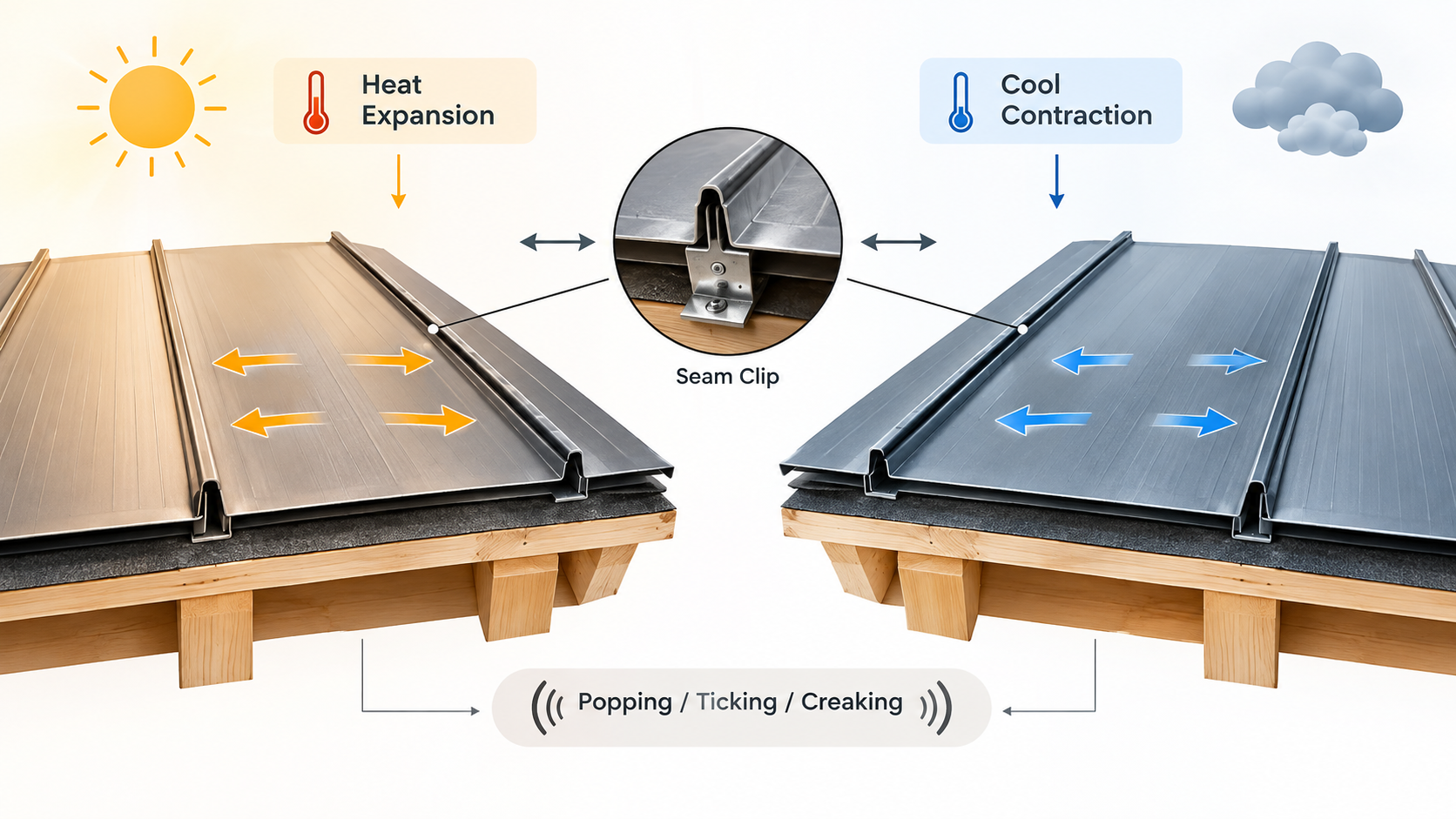
Metal panels expand when they heat up and contract when they cool down. When the sun hits your roof, the metal heats up and expands. When the sun goes down, it cools off and contracts.
This movement can cause popping, ticking, or cracking sounds that you may hear inside the home. At first, a pop or crack can even sound like someone walking on the roof. It can sound unusual at first, but this is a normal result of thermal movement. You may notice these sounds more during larger temperature changes, such as when a hot afternoon turns into a cool evening.
Does Every Metal Roof Make Loud Noises?
No, not every metal roof will sound the same. How the roof is built and installed can make a big difference. Insulation, underlayment, and proper installation can help reduce how noticeable these sounds are inside the home. A well-built standing seam metal roof with proper fastening details and the way the roofing system accommodates thermal movement can also affect how much noise you notice.
So, don't assume every metal roof will sound the same. The roof assembly underneath the panels also affects how much sound you notice inside the home.
2. Rain May Sound Louder Than It Does on Shingles
Rain can sound more noticeable on a metal roof than on shingles. However, it does not necessarily sound like the loud banging people associate with an old metal barn or shed.
Your home has layers between you and the roof, such as decking, insulation, and drywall. These layers can help reduce the sound inside the home. How noticeable the rain is will depend on the roof assembly, insulation, and the intensity of the rain. Heavy rain will generally be more noticeable than a light shower, so don't expect the roof to be completely silent during a major Pennsylvania storm
Can Insulation Reduce Metal Roof Noise?
Yes. Insulation can help reduce how much rain noise you hear inside the home. Thicker Insulation and certain sound-dampening underlayment can help reduce rain noise, although the overall roof assembly also matters. If reducing indoor noise is important to you, ask your installer how the insulation and underlayment choices will affect sound before the panels are installed.
3. Your Gutters May Need to Handle Water Differently
A metal roof can shed rainwater efficiently because its surface is relatively smooth. The texture and profile of asphalt shingles can affect how water moves across and off the roof.
During an intense storm, a large volume of water can reach the gutters quickly. Whether your existing eavestrough system can handle that flow depends on the roof area, pitch, rainfall intensity, gutter size, and downspout capacity. If gutters overflow, water can collect near the foundation and, in some cases, contribute to basement water problems.
This is why your roof and gutter system should be planned together rather than treated as separate systems. Even a properly installed metal roof can have drainage problems if the existing gutter system is undersized for the home's runoff.
Do You Need 6-Inch Gutters for a Metal Roof?
Not always. It depends on a few things:
The size of your roof
The roof pitch
Rainfall intensity in your area
The capacity of your gutters and downspouts
Some homes may have adequate capacity with standard-size gutters. Others may benefit from 6-inch gutters, additional downspouts, or splash protection where water leaves the roof. Ask your contractor to evaluate the existing drainage setup before installation so any needed changes can be planned in advance.
4. Installing Metal Roofing Over Shingles Can Raise the Finished Roof Height
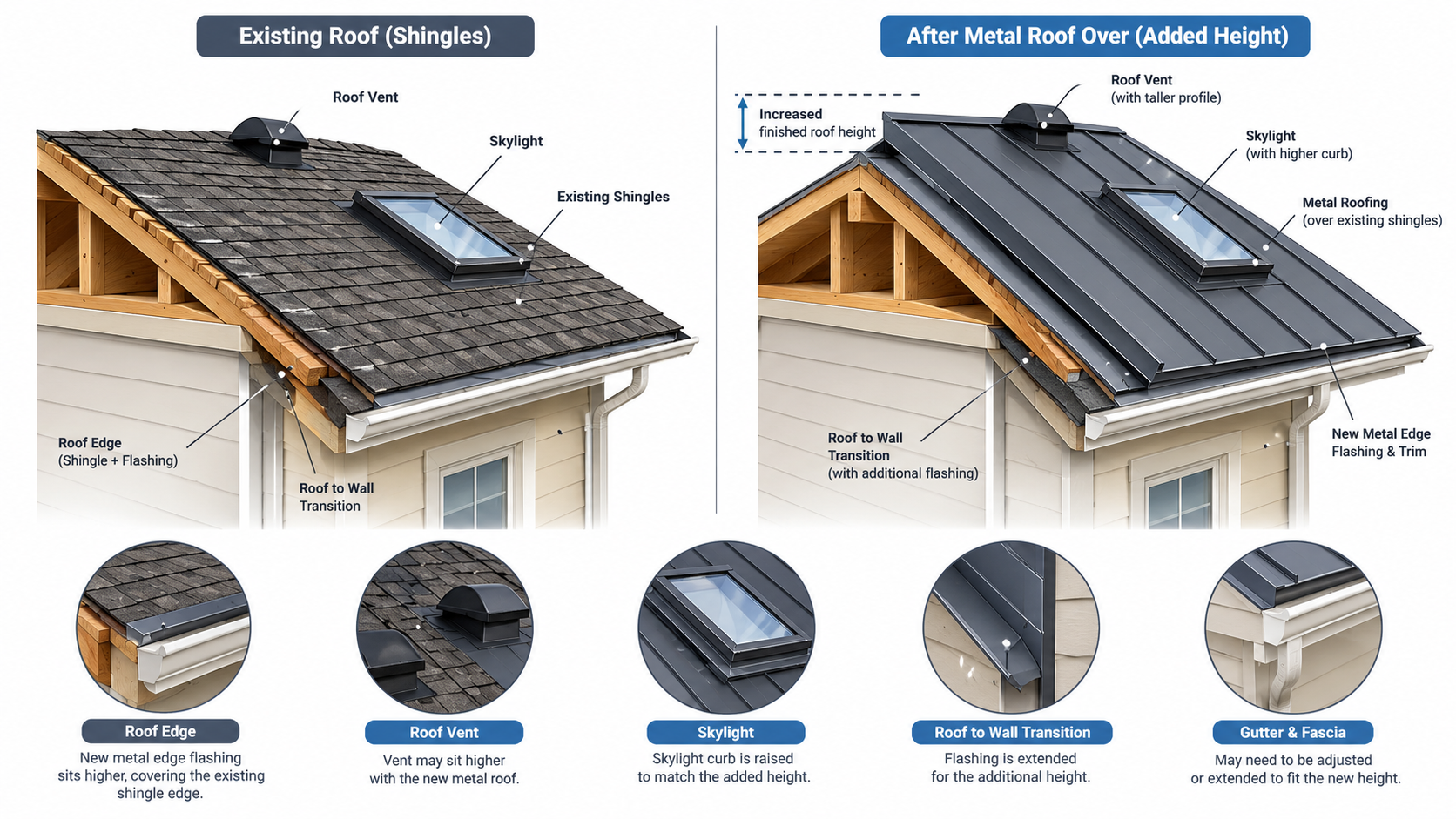
Some metal roofing systems can be installed over existing shingles. This is called a roof-over, and it can reduce the need for a full tear-off. Depending on the roofing system and installation method, installers may use wood battens or furring strips over the existing shingles before attaching the metal panels. When these are used, the metal panels sit above the existing roof surface, which can raise the finished roof height.
What Can Be Affected by a Higher Roof?
A slightly higher roof plane can affect more than you might expect:
Roof vents may need adjustment or extension
Skylights may need flashing adjustments
Trim and edge details may need adjusting
Roof-to-wall transitions may need flashing or trim adjustments
None of this means a roof-over is a bad choice. It means these details should be checked before the panels are installed.
5. Snow Can Change How You Think About Roof Clearance
Metal roofing can shed snow differently than asphalt shingles. Because metal roofing has a smoother surface, accumulated snow may slide off more readily, particularly on steeper roofs. Snow shedding can help reduce the amount of snow that remains on the roof, but it does not eliminate the risk of ice dams. It also means you need to think about where that snow lands once it slides off.
Can Snow Buildup Affect Windows and Porches?
It can, and this connects directly to the height change discussed in Point 4. If the finished roof plane is raised during installation, the clearance between the roof edge and a nearby window or porch roof can shrink.
In parts of Pennsylvania that receive heavier snowfall, particularly areas affected by lake-effect snow, this clearance deserves extra attention. For example, a porch roof that once sat well below a window could end up close enough for accumulated snow to reach the window sill. Ask your installer to check clearance around windows, porches, and walkways before the job starts, especially on lower roof sections.
Do You Need Snow Guards on a Metal Roof?
Not every home needs them. Snow guards hold snow in place on the roof so it melts gradually instead of sliding off all at once. They matter most on steep roofs, in heavy snow areas, or above doors, walkways, and parked cars. Ask your contractor if your specific roof design and location call for them.
What to Plan Before Your Metal Roof Is Installed
The better approach is to evaluate your home's water and snow management at the same time you plan the new roof, rather than treating the roofing material as a stand-alone decision. That can help you identify potential drainage, clearance, and installation issues before the work begins.
Pre-Installation Metal Roof Checklist
Before installation, check whether your project needs to meet Pennsylvania’s Uniform Construction Code (UCC) requirements and local permitting rules.
Check Your Existing Gutters and Downspouts
Look at their size, placement, and condition before your new roof goes on. Ask your contractor whether they have enough capacity for the expected roof runoff.
Check Roof Vents, Skylights, and Flashing
Ask your contractor whether the installation will affect existing vents, skylights, flashing, or other roof details.
Ask How the New Roof Will Be Installed
Find out if it's a full tear-off or a roof-over. If contractors recommend different installation methods, ask why and what each option means for your roof height, flashing, and overall cost.
Check Areas Where Snow Could Fall
Look at windows, porches, walkways, and entrances below any roof edge or valley.
Ask About Roof Height and Clearance
Confirm how the finished roof height will affect clearance near windows, doors, porches, and lower rooflines.
What is the Cost of a Metal Roof?
According to Modernize’s 2026 Pennsylvania roofing cost data, a metal roof typically costs about $11.50 to $20.50 per square foot installed in Pennsylvania. For a 2,000-square-foot roof, that works out to roughly $23,000 to $41,000. The actual price can vary depending on your roof's size, pitch, complexity, metal system, installation method, and local labor rates.
Check whether the estimate includes:
Tear-off or roof-over preparation
Flashing and trim
Gutters and downspouts
Skylight or vent adjustments
Snow guards, if needed
Old roofing disposal
Additional ventilation or structural work
Before comparing quotes, you can also use snowsbrain free Roof Replacement Cost Calculator to get a quick estimate for your project.
Are These Reasons to Avoid a Metal Roof?
No, not at all. These five things don't mean a metal roof is a bad choice for your Pennsylvania home.
They simply mean the roof needs proper planning, just like any big home investment. A good contractor can walk you through gutters, height changes, and snow clearance before installation starts, not after something goes wrong. Knowing these details upfront is what turns a good roofing decision into a great one.