
Can You Put a Metal Roof Over Shingles?
Is your roof starting to show signs of wear, making you wonder if you really need a full roof replacement? If you already have existing shingles, you may be looking for a simpler option whether your roof needs repairs, you want a longer-lasting upgrade, or you are trying to improve your home before selling. In many cases, metal reroofing can be done without tearing off the entire old roof first.
Many homeowners ask, can you put a metal roof over shingles without removing the old roofing material first. The answer is not every roof is the right fit for a roof overlay. Before new metal panels are installed, things like moisture, ventilation, structural support, and local building codes all need to be checked carefully. In this article, you’ll learn when metal reroofing over existing shingles works, what problems to watch for, and whether a roof overlay or full roof replacement makes more sense for your home.
Can You Put a Metal Roof Over Shingles? When It Works
If your existing layer of shingles is still flat, dry, and in good condition, then a roof-over may be worth considering. But if you notice issues like curling shingles, missing areas, a sagging roof, or weak spots in the roof deck, then the focus shifts toward roof safety and structural integrity. A proper roofing inspection process and roof evaluation becomes important to confirm installation suitability and avoid hidden risks like roof damage, poor moisture control, or unsafe roof readiness.
Key Conditions to Check Before a Roof-Over
Roof Is Structurally Sound
A structurally sound roof is the first requirement before any decision. A proper roof inspection helps confirm wind resistance, overall roofing performance, and long-term durability assurance. It also ensures roof safety and proper roofing compliance check before moving forward.
Only One Layer of Shingles Exists
A roof-over is usually only suitable when there is a single layer shingles system already in place. This follows the reroofing limit and avoids exceeding the two roof coverings limit set by building codes, including the international residential code and Florida building code. Meeting these rules ensures proper legal compliance.
Local Codes Allow Roof Overlays
Before installation, it is important to confirm that local roofing regulations and roofing standards allow a roof overlay. All installation requirements and overlay installation conditions must be met, along with proper roofing approval from relevant authorities.
You Want to Avoid Tear-Off Costs
Many homeowners choose this option for cost savings through a metal roof overlay. It helps avoid full tear-off, reduces labor reduction, and removes extra costs like dumpster rentals and landfill fees. This can lead to around 20% to 30% cost reduction, along with faster installation, reduced construction time, and less weather exposure reduction. It also saves tear-off savings and supports a smarter roofing strategy and overall roofing investment decision.
Why metal roofs are great
Metal roofing lasts 40 to 70 years, while asphalt shingles last only 12–20 years, making it a more durable and long-lasting option. It provide weather protection, including, hail resistance, hurricane-force winds, and high impact resistance .fire, and damage. It also helps reduce energy costs by reflecting heat and improving cooling efficiency. Plus, it is eco-friendly and improves the overall look and value of your home.
When You Should Remove Old Shingles First
While installing a metal roof over shingles is often possible, some situations require a full roof replacement and complete roof tear-off first. If you are asking should i remove shingles before installing metal roof, the answer usually depends on the roof’s condition, local code requirements, and any hidden damage under shingles before metal roof installation. For example, moisture problems, sagging areas, or multiple shingle layers may create issues that should be repaired before new metal panels are installed.
Here are the main situations where removing old shingles first becomes the safer option before metal roof installation:
1. Structural and Material Damage
You should remove old shingles first if there are signs of moisture or structural problems underlying the roof surface. This includes:
Active Leaks or Moisture Damage:
If your roof has active leaks, a musty attic smell, water stains, or visible mold, the roof decking may already be a water-damaged roof with hidden moisture issues. Covering these problems with metal panels will not solve them and may lead to premature roof failure.Rot and Structural Weakness:
A complete roof tear-off allows contractors to inspect for hidden rot, broken boards, sagging decking, weak framing, or buckling trusses. These issues weaken roof stability, reduce structural integrity, and increase long-term roofing risks.Damaged Shingles:
If the existing shingles are curling, cupped, split, warped, or missing, they cannot provide the flat and stable surface needed for proper metal roof installation. Uneven shingles can affect panel alignment, ventilation, and overall roofing performance.
2. Existing Layers and Weight Limits
Another major reason for a full roof replacement is excessive roof weight.
Multiple Layers of Shingles:
Most building codes and roofing experts do not allow another layer if two or more shingle layers already exist. Adding a metal roof over multiple layers can exceed structural weight limits and place dangerous stress on the home.Weight and Structural Stress:
If the current roof already shows signs of sagging or structural movement, adding another roofing system may increase the risk of structural failure or future roof collapse. In these cases, removing old materials first is the safer option.
3. Warranty and Regulatory Compliance
In some situations, removing shingles is necessary to meet manufacturer and legal requirements.
Manufacturer Requirements:
Many metal roofing manufacturers may reduce or void the material warranty if panels are installed over old shingles. A proper tear-off often provides better warranty protection and installation reliability.Local Building Codes and Insurance Rules:
Some areas have strict roofing regulations that limit overlays completely. In hurricane-prone regions like Florida, failing to meet local code standards could result in denied insurance claims or limited wind damage coverage.
4. Long-Term Performance and Value
A complete tear-off also improves the long-term quality of the roofing system.
Full Roof Inspection:
Removing shingles allows a full inspection of the roof deck and helps identify hidden damage under shingles before metal roof installation. This ensures the structure is healthy before installing a new metal roofing system.Better Ventilation and Future Value:
A tear-off also makes ventilation upgrades easier, helping reduce trapped heat and moisture-related rot. For homeowners planning to stay long-term, this avoids expensive future “double tear-off” costs where both the metal roof and old shingles would eventually need removal. In many cases, a full roof replacement also improves resale value and creates stronger long-term roofing performance.
Choosing a metal roof over shingles without tear off
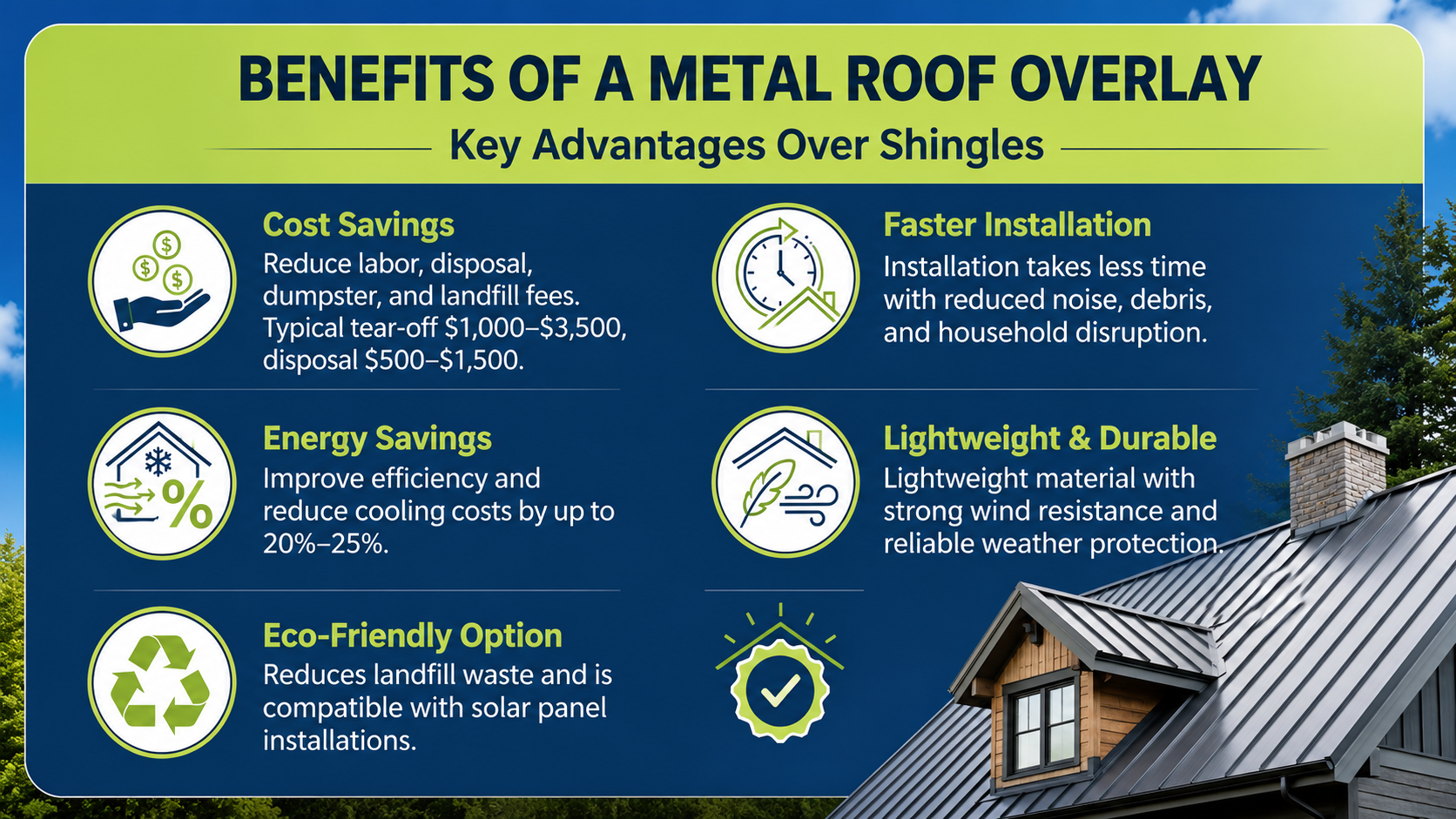
Cost savings: Choosing a metal roof over shingles without tear off helps reduce labor, disposal, dumpster rental, and landfill fees, making the project more budget-friendly for homeowners. Typical tear-off labor can range from $1,000 – $3,500, while disposal and dumpster fees may add around $500 – $1,500, depending on roof size and location
Faster installation: Since the old roof stays in place, installation usually takes less time with reduced noise, debris, weather exposure, and household disruption.
Energy savings: Metal roofing can help improve energy efficiency and reduce cooling costs by up to 20%–25%, depending on insulation, climate, and roof design.
Lightweight and durable: Metal works as a lightweight roofing material while offering strong wind resistance (based on system design and installation standards), reliable weather protection, and long-term roofing durability.
Eco-friendly option: A metal roof overlay reduces landfill waste by keeping old shingles in place and also works well as a solar panel compatible roof for future energy upgrades.
Potential Drawbacks and Risks
Hidden roof damage: One of the biggest problems with metal roof over shingles is that hidden rot, broken boards, or water damage underneath may go unnoticed without a full inspection.
Trapped moisture risks: Poor ventilation between roofing layers can create trapped moisture, which may lead to mold growth, wood rot, and reduced roof lifespan.
Weight concerns: Multiple roofing layers may add extra stress to older homes and increase the risk of sagging or structural problems over time.
Roof warranty limitations: Some manufacturers may reduce or void the roof warranty for overlay installations, depending on local codes and installation methods.
Future repair complexity: Double layer roof replacement problems can make future repairs harder because leaks are more difficult to locate between the metal roof and old shingles.
What Should Be Checked Before Installation?
✅Roof Deck Condition
Before installing metal roofing over shingles, a proper roof deck inspection before installing metal roof is extremely important. A complete roofing inspection helps check the overall roof deck condition, including signs of hidden roof damage, weak roof decking, soft spots, or existing roof leaks that could affect long-term roof performance. If there are broken boards, warped decking, or areas needing roof repair, those problems should be fixed first to avoid future roofing issues.
✅Structural Support and Roof Weight
Your contractor should also inspect the overall structural support and roof structure before installation begins. Many homeowners ask, is metal roofing lighter than shingles — and while metal is considered lightweight roofing, the combined weight of two roofing systems still needs a proper structural assessment. Signs like sagging decking, buckling trusses, or existing roof stress may point to deeper roofing weight concerns that can affect roofing stability and long-term durability.
✅Moisture or Water Damage
One of the biggest concerns during a roofing inspection is checking for moisture buildup, trapped moisture, or hidden water damage under the existing shingles. Problems like active leaks, mold growth, damaged rafters, musty attic smells, or soft roof areas may signal serious moisture problems under metal roof over shingles. If moisture gets sealed between roofing layers, it can lead to rot, deck deterioration, and long-term roofing damage.
✅Ventilation Requirements
Proper airflow is another key part of the installation process. Good roof ventilation and correct ventilation requirements for metal roof over shingles help reduce heat buildup and prevent condensation between layers. During the inspection, contractors usually check attic ventilation, airflow paths, ridge vents, and soffit vents to make sure the new roofing system will not block ventilation or reduce attic efficiency.
✅Local Building Codes and Permit Rules
Before moving forward, homeowners should also review local building codes, HOA guidelines, and local permit rules related to reroofing projects. Different areas have different metal roof over shingles code requirements, including overlay restrictions, attachment methods, ventilation standards, and roofing approval conditions. Checking these roofing regulations early helps avoid installation delays, warranty issues, or future compliance problems.
Do You Need Underlayment Beneath Metal Panels?
What Helps the Installation? | Why It Matters |
|---|---|
Synthetic Underlayment | Creates a protective layer between old shingles and metal panels while handling metal expansion and contraction better than traditional felt paper. |
Reflective Insulation (E-Foil) | Helps reflect heat, improves roof cooling efficiency, and adds an extra cushion beneath the metal roofing system. |
Furring Strips or Battens | Creates a flatter base over uneven shingles and improves airflow beneath the metal panels for better ventilation performance. |
Moisture Protection Layer | Helps reduce trapped moisture, water penetration, mold growth, corrosion problems, and long-term roof deck damage. |
Roof Ventilation and Airflow | Supports moisture control, reduces condensation buildup, and protects overall roof performance and roofing durability. |
Proper Roof Insulation | Helps maintain indoor comfort while improving long-term moisture management beneath the metal roof. |
Best Metal Roofing Options for Overlay Projects
Not all metal roofs perform the same when installed over existing shingles. Many homeowners want to save money by avoiding a tear-off, but they also want a roof that will last for decades without creating future problems. The right choice depends on your budget, how long you plan to stay in the home, and the level of protection you expect from your new roof.
1. Standing Seam Metal Roofing
If long-term reliability is your top priority, a standing seam metal roof is often considered the best option. These systems are built to handle roof loads through the home's structure instead of relying on the old shingles underneath. Models like TCM-LOK, SL-LOK, SS-LOK, and MS-LOK are popular because they offer excellent roof durability, strong weather protection, and a clean modern appearance with concealed roofing fasteners.
2. Corrugated Metal Panels
For homeowners looking for a more affordable upgrade, corrugated metal panels are a practical choice. If you're wondering can you install corrugated metal roof over shingles, these panels are commonly used for overlay projects when the roof is properly prepared. They are cost-effective, lightweight, and work well with ventilation systems that help improve overall roof performance.
3. Metal Shingles
If you like the traditional look of shingles but want the strength of metal, metal shingles and stone-coated metal roof systems offer a good balance. Products such as DECRA Shingle XD and Centura Shingles provide the familiar appearance of asphalt roofing while delivering better durability and weather resistance. For many homeowners comparing asphalt shingles vs metal roofing, this option offers the best mix of style and performance.
Which Metal Roofing Option Lasts Longest?
When it comes to roof lifespan, standing seam metal roof systems are generally viewed as the premium choice because of their strong design and long-term performance. However, quality stone-coated metal roof products also provide excellent durability. With proper installation, both options can deliver decades of reliable protection and outstanding roof performance.
Step-by-Step Installation Process
Roof Inspection and Repairs
Before starting metal roof installation, it is important to perform a comprehensive assessment of the existing roof. A detailed roof inspection should include an attic inspection, roof deck inspection before installing metal roof, and a full roof structure evaluation.
Conduct a complete roofing inspection to assess overall structural integrity.
Check for soft spots, rot damage, sagging decking, buckling trusses, and active leaks.
Check the roof support system to ensure it can handle the additional roof weight of approximately 2 lbs per square foot.
Look for rotten sheeting, damaged rafters, and other issues that may require roof repair.
Perform a compliance check with local building codes, HOA guidelines, and verify roof overlay approval requirements.
Confirm that the roof meets the two roof coverings limit and all roofing compliance standards.
Complete a final installation inspection to verify roof readiness and roof safety before moving forward.
Perform roof cleaning, including dirt removal, moss removal, and loose debris removal.
Inspect the existing shingles and complete any necessary shingle repair for loose shingles or missing shingles.
Ensure an even surface through proper roof surface leveling.
Complete edge preparation around eaves, gable edges, ridge cap shingles, and vent caps.
Installing Battens or Underlayment
Install furring strips or battens using 1x4 wood strips, 2x4 wood strips, or pine strips secured to the sheathing with wood screws.
Add synthetic underlayment or another suitable underlayment for metal roof to improve moisture management, corrosion prevention, and metal panel protection.
Consider reflective radiant barrier materials or foam board insulation to increase energy efficiency and reduce rain noise.
Install proper roof ventilation components to support a healthy airflow system and overall ventilation support.
Securing Metal Panels
Begin metal panel installation with accurate initial alignment at the roof eave.
Position metal roof panels using proper square panel placement and maintain a 3/4-inch overhang for water runoff.
Secure panels with metal roofing screws, roofing fasteners, and rubber washers in the recommended locations.
Fasten panels through the flat panel area and along the roof ribs as required by the manufacturer.
Create a secure panel overlap by joining the smaller flange and larger flange to form a watertight seal.
Make custom cuts around roof valleys, gables, and roof pipes using metal snips, nibblers, or a circular saw with a metal-cutting blade.
Verify proper roof panel fitting, panel positioning, and overall roofing alignment.
For best results, many homeowners hire a professional roofing contractor for metal roof over shingles to ensure proper installation.
Flashing and Vent Placement
Install drip edge flashing along roof edges for improved water control.
Place valley flashing in all roof valleys to direct water safely off the roof.
Seal roof penetrations around chimneys, roof vents, and other openings using compatible flashing.
Add trim installation components and secure them with pan-head screws where required.
Upgrade older skylights with a flush mount skylight, UV-resistant plexiglass, or polycarbonate skylight if necessary.
Ensure complete roofing waterproofing with proper roof edge flashing and roof sealing materials.
Install or improve attic ventilation to support airflow and reduce moisture buildup.
Review all installation detailing to confirm a secure and weather-resistant finish.
Final Inspection
Complete a thorough final inspection and roof walkthrough.
Check for loose screws, flashing gaps, and misaligned panels.
Remove all metal shavings and perform full debris cleanup.
Inspect roof gutters and look for potential drainage issues.
Verify proper sealing around ridge caps, closure strips, gaskets, and flexible pipe boots.
Review all sealant application points, including plumbing vents, gable trim, and roof edges.
Conduct a final roofing inspection process and roof condition review.
Confirm the installation meets roof warranty requirements and complete the roofing performance check before considering the project finished.
How Much Does Installation Cost?
While a roof overlay can lower upfront expenses, the total value depends on labor requirements, disposal costs, and long-term roofing considerations. Here's a quick comparison of the most common installation options.
Installation Method | Average Cost | Time Required | Key Considerations |
|---|---|---|---|
Metal Roof Over Shingles (Overlay) | $8–$12 per sq. ft. | Usually 1–2 days shorter | Can reduce project costs by 20–30%, avoids most disposal fees, and requires less labor |
Complete Roof Replacement (Tear-Off) | $12–$18 per sq. ft. | Longer installation timeline | Higher upfront cost but provides a clean roof deck and full system replacement |
Labor Savings with Overlay | Up to 25% savings | Faster project completion | Skipping tear-off reduces labor hours and overall installation costs |
Avoided Disposal Costs | Save $1–$3 per sq. ft. | No extra cleanup time | Eliminates landfill disposal charges and dumpster rental expenses |
FAQ'S
Can you install metal roofing directly over shingles?
Yes, you can install metal roofing directly over shingles through a method called a roof overlay or re-roofing. This approach is usually legal when there is only one layer of shingles, the existing shingle roof is flat and in good condition, and there are no active leaks, rot, or damage to the roof decking. The underlying roof structure must also be strong enough to support the added weight of the metal panels, which is generally around 2 lbs per square foot.
Does a roof overlay affect warranties?
Yes, a roof overlay can affect warranty coverage. Many roofing manufacturers require a full tear-off before offering a full warranty on a new metal roof. Installing metal over original shingles may result in warranty restrictions, reduced coverage, or loss of eligibility. Always review the manufacturer requirements, warranty terms, and approved underlayment systems before starting the installation.
Will a metal roof trap moisture?
A metal roof can trap moisture if proper ventilation is not provided. Humidity, rain, and condensation may become trapped between roofing layers, leading to wood rot, mold growth, deck deterioration, and other forms of moisture damage. Professional roofing contractors often install furring strips, battens, or create an air gap while keeping ridge vents and soffit vents open to improve airflow, air circulation, and long-term roofing performance.
Is underlayment required?
Yes, underlayment is an essential part of a metal roofing system. It acts as a moisture barrier, helping prevent water infiltration, while also providing corrosion protection between the old shingles and metal panels. Modern synthetic underlayments are often preferred over felt paper or tar paper because they handle thermal expansion, thermal contraction, and thermal movement more effectively, improving overall roofing durability and weather protection.
How much money can reroofing save?
Reroofing with an overlay can provide significant cost savings, often reducing the overall project budget by 20% to 30%. Homeowners save on labor costs, waste disposal, landfill fees, and dumpster rentals because the existing roof is not removed. In many cases, overlay costs range from $8 to $12 per square foot, while a complete tear-off and replacement can cost $12 to $18 per square foot, making reroofing a more affordable option.
How long will it last?
A properly installed metal roof offers exceptional longevity and can last between 40 and 70 years. With regular maintenance, many systems exceed 50 years of service life. Compared to traditional asphalt shingles, which typically last 12 to 20 years, metal roofing provides greater roof durability, improved weather resistance, better long-term value, and a significantly longer roof lifespan.