
Roof Replacement Cost in 2026
How Much Does It Cost to Replace a Roof? It’s one of the first questions homeowners ask when planning a roof replacement. The answer depends on several factors, including roof replacement cost, new roof cost, roof size, roof pitch, roof complexity, roof material, and geographic location, all of which influence the final roofing calculation and total replacement cost.
Understanding average roof cost, roofing material costs, roof installation, and long-term roof durability can help you make a smarter roofing investment. Whether you have a 2,000-square-foot roof, a 4,000 square foot house, or are comparing asphalt shingles, slate roofing, and copper roofing, this guide covers the roofing expenses, roofing options, and roofing budget considerations that affect your overall home improvement project.
Roof Replacement Cost
The roof replacement cost 2026 depends on several key cost factors, including roof size, roof material, roof complexity, labor rates, and geographic location. For a typical 2,000-square-foot U.S. home, an asphalt shingle roof is usually the most affordable roofing material, while metal roofing and slate roofing fall into the premium materials category due to their longer roof lifespan and higher installation cost.
Cost Metric | Typical Range |
|---|---|
Average Roof Replacement Cost | $14,182 |
Typical Cost Range | $6,885–$89,600 |
Cost Per Square Foot | $4–$41+ |
Most Affordable Option | Asphalt shingles |
Premium Roofing Options | Metal roof, Slate roofing |
💡Keep in Mind: The initial roofing quote is not always the final price. Factors like roof complexity, tear-off work, and unexpected repairs can add to the total replacement cost.
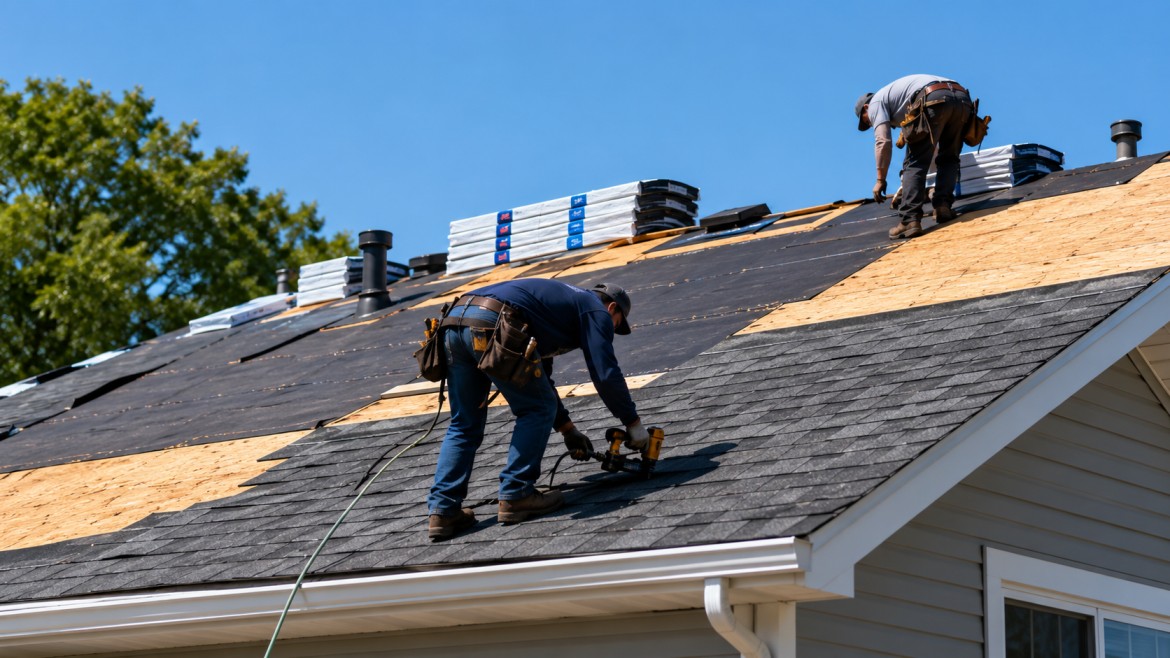
Roof Replacement Cost by Home Size
The roof replacement cost by home size increases as the roof size, square footage, and total area grow. Most roofing professionals measure roofing projects in roofing squares, where one square equals 100 square feet, making larger homes require more roofing materials, labor costs, and a higher roofing budget.
Home Size (Sq. Ft.) | Asphalt Shingles | Metal Roof |
|---|---|---|
1,000 | $4,291–$8,951 | $14,030–$41,341 |
2,000 | $8,419–$17,678 | $28,691–$82,459 |
3,000 | $12,547–$26,405 | $42,954–$123,577 |
4,000+ | $28,000–$36,000 | $48,000–$72,000 |
Besides material selection, factors such as roof complexity, steep roof pitch, multiple angles, dormers, geographic location, and regional pricing differences can affect the final roof replacement pricing. Complex designs often require additional installation time, safety equipment, and skilled labor, increasing overall roofing costs.
Roof replacement cost for different roofing materials
The roof replacement cost is heavily influenced by the roofing materials you choose. While asphalt shingles remain the most popular and affordable roofing material, options like metal roofing, clay tile, and slate roofs offer greater roof lifespan, durability, and long-term roofing value, but come with higher upfront costs.
Asphalt Shingles
Asphalt shingles remain the most popular residential roofing option because they offer a balance of affordability, weather resistance, and durability. From basic asphalt shingles to architectural shingles and premium architectural shingles, homeowners can choose different styles based on their budget, desired appearance, and expected roof lifespan.
Metal Roofing
Metal roofing is a premium choice known for its exceptional durability and long-term performance. Options such as steel roofing, aluminum roofing, copper roofing, and standing seam metal roofing provide excellent energy efficiency, heat reflection, and weather protection, making them a strong long-term roofing investment.
Clay and Concrete Tiles
Clay tiles and concrete tiles are valued for their longevity, attractive appearance, and resistance to harsh weather conditions. Although they come with a higher upfront price, these materials can deliver decades of reliable performance and are often chosen for homes where durability and aesthetics are equally important.
Wood Shakes
Wood shakes and wood shingles create a natural look that complements many residential properties. Commonly made from cedar, pine, or spruce, these materials offer good durability but require regular maintenance to prevent rot, moisture damage, and algae growth.
Slate Roofing
Slate roofing is widely regarded as the longest-lasting roofing material available. Made from natural stone, slate tile roofs combine premium aesthetics, low maintenance requirements, and exceptional longevity, making them a preferred option for homeowners seeking maximum long-term value.
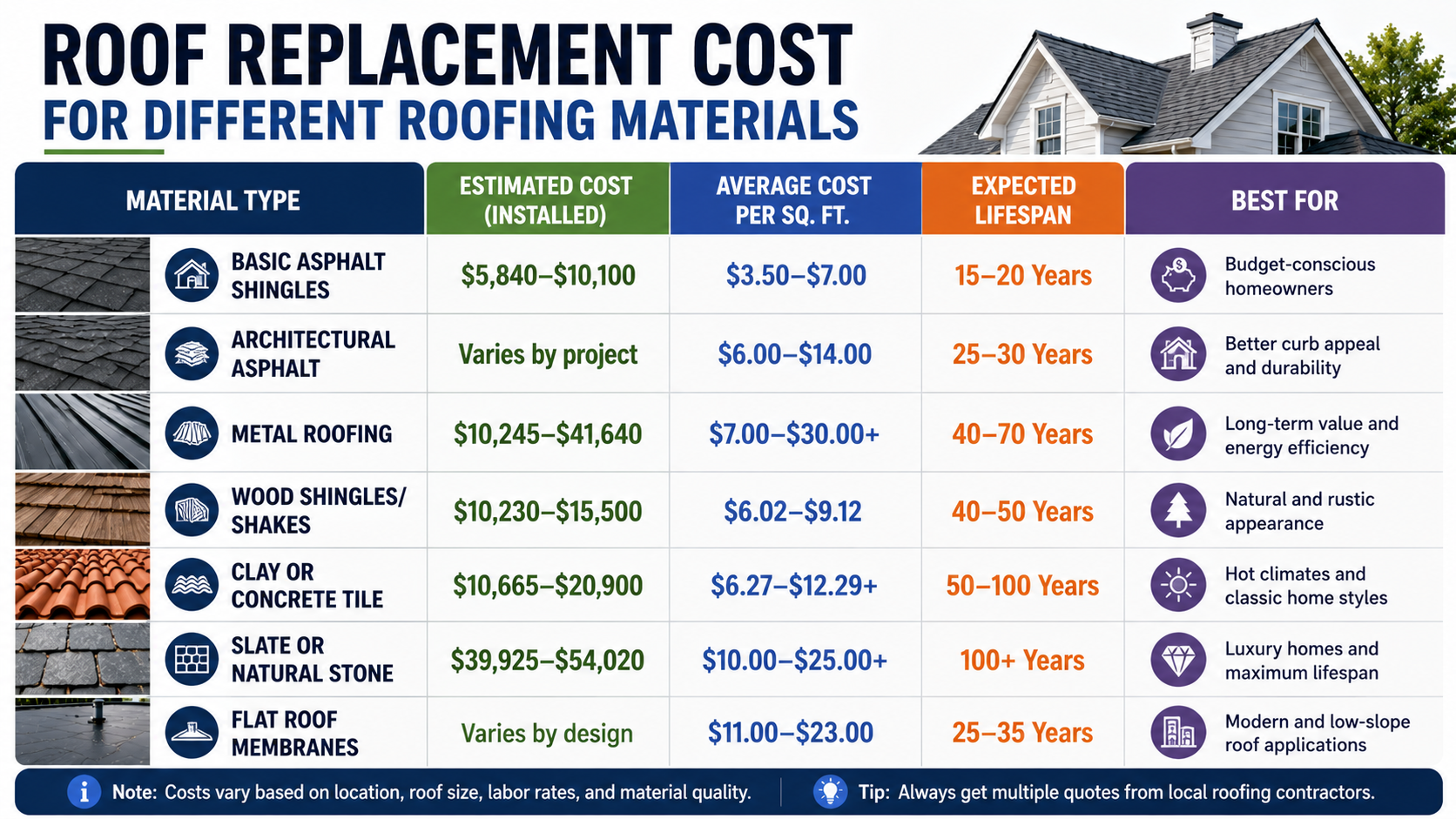
Choosing the right roofing material is about balancing upfront cost with long-term performance. The comparison table below highlights the estimated costs, lifespan, and best use for homeonwer.
Material Type | Estimated Cost (Installed) | Average Cost Per Sq. Ft. | Expected Lifespan | Best For |
|---|---|---|---|---|
Basic Asphalt Shingles | $5,840–$10,100 | $3.50–$7.00 | 15–20 Years | Budget-conscious homeowners |
Architectural Asphalt | Varies by project | $6.00–$14.00 | 25–30 Years | Better curb appeal and durability |
Metal Roofing | $10,245–$41,640 | $7.00–$30.00+ | 40–70 Years | Long-term value and energy efficiency |
Wood Shingles/Shakes | $10,230–$15,500 | $6.02–$9.12 | 40–50 Years | Natural and rustic appearance |
Clay or Concrete Tile | $10,665–$20,900 | $6.27–$12.29+ | 50–100 Years | Hot climates and classic home styles |
Slate or Natural Stone | $39,925–$54,020 | $10.00–$25.00+ | 100+ Years | Luxury homes and maximum lifespan |
Flat Roof Membranes | Varies by design | $11.00–$23.00 | 25–35 Years | Flat roofs, additions, and modern homes |
The Hidden Costs Homeowners Often Miss
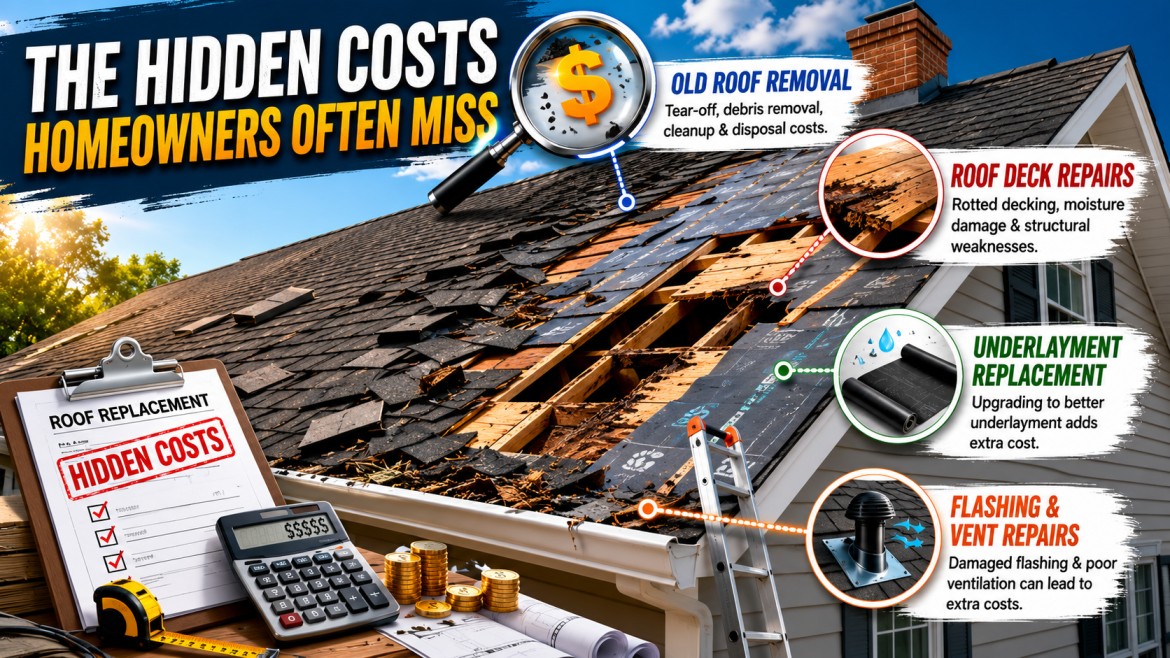
Many roofing estimates do not show the complete cost of a project because several important components remain hidden beneath existing shingles and inside the roof structure. Once contractors remove the old materials, they may discover issues such as damaged decking, underlayment problems, or ventilation deficiencies that can significantly increase the final roof replacement bill.
Old Roof Removal
Removing an old roof involves more than simply taking off shingles. The process creates a large amount of debris, including nails, flashing, and roofing materials that must be transported and disposed of properly. Tear-off and disposal costs typically range from $1 to $3 per square foot, while multiple roofing layers, cleanup labor, and landfill fees can further increase the total expense.
Roof Deck Repairs
The roof decking serves as the foundation of your roofing system, but its condition often remains hidden until the old roof is removed. If contractors find rotted decking, moisture damage, or structural weaknesses, repairs must be completed before installing new materials. In most cases, decking repairs add between $500 and $5,000+ to the project, which is why experts recommend setting aside a 10%–15% contingency fund.
Underlayment Replacement
The underlayment acts as a protective barrier between the roof deck and roofing materials, helping prevent moisture damage and leaks. While standard synthetic underlayment is commonly used, upgrading to high-temperature SBS membranes in vulnerable areas such as eaves and valleys can add hundreds or even thousands of dollars to the overall roof replacement cost, especially in colder climates.
Flashing and Vent Repairs
Damaged roof flashing around chimneys, skylights, and valleys can allow water to enter the roofing system if left unrepaired. In addition, inadequate ventilation can shorten shingle life and trap excess heat in the attic. Replacing flashing and improving airflow with ridge vents or soffit ventilation typically adds $500 to $1,500 to the project, depending on the extent of the required upgrades.
💡Keep in Mind: Hidden roofing costs are often discovered only after the old roof is removed. Setting aside extra funds can help you handle unexpected repairs without disrupting your project budget.
What Has the Biggest Impact on Roof Replacement Cost?
Roof Size
Your roof size is one of the biggest factors affecting roof replacement cost because a larger total roof area requires more materials and labor. Roofing contractors measure roofs in roofing squares, with one square equal to 100 square feet, making accurate measurements essential for reliable project pricing.
Roof Pitch
A steeper roof pitch increases installation difficulty and safety requirements, which can raise labor costs. In most cases, a steep roof adds 10% to 20% to the total project cost compared to a standard or gentle slope, while also increasing the surface area that must be covered with roofing materials.
Roof Complexity
A complex roof design with multiple gables, dormers, valleys, skylights, and chimneys requires more labor and materials than a simple roof. Complex designs can increase labor costs by 15% to 25%, while simple roof layouts often cost 15% to 20% less. Custom flashing and waterproofing around roof features may also add $500 to $1,500 per feature.
Accessibility
Limited roof accessibility can quietly add significant costs to a roofing project. Multi-story homes typically cost 15% to 30% more than single-story homes, while restricted access, tight lanes, staging challenges, and waste removal logistics can add approximately $500 to $2,000 or more to the final quote.
Local Labor Rates
Local labor rates usually account for 55% to 65% of the total roofing bill, making them one of the largest cost factors. In high-cost regions such as the Northeast and West Coast, roofing projects can cost 20% to 30% above the national average, while hurricane-prone areas may require enhanced installation methods that add an additional 15% to 25% premium.
7 Signs It May Be Time for a New Roof
One of the clearest roof replacement signs is an aging roof that has reached the end of its service life. While asphalt shingles, metal roofing, concrete tiles, terracotta tiles, and slate roofing all have different lifespans, an older roofing system is more likely to develop problems that make replacement necessary.
Active Leaks or Interior Water Damage
Persistent roof leaks, interior water damage, and ongoing moisture entry often indicate a failing roofing system rather than a minor repair issue. If you continue to notice water stains, recurring leaks, or signs of weather-related damage, a full roof replacement may be the most cost-effective solution.
Damaged or Rotting Roof Decking
Your roof decking acts as the wooden foundation that supports the entire roof. If leaks cause rotting roof decking, soft spots, or structural damage, the roof may no longer provide proper support, making replacement a safer long-term option.
Failing or Rusted Flashing
Damaged roof flashing around chimneys, skylights, valleys, and wall intersections can create easy water entry points. When rusted flashing or flashing failure allows moisture to reach the underlying structure, it can accelerate overall roofing deterioration.
Visible Structural Sagging
A sagging roof, sagging rafters, or damaged framing often points to deeper structural problems. If you notice visible dips in the roofline or signs of long-term water damage, you should seek professional inspection as these issues may require a full roof replacement.
Premature Shingle Aging from Poor Ventilation
Poor attic ventilation can trap heat and moisture inside the roof system, causing premature shingle aging. Over time, brittle shingles, reduced roof performance, and a shortened roofing lifespan can signal that your current system is nearing failure.
Severe Storm or Weather Impact
Major weather events such as hail damage, high winds, and severe storm damage can weaken roofing materials and underlayment. In colder climates, recurring ice dams around eaves and valleys may also indicate that your current roofing system is no longer providing adequate protection.
Smart Ways to Reduce Roof Replacement Costs
-3bfb782d.jpg)
Must-Do First
Get written estimates from licensed contractors
You should always get written estimates from licensed contractors to avoid overcharging and understand the real market price.Compare asphalt shingles vs metal roofing
You should compare asphalt shingles with metal roofing. Asphalt is cheaper upfront, but metal lasts longer and saves more money over time.Check roof measurement accuracy (square footage)
You must check roof measurements carefully because even small errors in square footage can increase your final bill.Avoid hidden costs (layers, rotten decking, structural repairs)
You should ask about hidden costs early, like extra layers, rotten decking, or structural repairs, to avoid surprises later.
Smart Savings Moves
Schedule in November–December (off-season)
You should try to schedule your roof work in November or December. During this off-season, contractors are less busy and you can often get 10–15% discounts.Bundle upgrades (ventilation, skylights, attic baffles)
You can also save money by bundling small upgrades together. Things like ventilation fixes, skylight work, or attic baffles are cheaper when done in one job instead of separate visits.
Check rebates (solar + battery options)
It is also a good idea to check for rebates. If you include solar panels or battery systems, you may qualify for savings of up to $10,000 depending on your area.
⚠ Skip if You’re in a Hurry
You can ignore things like roof color selection, minor maintenance details, and technical lifespan comparisons if your main goal is to make quick and smart decision