
How to Remove Rust From a Metal Roof: Step-by-Step Guide to Repair and Prevent Future Damage
Rust on a metal roof can appear faster you think, especially if you live in an area with high humidity, coastal salt spray, or frequent rain. At first, a few rust spots may seem like a sign that your roof needs to be replaced. But in most cases, that's not true. Small rust spots can often be removed and repaired before they turn into a bigger problem. The key is finding the cause and fixing it before the damage spreads.
In this guide, you'll learn
What causes rust on a metal roof
How to tell if it's serious
The safest way to remove rust
When repainting is enough
How to keep rust from coming back.
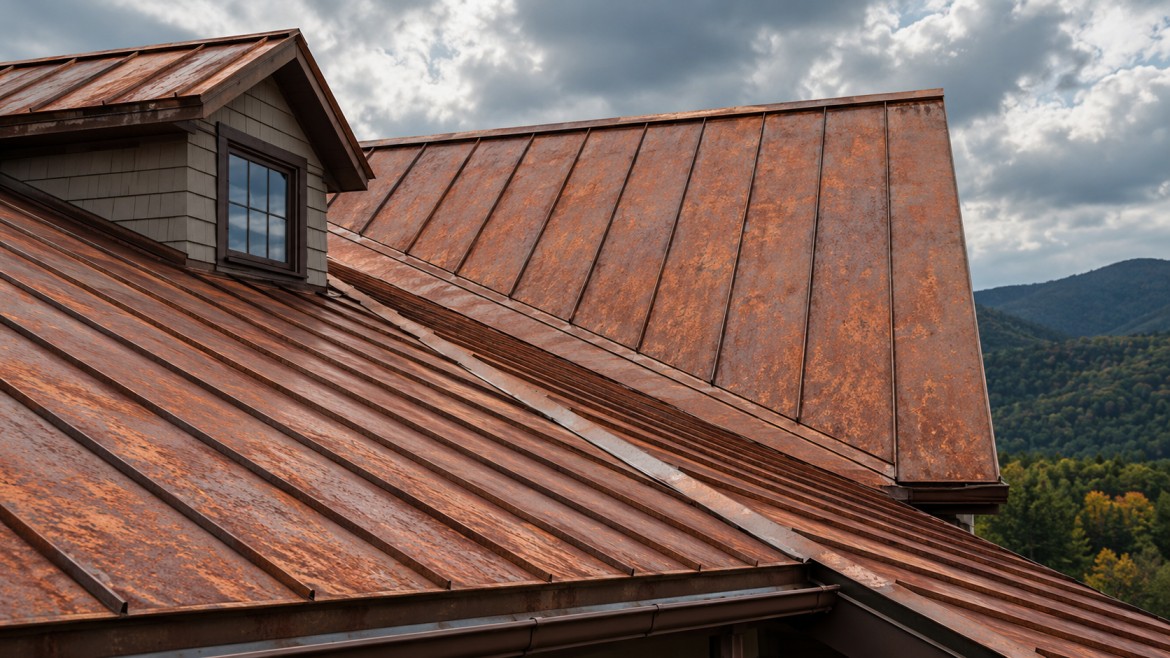
What Causes Rust on a Metal Roof?
Several factors can cause rust on a metal roof, from damaged coatings to poor maintenance. Identifying the source of the problem is the first step toward choosing the right repair and protecting your roof for years to come.
Damaged Paint or Protective Coating
One of the biggest causes of rust on a metal roof is oxidation. This natural chemical process starts when steel or other iron-based alloys are exposed to oxygen and moisture. Over time, this reaction forms iron oxide, the red-brown compound you see as flaky rust. If your roof has a damaged protective paint system or a worn protective coating, moisture can reach the metal surface more easily, increasing the risk of corrosion.
Scratches and Installation Damage
If your roof was not installed correctly, it may be more likely to rust. Surface scratches, damaged protective coatings, construction debris, or exposed fasteners with worn rubber washers can leave the raw metal exposed. Once moisture gets into these small areas, rust can begin to form if the damage is not repaired quickly.
Metal Shavings (Swarf) Left After Installation
After a metal roof is installed, small metal shavings or steel shavings should be cleaned off right away. If they stay on the roof and get wet, they can rust quickly. This may cause premature rusting and leave surface stains, even when the roof itself is still in good condition.
Standing Water and Poor Drainage
Your roof needs to dry properly after rain or snow. If moisture stays on the roof because of poor attic ventilation or trapped condensation, the roof can remain damp for a long time. Over time, this may cause the metal to rust from inside, especially if the water cannot drain or dry properly.
Coastal Salt Exposure
If you live near the coast, your roof may rust faster than expected. High humidity, frequent rain, snow, salt spray, and ocean air can speed up rust formation. Pollution, environmental pollutants, and acid rain can also weaken the protective paint system, making your roof more likely to develop corrosion.
Is the Rust Serious Problem
Not always. Rust on a metal roof does not always mean you need a roof replacement. If you only see surface rust, you can often fix it before it turns into serious rust. But if untreated rust continues to spread, it can lead to metal corrosion, holes, roof leaks, moisture damage, and even structural decay. Over time, water can reach the rafters, insulation, and rotten decking, causing mold growth, interior damage, and weakening your home structure. Acting early helps protect your roof integrity, improve roof lifespan, and reduce repair costs caused by long-term rust deterioration and hidden damage.
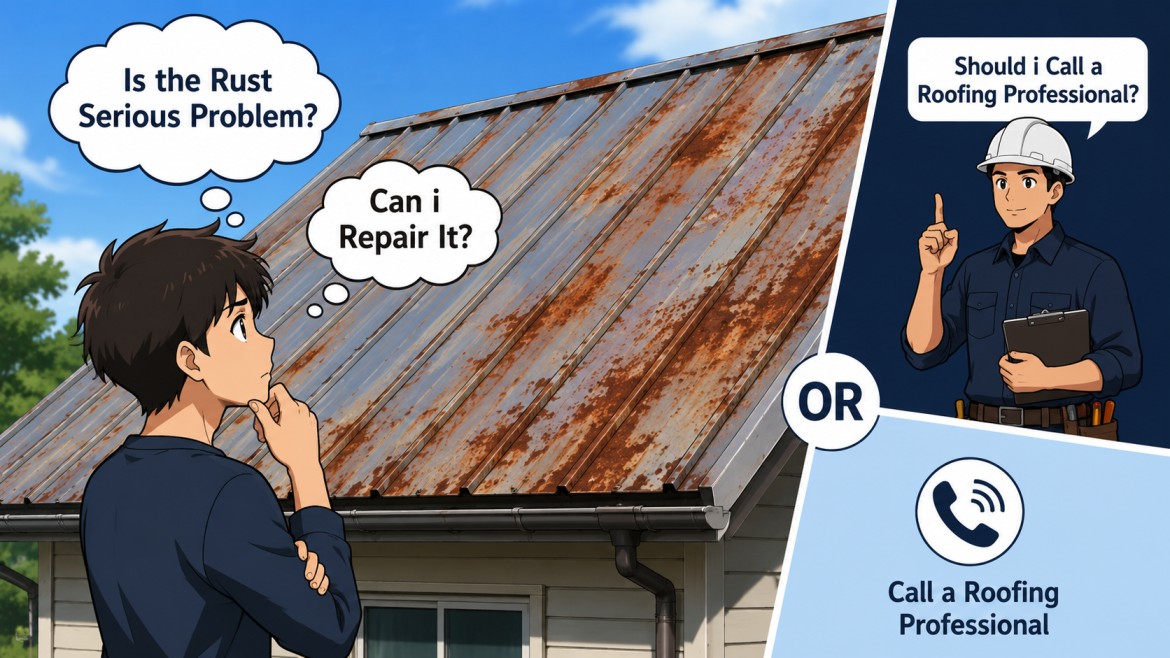
When You Can Repair It Yourself
If the rust is only on the surface and the damaged area is small, you can usually repair it yourself. Always work safely by using a secure ladder, wearing non-slip shoes, and avoiding wet or steep roofs.
Clean Surface Rust
Use a wire brush or mild abrasive cleaner to remove loose surface rust. Once the area is clean, apply a rust-inhibiting primer followed by matching paint to seal the bare metal.
Tighten or Replace Loose Fasteners
Check for loose fasteners, loose screws, or cracked rubber washers. Tighten them if possible, or replace damaged fasteners with new ones to help prevent roof leaks.
Seal Small Holes
Small holes or punctures can often be repaired with a polyurethane sealant or butyl-based elasto-meric sealant. If the hole is larger, install a metal patch and seal the edges properly.
Remove Metal Shavings
Brush away metal shavings left after installation because they can rust quickly and leave surface rust stains on your metal roof.
Keep Up With Regular Maintenance
Routine roof cleaning, roof inspection, and metal roof maintenance help you find small problems early and reduce future rust damage.H3: When You Should Call a Roofing Professional.
When You Should Call a Roofing Professional
Some rust problems are too serious or complex to repair yourself. In these situations, hiring a qualified expert is the safest and most reliable option.
Rust Keeps Coming Back
If you notice persistent rust, widespread damage, or signs of structural damage, schedule a professional inspection. A roofing expert can find hidden damage, inspect the roof deck, and recommend the right professional roof repair.
Your Roof Has Complex Details
Repairs on a standing seam metal roof, complex flashing, chimneys, skylights, or roof valleys require specialized tools and roofing expertise. Incorrect repairs can lead to more roof leaks and costly damage.
Protect Your Warranty
Hiring a certified professional helps protect your manufacturer warranty and warranty protection. It also ensures your roofing system is repaired correctly for long-term performance.
Tools and Materials You'll Need Before Removing Rust
Before you start removing rust from a metal roof, make sure you have the right tools and supplies ready. Using the proper equipment helps you work safely, protects your metal roof, and gives you a better repair. If your roof manufacturer recommends specific products, use those whenever possible to keep the repair compatible with your roofing system.
Essential Safety Gear
Before climbing onto your roof, gather these safety items:
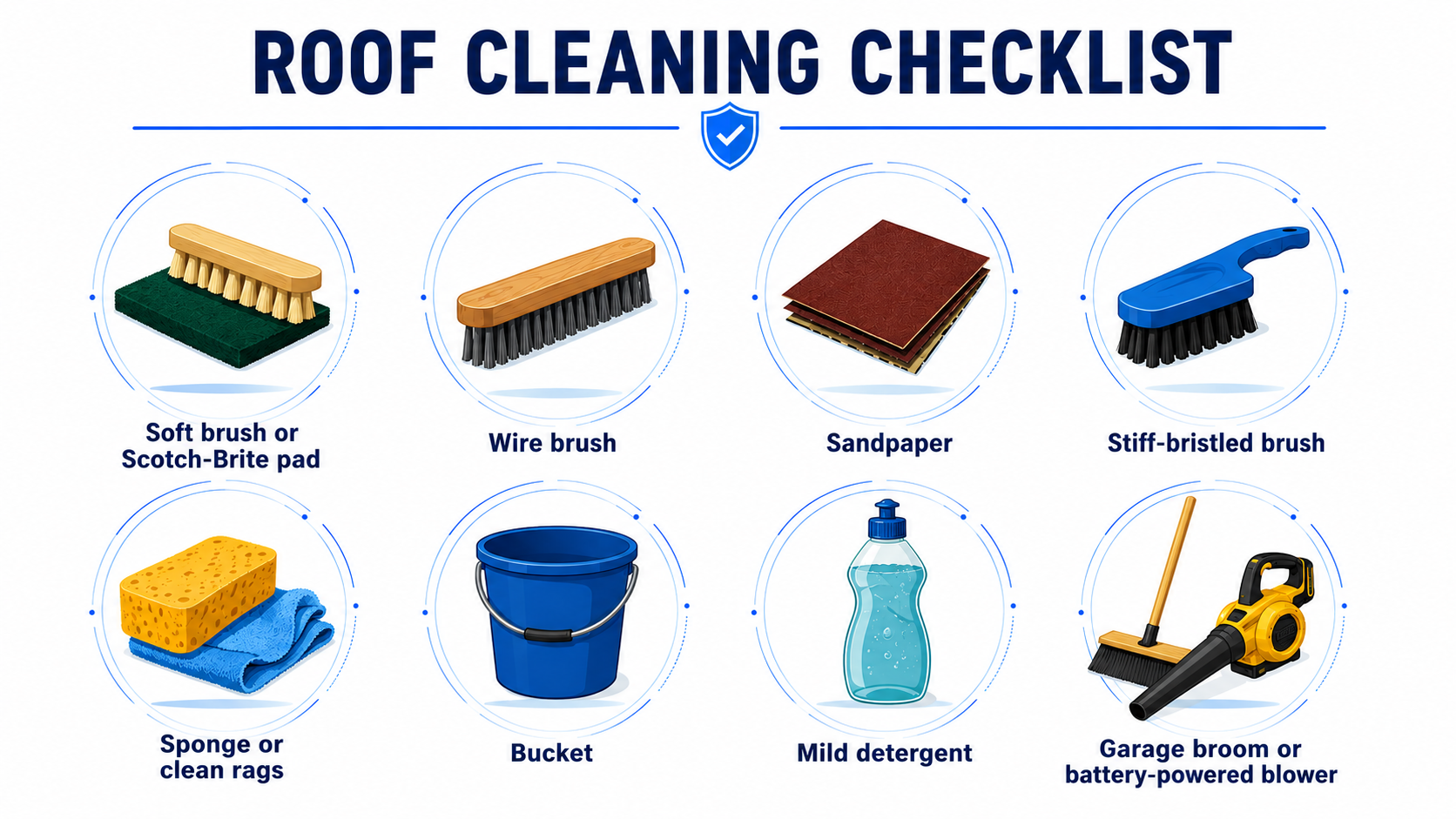
Cleaning and Surface Preparation Tools
You'll need these tools to clean the roof and prepare the metal surface before repairing rust:
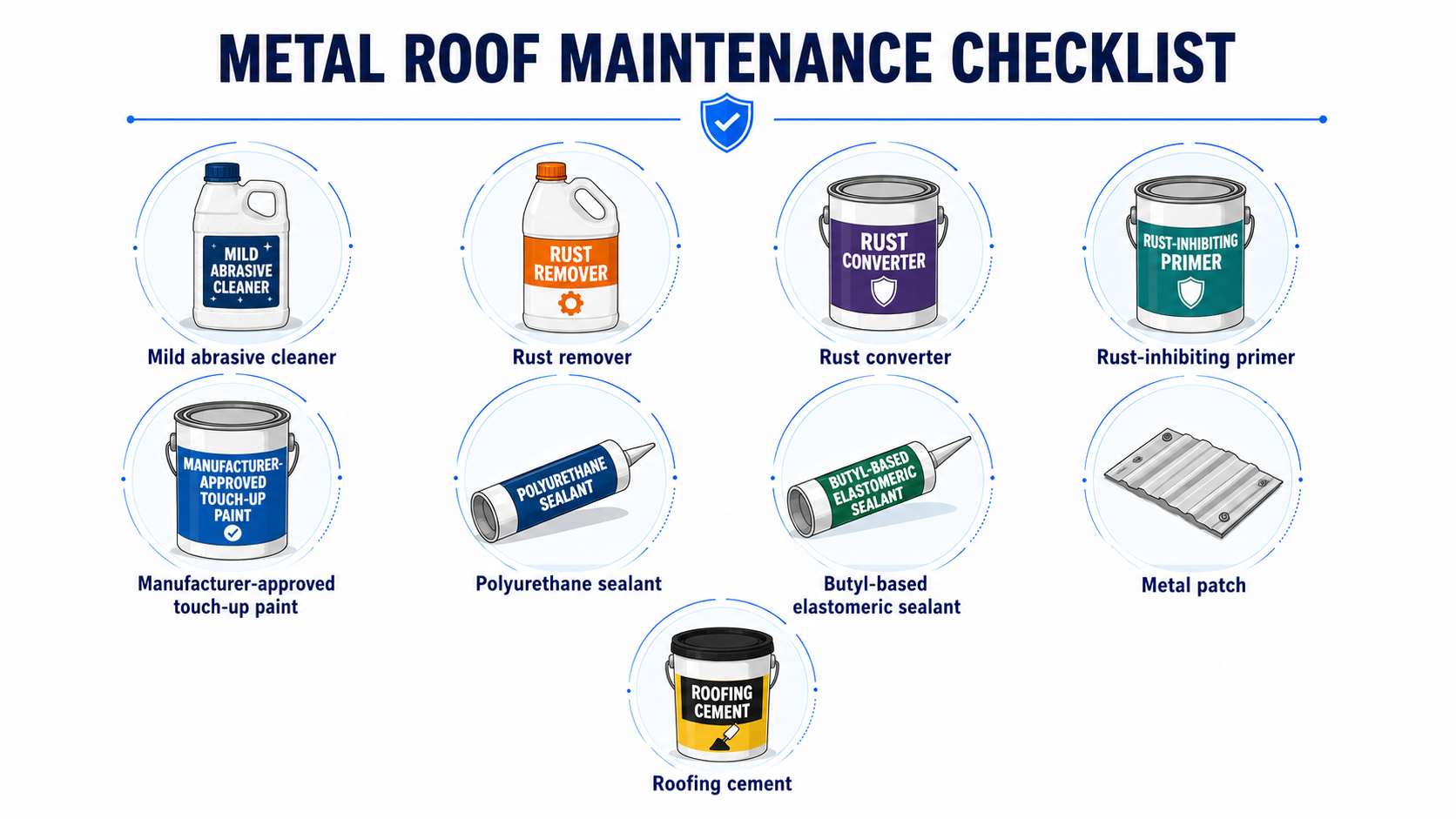
Rust Removal and Repair Materials
Keep these products ready to remove rust from metal roof, protect the metal, and complete the repair:
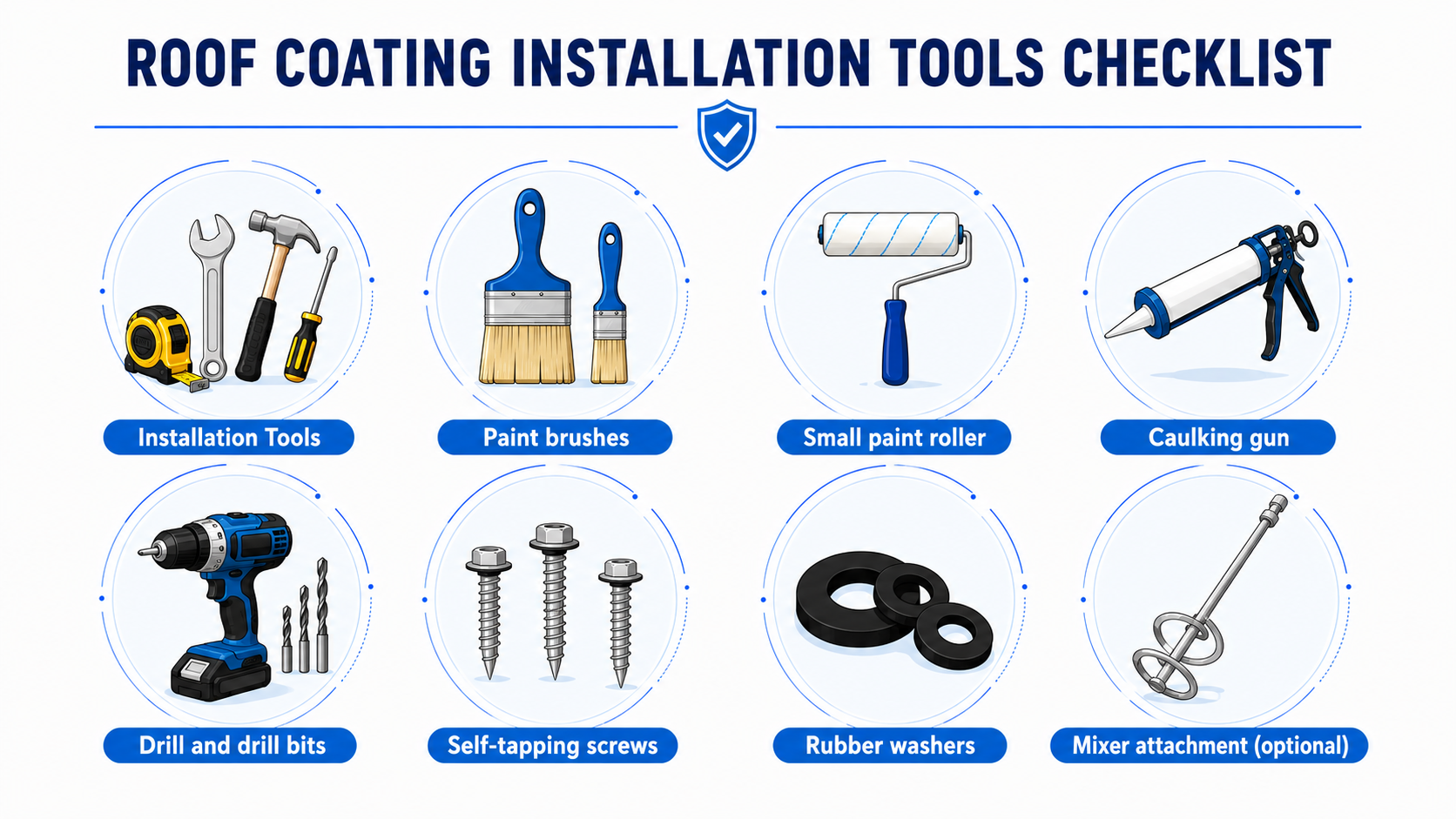
Installation Tools
These tools help you apply coating on roof, repair/installtion products and secure replacement materials:
How to Remove Rust From a Metal Roof
Before you start, inspect the damaged area carefully and gather the right tools. If you are wondering how to remove rust from a metal roof, the best repair method depends on whether you are dealing with surface rust stains or actual corrosion. Using the correct products in the right order helps protect your metal roof, prevents further damage, and gives you longer-lasting repair results.
Step 1 – Inspect the Rust
Before you begin any roof repair, inspect the affected area to see whether you have surface rust or deeper actual corrosion. This first inspection helps you decide the best way to remove rust from a metal roof and whether you can handle the repair yourself or need professional help. Wear the right safety gear, including work gloves, safety glasses, and non-slip shoes. Since a metal roof can become slippery, especially after roof cleaning or on a wet roof, always use a secured ladder, fall protection equipment, and other personal protective equipment.
Step 2 – Clean the Roof
Before you remove rust stains from a metal roof, clean the area thoroughly. If the stains are caused by uncoated metal particles or steel shavings left after installation, use a mild abrasive cleaner or soft scrub with a non-abrasive pad. This is one of the safest ways to clean rust from a metal roof without damaging the finish. For tougher stains, use a cleaning solution made with water, vinegar, citric acid, phosphoric acid, or muriatic acid. Apply it with a rag using gentle circular motions, then rinse the roof surface immediately.
Step 3 – Remove Loose Rust
Once the roof is clean, you can remove rust from a metal roof by getting rid of all loose rust before it spreads. If you need to fix rust on a metal roof, choose the rust removal method that matches the amount of corrosion. Start with the least aggressive option and only move to stronger methods if needed. After removing the rust, clean away all loose flakes, dust, and rust particles so the repair products can bond properly.
Method 1 – Soft Brush or Scotch-Brite Pad
Use a soft brush or Scotch-Brite pad when you only need to remove light surface rust from a painted metal roof. This gentle method helps remove rust without scratching the existing protective coating.
Method 2 – Sandpaper
If the rust is more noticeable, use fine-grit sandpaper to remove the damaged layer until you reach clean, bare metal. This method works best for small areas with active corrosion.
Method 3 – Rust Remover
Apply a quality rust remover if brushing alone cannot remove the rust. Follow the product instructions carefully, then rinse the area well before moving to the next step.
Method 4 – Rust Converter
If some rust remains after cleaning, apply a rust converter. It reacts with the rust and changes it into a stable protective layer that helps stop future corrosion.
Step 4 – Clean the Surface Again
After removing the rust, wipe away all remaining dust, debris, and loose rust particles with a clean cloth or soft brush. Make sure the metal surface is completely clean and dry before applying primer. This helps the primer stick better and creates a stronger, longer-lasting repair.
Step 5 – Apply Metal Primer
To repair a rusted metal roof, apply a high-quality rust-inhibiting primer or metal primer over the repaired area. The primer creates a protective barrier against future oxidation, improves paint adhesion, and helps extend the life of the repair. Follow the manufacturer's recommended drying or curing time before moving to the next step.
Step 6 – Apply Manufacturer-Approved Touch-Up Paint
After the primer has dried, paint a rusted metal roof using a manufacturer-approved touch-up paint that matches your existing roof color. This protective finish seals the repaired area, restores the roof's appearance, and helps prevent future corrosion.
Step 7 – Let It Cure and Inspect the Repair
Allow the repaired area to cure completely according to the paint manufacturer's instructions. Once it has dried, inspect the repair carefully to make sure the coating is even, fully sealed, and free from missed rust spots. Regular inspections help keep your metal roof in good condition and catch new rust before it spreads.
Common Mistakes to Avoid
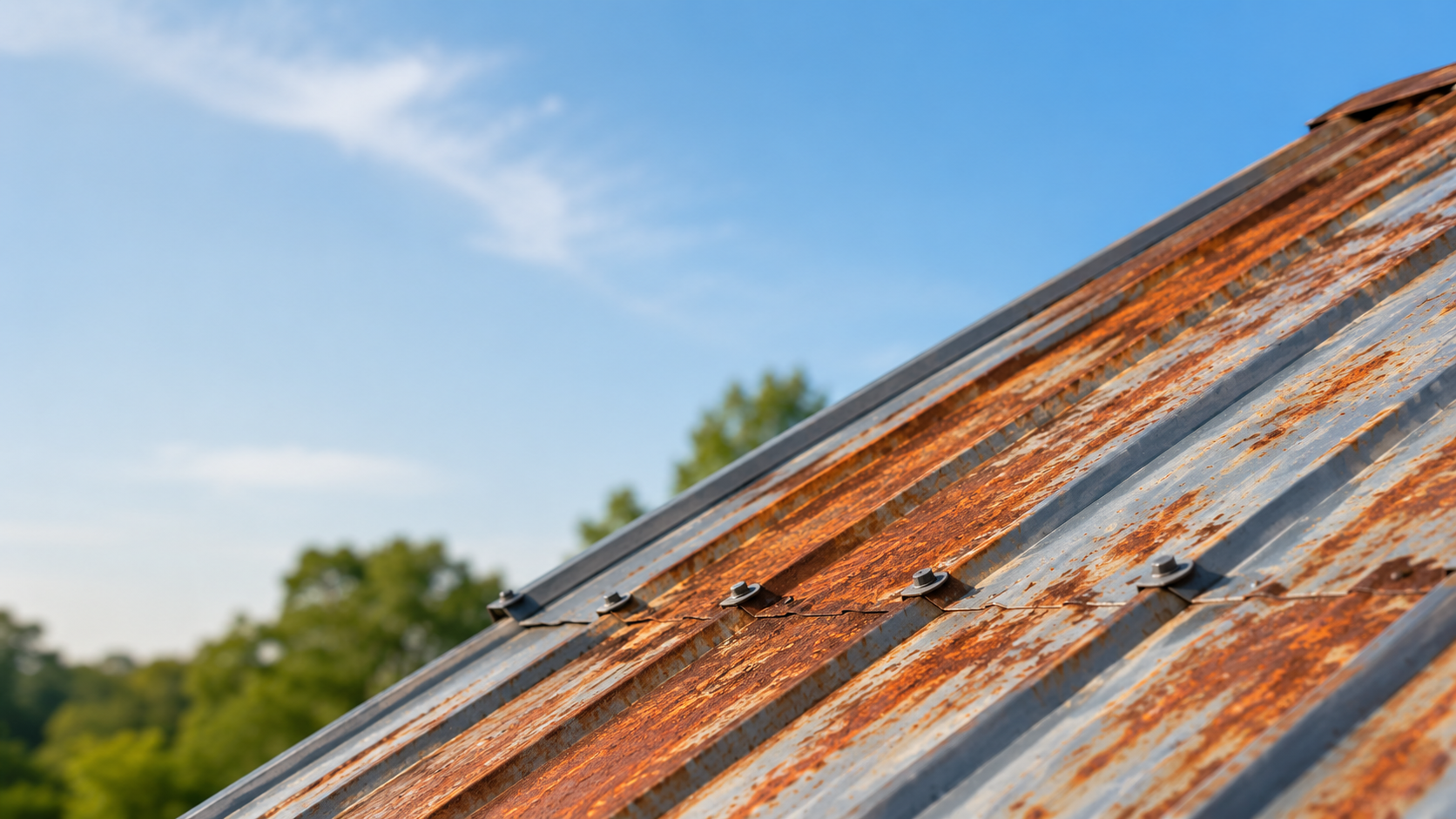
Even small mistakes can cause rust on a metal roof to return sooner than expected. Avoiding these common problems helps protect your metal roof, reduce repair costs, and improve its lifespan.
Choose the Right Materials for Your Climate
Not every roofing material works well in every location. Choose roofing materials that match your local climate to help reduce the risk of future corrosion.
💡 Quick Tip: Avoid light gauge steel (such as 24 gauge steel or 26 gauge steel) if stronger protection is needed. In salt-laden coastal environments, avoid bare steel and Corten steel (weathering steel) because salt spray can cause rapid corrosion.
Avoid Installation Mistakes
Small installation errors can create bigger problems later. Always remove construction debris, metal shavings, and steel particles after installation because they can cause premature rusting and surface stains.
✅ Do | ❌ Don't |
|---|---|
Remove metal shavings after installation | Leave construction debris on the roof |
Use proper screw pressure | Overtighten screws |
Maintain good attic ventilation | Ignore trapped moisture |
💡 Quick Tip: Avoid overtightening screws or using too many exposed fasteners, as both can increase the risk of leaks. Good attic ventilation also helps prevent condensation and rust from inside.
Use Safe Cleaning Methods
Keep your cleaning routine simple to avoid damaging the roof.
✅ Clean the roof with water or mild detergents.
✅ If you use acid-based solutions for severe stains, rinse them off within the recommended time.
✅ Keep gutters clear to prevent pooled water, leaks, and corrosion.
⚠ Avoid This: Do not use steel wool, wire brushes, or sandpaper for routine cleaning on a painted metal roof, as they can damage the protective coating.
Repair Rust the Right Way
Never apply paint or roof coatings over loose rust or flaky rust. Clean the area first, then apply a rust converter or rust-inhibiting primer before repainting.
⚠ Avoid This: Do not pour used rust primer back into the original container, and avoid applying roof coatings in low temperatures because they may not cure properly.
Final Thoughts
Rust on a metal roof doesn't always mean you need a replacement. With early repairs, proper cleaning, and regular maintenance, you can stop corrosion from spreading and extend your roof's lifespan.
If you have questions about metal roofing, roof repairs, or maintenance leave a comment below. Snows Brain can help you understand your repair options and keep your metal roof in the best possible condition.