
Are Metal Roofs Better Than Shingles?
What Are Shingles Made From?
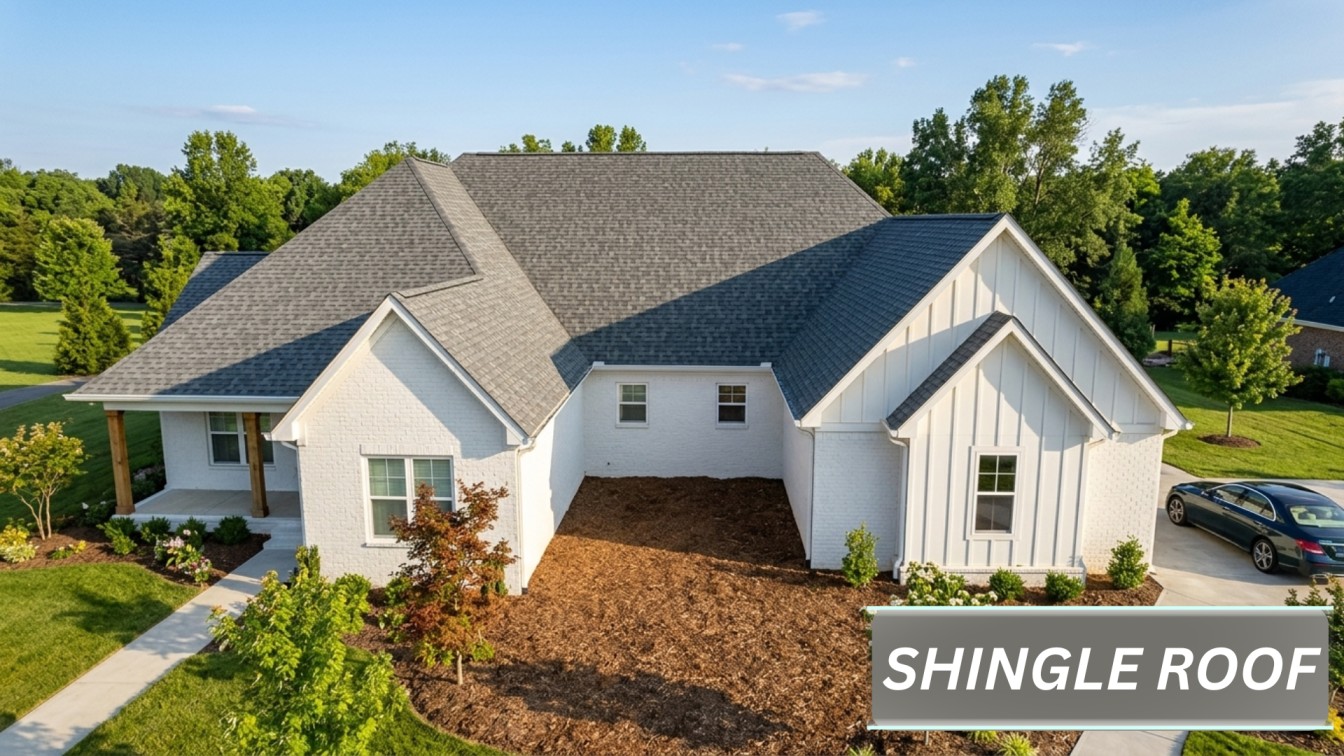
Most asphalt shingles use a multi-layer design that starts with a fiberglass or organic felt base material. This layer is covered with an asphalt coating, a petroleum-based waterproofing agent that helps protect the roof from moisture.
Modern architectural shingles often include polymer-modified asphalt and fiberglass mats for added strength and durability enhancement. The surface is finished with mineral granules or ceramic granules, which provide UV radiation protection and help reduce environmental wear. While they remain a popular choice in residential construction, they contain significant petroleum content and can contribute to landfill waste over time.
What Are Metal Roofs Made Of?
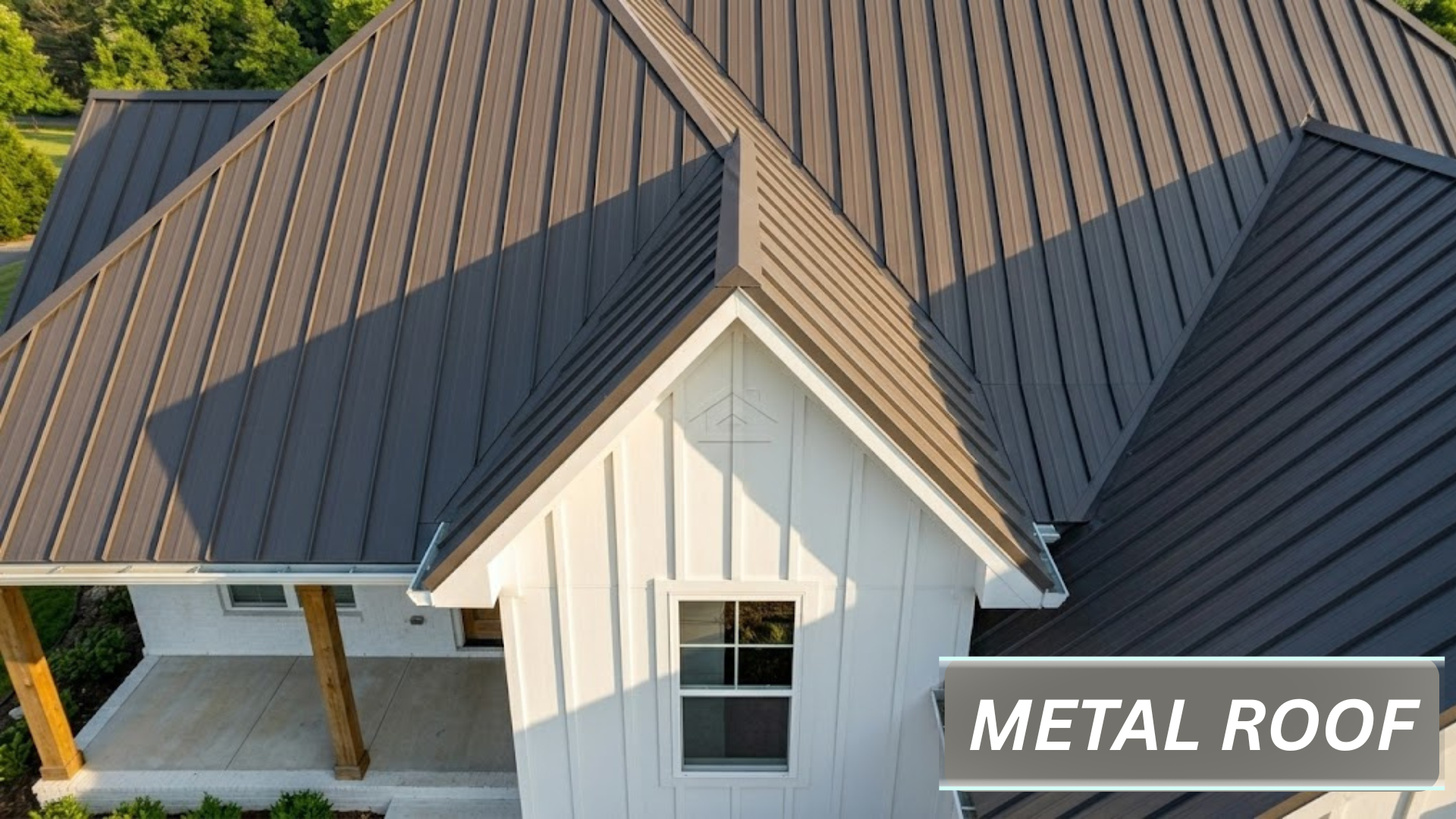
In comparison, metal roofs are built from strong roofing materials such as steel, aluminum, copper, and zinc. These durable metals offer excellent corrosion resistance, rust resistance, and long-term weather protection. Many systems use galvanized steel or a Galvalume coating with a zinc and aluminum blend to improve roofing performance.
Premium options may include stone-coated steel, standing seam panels, or metal shingles with PVDF or Kynar 500 paint finishes that improve solar heat reflection, energy efficiency, and overall roof lifespan. Because they are often made with recycled materials and are 100% recyclable, metal roofing is widely considered a sustainable roofing solution with a lower environmental impact.
Find the Best Roofing Option Based on Your Goals
Where Metal Roofs Outperform Shingles Roof
Longer Lifespan and Better Long-Term Value
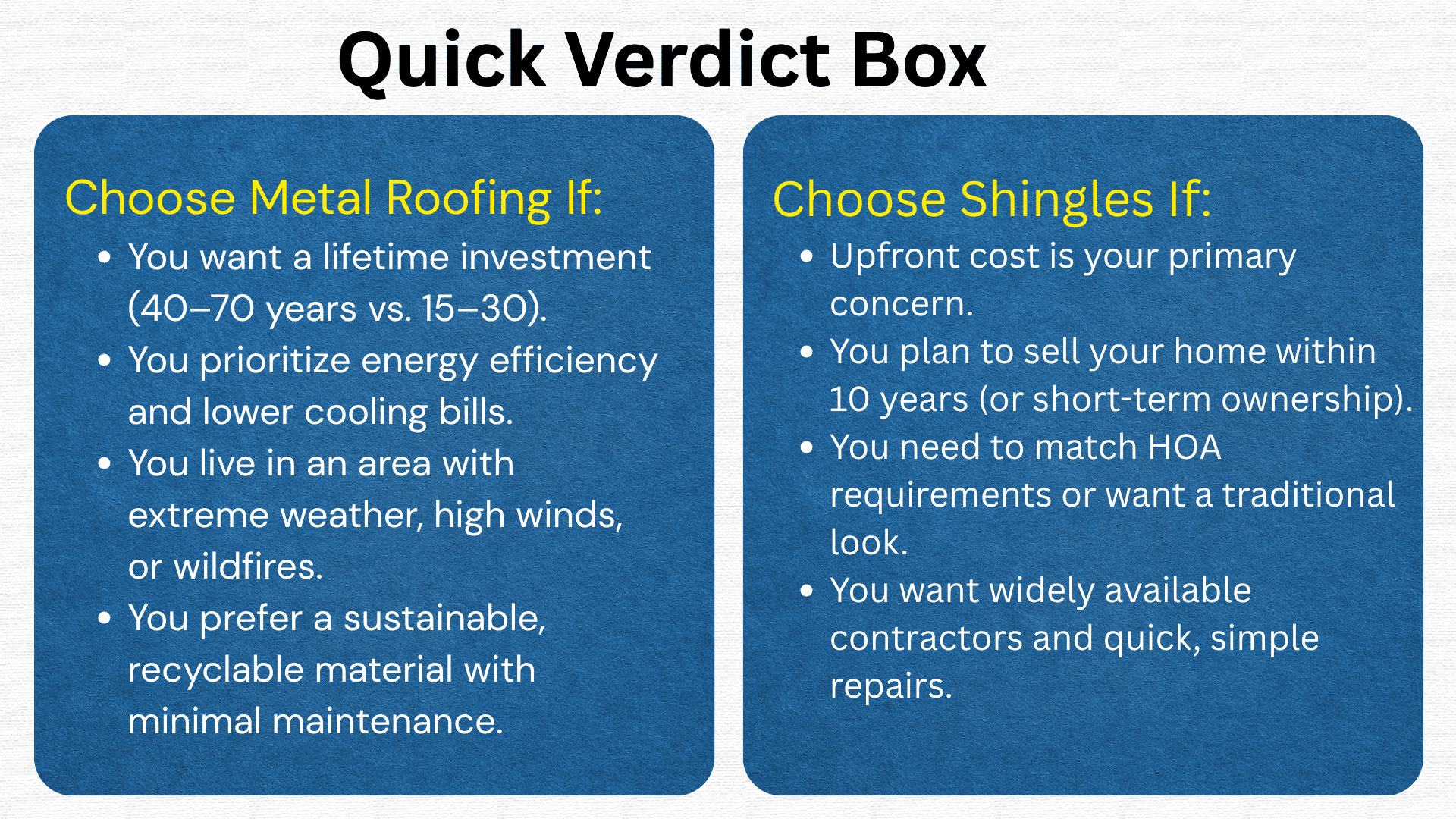
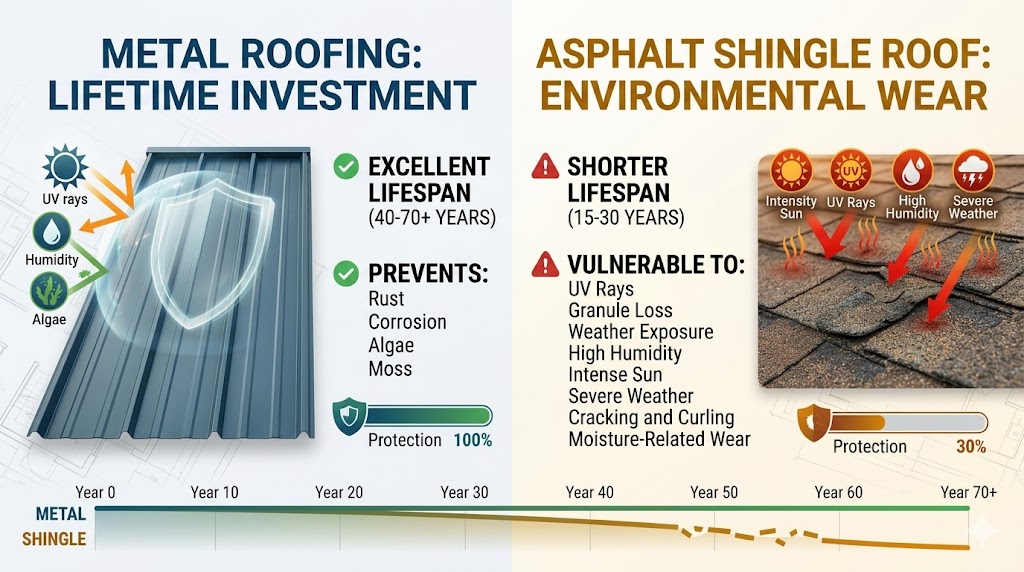
One of the biggest reasons homeowners choose metal roofing is its unmatched longevity. A metal roof is often viewed as a lifetime investment because it can last 40 to 70 years, while shingles usually need replacement after 15 to 30 years. This longer roof lifespan provides excellent long-term value, making it a smart roofing investment for homeowners who want lasting durability and dependable roofing performance.
Stronger Protection Against Weather and Storms
When it comes to severe weather, metal roofs are often considered a weather warrior. They offer superior weather resistance against 140+ mph winds, wildfires, heavy snow, and hail. Features such as wind resistance, fire resistance, snow resistance, and hail resistance help improve roof protection and overall climate resilience, making metal a strong choice for areas exposed to harsh weather conditions.
Better Energy Efficiency and Sustainability
Another advantage of metal roofing is its impressive energy efficiency. Through heat reflection, metal roofs reduce solar heat absorption, improve cooling efficiency, and can help lower cooling costs during summer cooling seasons. Many products are made with recycled content, use renewable materials, and are 100% recyclable, supporting environmental sustainability and making metal an eco-friendly roofing option.
Lower Maintenance Requirements
Metal roofs are known for their low maintenance needs. They provide strong rust resistance and corrosion resistance, while also resisting biological growth such as algae and moss. With occasional cleaning, basic roof inspections, and minimal roof maintenance, homeowners can enjoy long-term maintenance savings from a high-performance roofing system.
Where Shingles Have the Advantage
Lower Upfront Costs and Easier Installation
The biggest advantage of asphalt shingles is their affordability. As a budget-friendly standard, they offer a lower upfront cost and excellent roofing affordability for budget-conscious homeowners. Their ease of installation, quicker installation times, and wide network of roofing contractors make them a practical and cost-effective roofing option for many homes.
Simpler Repairs and Wider Contractor Availability
Shingles are also easier to repair when damage occurs. Most localized repairs, roof repair projects, and maintenance work can be handled by experienced local contractors without specialized equipment. Their high repairability, broad contractor availability, and status as a common roofing material make them an accessible roofing solution for many homeowners.
Traditional Appearance and Neighborhood Acceptance
For homeowners who prefer a classic style, shingles offer a familiar traditional look with a wide range of colors, textures, and roofing styles. Their strong curb appeal, attractive roofing appearance, and compatibility with many HOAs and housing communities make them a popular choice in residential neighborhoods.
Areas Where Shingles Fall Short
Despite their benefits, shingles have a shorter lifespan and may struggle in harsh climates and hot climates. Over time, UV degradation, granule loss, cracking, and curling can lead to high maintenance, frequent repairs, and additional repair costs. Because asphalt tends to absorb and retain heat, shingles often provide lower energy efficiency, which can increase cooling bills. Their petroleum-based material composition and contribution to landfill waste also raise concerns about environmental impact and long-term sustainability.
Are Metal Roofs More Expensive Than Shingles?
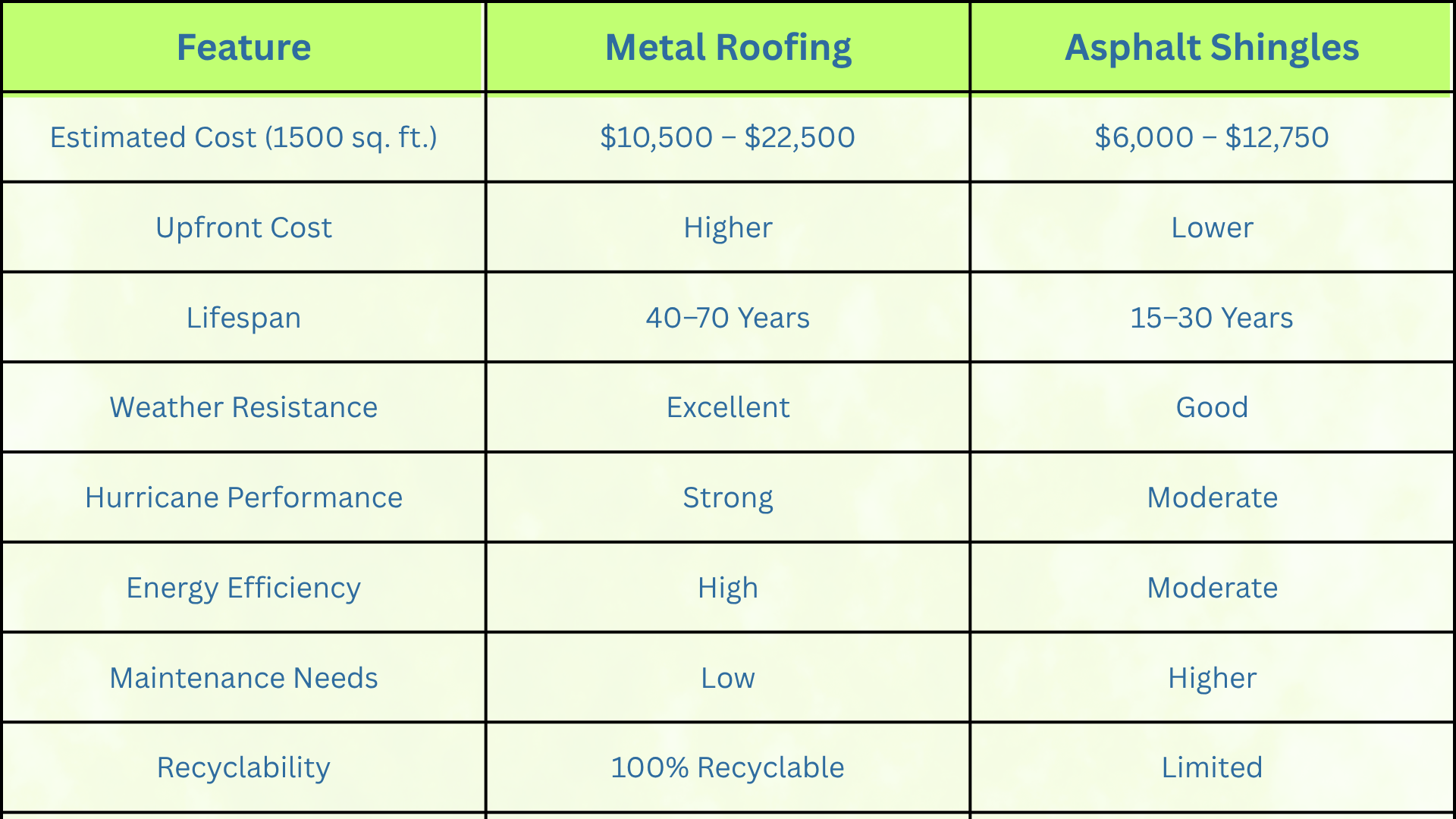
Yes, metal roofs are generally more expensive than asphalt shingles when looking at the upfront cost and installation cost. In most cases, metal roofing costs around two to five times more than shingles because of higher material costs, specialized installation, and the skilled labor required to fit metal panels correctly.
The table below provides a quick overview of how metal roofing and asphalt shingles compare in terms of cost, lifespan, maintenance, energy efficiency, and overall value.
Metal Roof vs Shingles Life Expectancy
Metal Roofing Lifespan
When comparing roof life expectancy, metal roofing stands out as a true lifetime investment. Most metal roofs have a excellent lifespan , depending on the material and installation quality.It prevents :
rust
corrosion
algae
moss
Asphalt Shingle Roof Lifespan
In comparison, asphalt roof have a shorter lifespan because they are more vulnerable to environmental wear over time. Their durability depends on the type of shingle used, such as 3-tab shingles, architectural shingles, or luxury shingles, as well as local weather conditions. Over the years, shingles can be affected by:
UV rays
Granule loss
Weather exposure
High humidity
Intense sun
Severe weather
Cracking and curling
Moisture-related wear
These factors can gradually lead to roof deterioration, increase maintenance needs, and shorten the overall life of the roof.
Metal Roof vs Shingles in Hot Climate
Shingle Problem: Why Heat Gets Trapped
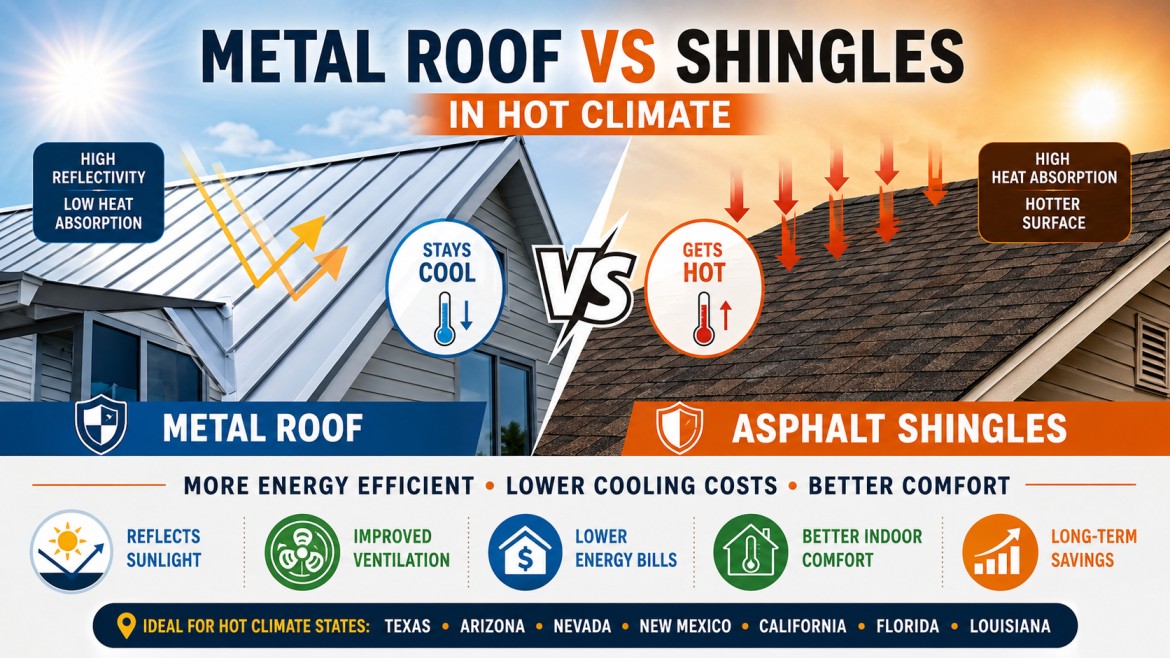
In warm regions, your roofing material can significantly influence indoor comfort and monthly utility bills. Traditional asphalt shingles absorb large amounts of solar radiation throughout the day. As temperatures rise, that stored heat can move into the attic and living areas below, causing air conditioning systems to work harder to maintain a comfortable environment.
This issue is particularly noticeable in states such as Texas, Arizona, Nevada, New Mexico, and parts of California, where rooftops are exposed to intense sunlight for extended periods. Over time, increased heat gain can lead to higher electricity usage and reduced overall efficiency.
Metal Solution: Reflecting Heat Instead of Absorbing It
Metal roofs are engineered to reflect a significant portion of the sun’s rays rather than retain them. Many modern systems incorporate reflective coatings and a high Solar Reflective Index (SRI), helping to keep roof surface temperatures lower during peak sunlight hours.
This reflective capability has made metal one of the preferred roofing materials in regions where summer temperatures remain high for much of the year.
Lower Cooling Costs and Better Energy Efficiency
Metal roofs can help reduce the amount of heat due to thermal performance,. Another benefits such as batten systems, ventilation channels, and air gaps further improve temperature regulation.
Potential benefits include:
Lower energy bills
Reduced electricity consumption
Greater indoor comfort
Improved cooling performance during summer
In states such as Texas, Arizona, Florida, Louisiana, and Nevada, where air conditioners often run for long periods, these advantages can translate into meaningful savings over time.
Are Metal Roofs Better Than Shingles in a Hurricane?
Metal Roofing
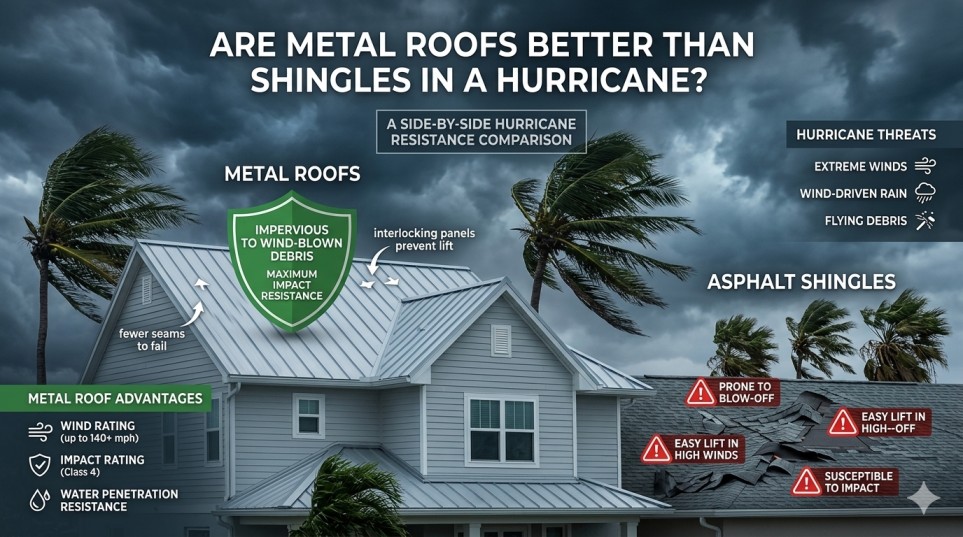
Metal roofs are built for extreme weather. Many systems can withstand 140+ mph winds, and their interlocking panels help reduce the risk of water intrusion, flying debris, and major roof damage during hurricanes.
Asphalt Shingles
Asphalt shingles can perform well in moderate storms, but they are generally more vulnerable to wind uplift and shingle loss during powerful hurricanes. This often leads to more repairs and maintenance after severe weather events.
For homeowners in hurricane-prone regions such as Florida, Louisiana, and the Carolinas, metal roofing usually provides stronger wind resistance, better storm protection, and greater long-term durability than shingles.
Insurance and Resale Value
A roof is more than a protective layer—it can also influence how buyers view a home. Many homeowners see a metal roof as a valuable upgrade because of its durability, low maintenance, and long service life. Knowing that a roof may last for decades without major replacement costs can make a property more attractive and support stronger resale value.
Shingle roofs remain a popular option because they fit the look of many neighborhoods and offer a familiar appearance that buyers often expect. In communities where most homes use shingles, they can help maintain consistency and curb appeal. For investors and property managers, the choice often comes down to balancing upfront costs with long-term ROI. While shingles are usually easier on the budget initially, metal roofing can deliver greater value over time through lower maintenance needs and a stronger return on investment.
Final Thoughts
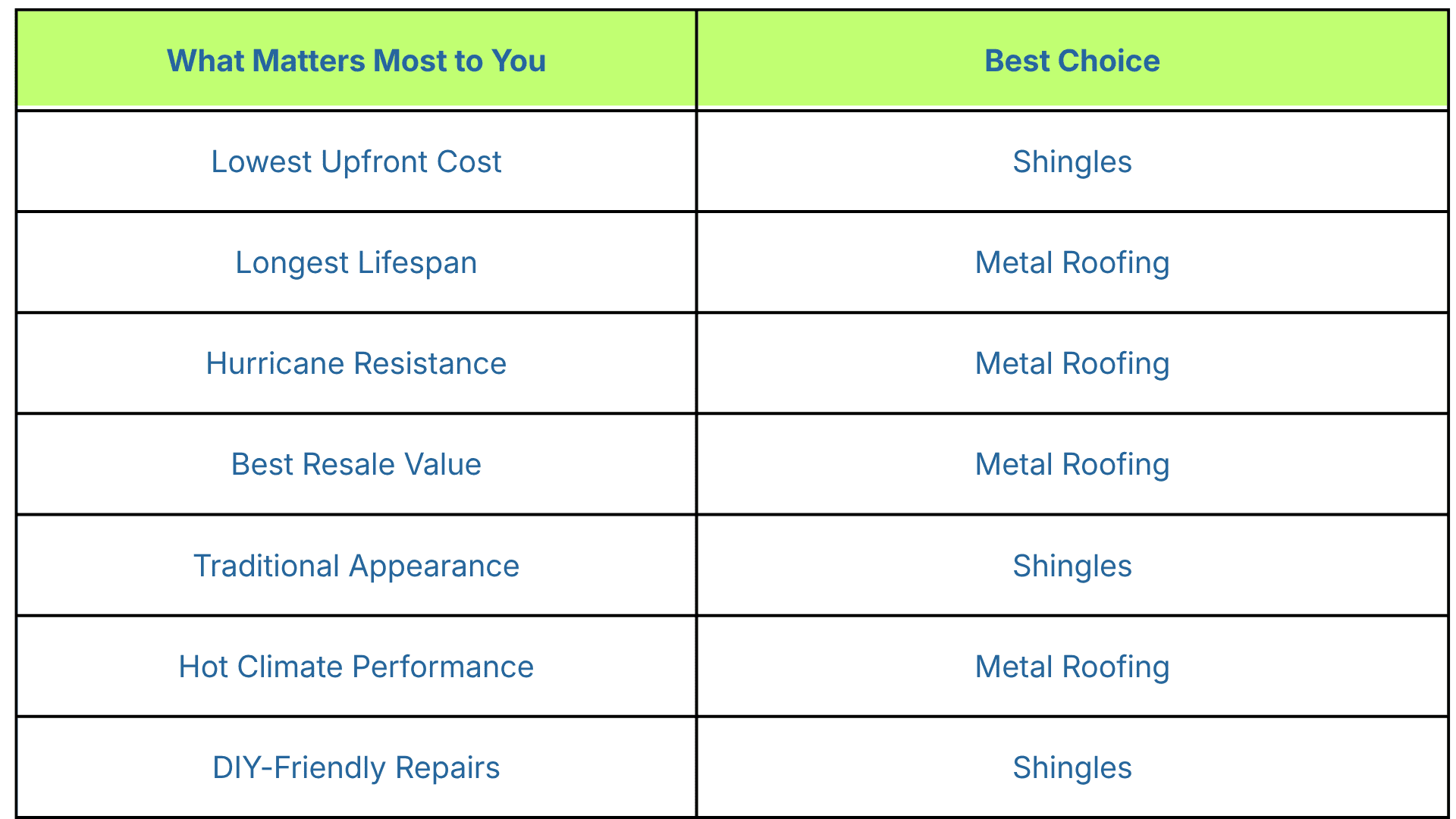
The right choice ultimately depends on your budget, local climate, and how long you plan to stay in the property.
Choose a metal roof if you prioritize durability, energy efficiency, weather resistance, and long-term value. Although the initial investment is higher, metal roofing can provide reliable performance and lower maintenance needs for decades.
Choose asphalt shingles if affordability, lower upfront costs, and a traditional appearance are your main priorities. They remain a practical option for many homeowners and are widely available in various styles and colors.
Regardless of the material you choose, proper installation plays a critical role in overall performance. Even the highest-quality roof can experience problems if it is installed incorrectly. Working with an experienced roofing contractor can help maximize lifespan, improve weather protection, and ensure the best return on your investment.
FAQ'S
What are the disadvantages of a metal roof?
While metal roofs are highly durable and long-lasting, they do have some drawbacks. The most common disadvantages include a higher upfront cost, specialized installation requirements, repair and maintenance challenges, noise during heavy rain or hail, the risk of denting from impact, and a longer return on investment. Some homeowners may also prefer the appearance of traditional roofing materials over metal roofing.
What are the disadvantages of putting a metal roof over shingles?
Installing a metal roof over shingles can save on tear-off costs, but it may hide roof deck damage, leaks, rot, and other structural issues. It can also add extra structural weight, create installation risks, complicate future roof repairs, and may affect warranties if the roof-over installation is not completed correctly.
Does a metal roof affect Wi-Fi?
No, a metal roof typically does not affect indoor Wi-Fi performance. Wi-Fi signals usually travel throughout your living spaces rather than through the roof, so issues are more often caused by router placement, thick walls, or outdated equipment.
Are metal roof better than shingles?
No, asphalt shingles do not last longer than metal roofs. Most asphalt shingles last around 15 to 30 years, while metal roofing can last 40 to 70 years or more. Metal offers better weather resistance, roofing durability, and protection against UV rays, making it a stronger long-term value and lifetime investment for many homeowners.