
Can You Put Solar Panels on a Metal Roof?Every-thing Homeowners Need to Know
Yes , and if you are worried about roof damage, leaks, or whether your metal roof can safely hold solar panels, you are not alone. Most homeowners ask the same thing before they realize metal roofs are actually the best surface for solar installation. Modern mounting systems are built specifically for standing seam and corrugated metal roofs, and many do not require a single drill hole — so your roof stays protected and maintenance stays low.
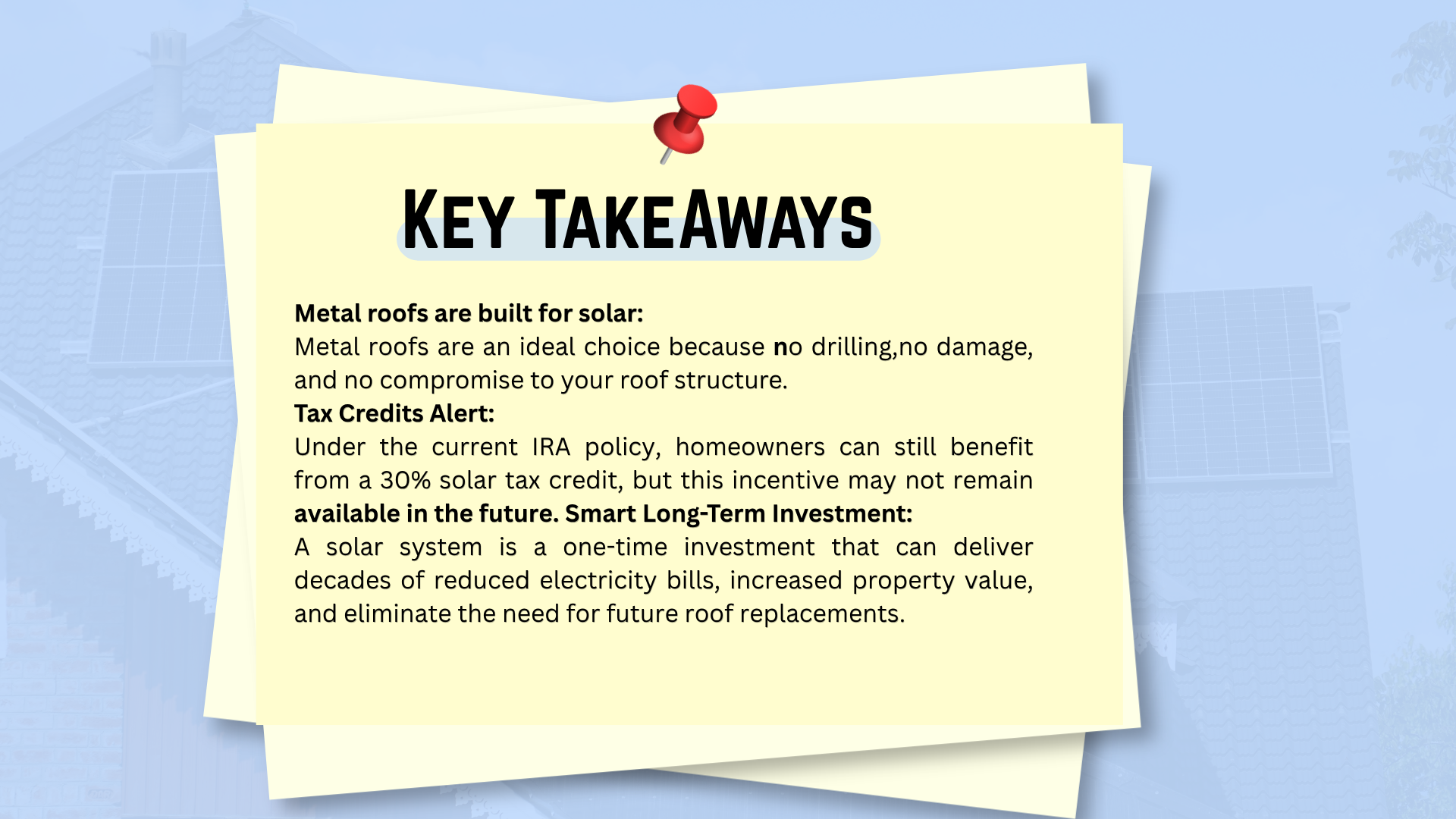
Why Metal Roofs and Solar Panels Work So Well Together
When homeowners look at solar panels and metal roof systems, they quickly realize this is one of the most solar-friendly roofs for modern homes. A professionally installed metal roof naturally supports solar compatibility because its structure works smoothly with solar technology, creating real energy synergy between solar panels and the roof surface. Unlike asphalt roofs or traditional asphalt roofs, a metal system is not a failing roof waiting for early roof replacement, which means you don’t face the problem of remove and reinstall solar panels or unexpected future expense during your solar investment journey. Here's what makes them work so well together:
Metal roofs last as long as solar panels
Metal roofs can last 40 to 70 years, which matches well with 25 to 30 years life of solar panels. This long-lasting combination supports long-term savings and fewer roof replacement issues, improves weather-resistant roofing performance, and creates more reliable solar energy systems with better long-term value.
Better durability than asphalt shingles
Metal roofing handles harsh weather ,wear and tear much better than asphalt shingles. Since metal roofs are less likely to fail underneath the panels, they help reduce future repair costs and expensive roof replacements. Solar panels on metal shingle roof systems are becoming more popular because they combine durability, strong structural support, and better solar panel protection.
Energy efficiency and cooling benefits
Metal roofs naturally reflect more sunlight, which helps reduce heat buildup on the roof surface. Metal roofs reflect more heat, helping keep the home cooler during summer. Many homeowners ask why is ventilation important for solar panels on a metal roof because good airflow under the panels helps release trapped heat and improves overall solar efficiency.
This airflow improves thermal performance, supports better panel performance, and helps maintain cooler indoor temperatures through better energy-efficient roofing and solar heat reduction.
Eco-friendly advantages for homeowners
Metal roofing and solar panels support renewable energy, improve sustainable roofing performance. Since many systems use recyclable materials and long-lasting roofing products, homeowners can build cleaner and more efficient energy systems for the future.
For environmentally conscious families, this setup helps create a lower carbon footprint while supporting more energy-efficient homes through clean energy solutions and long-term environmental benefits.
What Types of Metal Roofs Support Solar Panels?
From my experience, standing seam metal roofs are usually the best option and most compatible option for modern solar panel installations because they support a penetration-free mounting process. Installers use specialized clamps and mounting blocks attached directly to the roof's vertical seams, so there is no need to drill holes into the roof surface. This type of seamless mounting improves weather-tightness, protects manufacturer warranties, lowers labor costs, and allows a faster installation time with better solar compatibility.
1. Standing seam metal roofs
From what I’ve seen while researching roofing and solar systems, standing seam metal roof with solar panels is often considered the ideal choice, best option, and most compatible option for modern solar panel installations. These standing seam metal roofs support a penetration-free installation because installers use specialized U-clamps, S-5! clamps, and mounting blocks attached directly to the roof's vertical seams instead of creating drill holes in the roof surface. This penetration-free mounting process improves weather-tightness, protects manufacturer warranties and the overall warranty, lowers labor costs, and allows a faster installation time.
Clamp-mounted systems for standing seam roofs
Many professionals also prefer this mounting method because standing seam systems create the ideal surface for thin-film solar panels. Their lower profile, smooth adhesive and adhesive installation, durable mounting hardware, strong structural support, and non-invasive installation improve solar compatibility, solar roof integration, and long-term solar-friendly roofing performance across different metal roofing styles and roof profile designs through efficient seamless mounting and reliable metal roof solar panel mount systems.
2. Corrugated and Ribbed Metal Roofs
In many residential and farm-style buildings, solar panels on corrugated metal roof systems are very common because corrugated designs are widely available and cost-effective. But the installation process is different from standing seam systems because it usually requires penetration mounting. Installers attach brackets through the metal panels into structural rafters or purlins to create a secure roofing structure for long-term solar support systems.
To maintain waterproofing, installers use rubber gaskets, sealants, flashing, and a strong watertight seal around the drill points to improve leak prevention and maintain secure installation.
Bracket mounting systems for corrugated roofs
To maintain proper waterproofing, installers use rubber gaskets, sealants, flashing, and a durable watertight seal around drill points to reduce roof penetrations and improve leak prevention. In many projects, a solar panel on metal sheet roof setup may also include Solar Foot, pedestals, rail-mounted systems, secure mounting hardware, and advanced solar support systems for safe secure attachment during long-term solar installations.
3. Trapezoidal metal roofs
In commercial and industrial projects, trapezoidal metal roofs are widely used because their flat areas and varied ridges create strong support for modern solar systems. Their unique ridge profile helps installers position mounting equipment more accurately across different roof shapes and layouts.
Bracket mounting systems for trapezoidal roof
Most contractors use specialized brackets, multiple bracket types, and manufacturer-specific brackets designed for each unique ridge profile. Proper optimal drill hole placement, accurate drill placement, and secure structural attachment improve roof compatibility, overall roofing support, and long-term performance for advanced solar mounting systems installed on durable metal roofing systems and different roof profile designs.
4. Flat Metal Roofs
Many property owners also install solar on flat metal roofs because they offer flexible mounting options compared to sloped roofing systems. Some installers use standard racking, while others prefer ballasted systems that rely on heavy concrete weights to hold panels in place without creating unnecessary roof penetrations.
In some cases, thin-film panels can attach directly to flat metal surfaces using adhesive backing instead of traditional hardware. This creates efficient solar panel mounting, durable roof attachment systems, reliable mounting systems, smooth adhesive installation, advanced solar support systems, and clean non-invasive mounting solutions for modern commercial solar projects.
Flat metal roofs use different mounting methods depending on the system design, because there are usually no ridges or seams to clamp onto.
5. Metal Tile and Shingle Roofs
Today, solar panels on metal tile roof systems are becoming more popular because metal tile roofs, metal shingle roofs, metal tiles, metal shingles, and stone-coated steel designs are highly solar-friendly and fully compatible with solar panels. From my experience reviewing roofing systems, homeowners usually prefer these roofs when they want both durability and a more decorative roof appearance.
Bracket mounting systems
While installing solar panels on metal tile roof systems can involve a more advanced mounting method, installers often use tile replacement mounts, a specialized mounting base, or a secure mounting base that replaces existing tiles with a durable waterproof mounting base and long-lasting waterproof system. This improves roofing compatibility, strengthens solar integration, increases weather protection, and supports modern solar attachment systems using alternative mounting systems, mounts under tiles, or mounts through tiles while reducing visible dimpling on the metal surface for better secure installation across different roofing materials.
What Types of Mounting Systems Are Used?
When installing solar panels on metal roofs, there are three main mounting approaches used today: rail-based systems, rail-less (direct-attach) systems, and shared rail systems.
Each method connects panels to the roof in a different way, and the choice affects installation speed, hardware use, cost, and long-term maintenance.
Rail-based systems: Uses aluminum rails fixed to the roof with bolts and clamps. They offer strong support and easier long-term panel replacement, but installation takes more time and uses more hardware.
Non-rail (rail-less) systems: Skips the full rail structure and use direct-attach clamps or mounting disks, especially on standing seam roofs. They install faster, use fewer parts, and are often more cost-efficient, but may have slightly less flexibility for future upgrades.
Shared rail systems: Uses a hybrid approach where two panel rows share one middle rail instead of separate rails. This type of solar mounting uses reduced hardware, making the installation system simpler and more cost-effective.
Will installers drill holes into the roof?
It depends on your metal roofs type and the way mounting solar panels on metal roof without drilling is done.
In standing seam, installers usually avoid drilling completely. They use a penetration-free installation with specialized clamps that grip the vertical seams, keeping the roof surface safe and maintaining full weather-tightness and warranty.
But for corrugated roofs, ribbed roofs, and exposed fastener roofs, installers often need to drill into the metal panels to properly secure solar panels to metal roof using mounting brackets connected to structural members like rafters and purlins.
Even when drilling is required, flashing, sealants, and rubber gaskets are used to protect the roof from leaks.
For metal tile roofs, drilling is often avoided by using tile replacement mounts, allowing solar panels on top of metal roof without creating new penetrations.
Whether drilling is needed or not, always confirm with your roofing manufacturer or contractor, because installation methods can affect your metal roof warranty.

Do Solar Panels Damage Metal Roofs?
Metal roofs are a substantial investment with a long roof lifespan lasting decades, so proper solar panel installation is very important. When installed according to solar industry standards solar panels cause no damage, no short-term damage, and no long-term damage. Instead, they improve roof protection by acting as a buffer layer and protective layer, increasing weather resistance, reducing wear and tear, and improving overall durability and structural safety within the solar energy system.
Can solar panels cause rust or corrosion?
No, solar panels usually do not cause rust or corrosion on a metal roof when installed correctly. Good systems use corrosion-resistant materials, improving overall corrosion resistance and protecting the roof from damage. In most cases, proper installation methods and quality solar racking help prevent any moisture buildup or chemical reaction between materials.
On standing seam roofs, penetration-free clamps with no holes drilled keep the surface safe and reduce the risk of rust. On corrugated roofs and ribbed roofs, where drilling is needed, installers use waterproof flashing, sealants, and rubber gaskets to stop water entry and protect against corrosion. This helps maintain long-term rust prevention, metal roof longevity, and full system safety.
How Much Does It Cost to Install Solar Panels on a Metal Roof?
Key factors | prices |
|---|---|
Total Installation Cost (USA, 2026) | $15,000 – $30,000 |
Average Cost per Watt | $2.50 – $3.50 per watt |
Typical System Size | 6 – 8 kW residential system |
Gross Cost (6–8 kW system) | $18,000 – $27,000 |
Federal Tax Credit (ITC) | 30% reduction |
Net Cost After ITC | $12,600 – $18,900 |
Pros and Cons of Putting Solar Panels on a Metal Roof
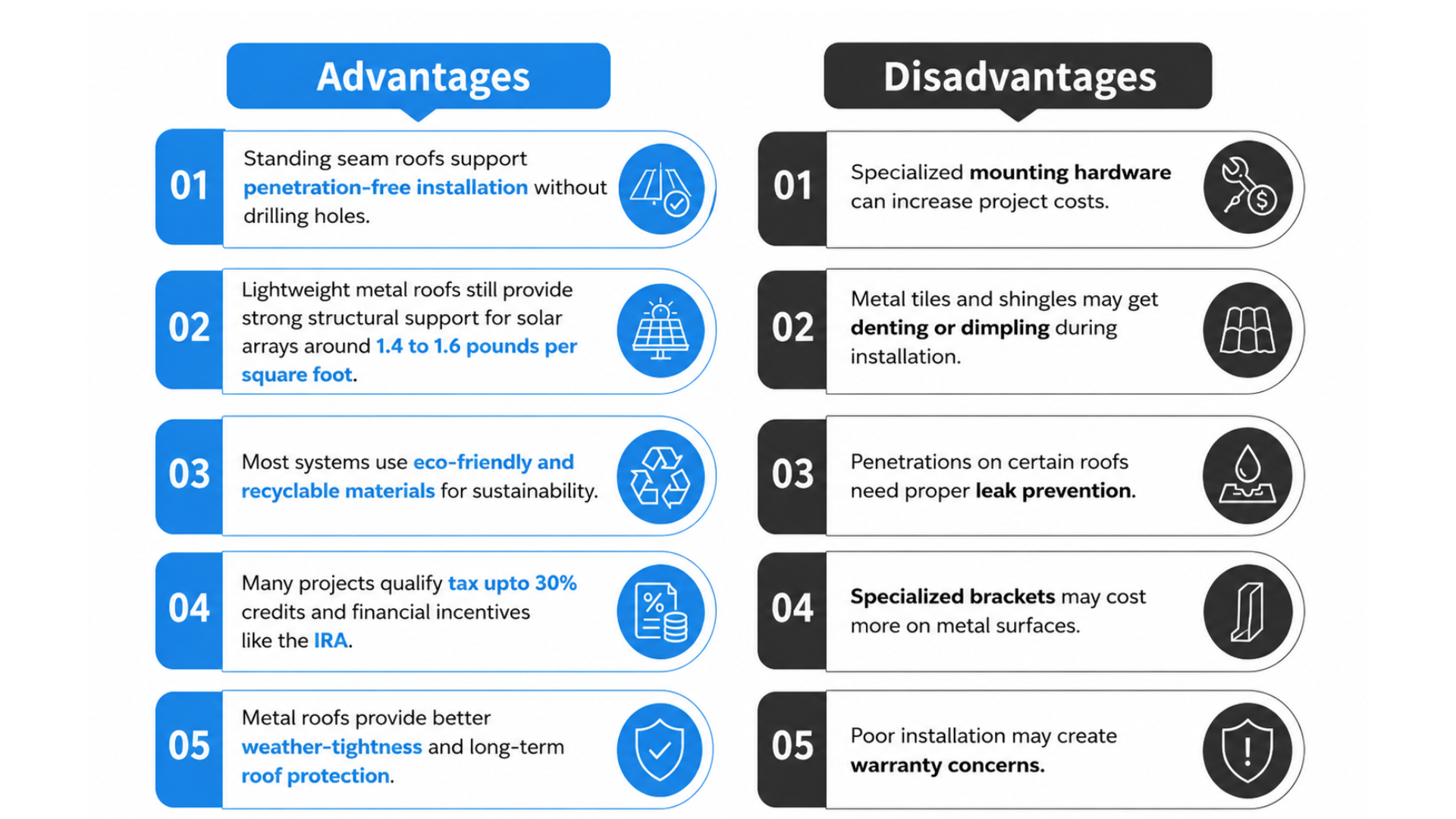
Are Solar Panels Worth It on a Metal Roof?
Lower electricity bills over time
Switching to solar power on a metal roof can provide energy savings for up to 25 years. It helps lower electricity bills and improve energy production over time.
Metal roofs reflect more sunlight than asphalt roofs, which helps reduce overheating around solar panels. A cooler environment helps panels work more efficiently and maintain strong performance.
Solar tax credits and incentives
Under the Inflation Reduction Act (IRA), homeowners can get a 30% tax credit on the total solar installation cost. This includes solar panels, installation labor, wiring, mounting equipment, and solar batteries with the correct capacity.
Homeowners can also combine local rebates, state incentives, and city programs for additional savings approximately $1,000 to $6,000. These incentives help reduce the overall upfront cost of solar installation.
Long-term return on investment
Solar systems usually pay for themselves in about 9 to 12 years through energy savings. A metal roof can last 40 to 70+ years, which means it often lasts much longer than solar panels. This helps homeowners avoid extra costs for panel removal or roof replacement later.
Important Things to Check Before Installing Solar Panels
A good setup depends on roof condition, correct structure, and proper planning of panels. When done right, it gives safe installation and stable energy output for many years. Here are some key points to consider when installing solar panels.
⮞ Roof Age & Condition
Check roof age first. Make sure roof does not need repair or replacement before installing solar panels.
⮞ Structural Strength Check
Get a structural inspection to confirm the roof can safely support the extra weight of the solar system.
⮞ Roof Direction (Orientation)
Check the roof direction before installation. South-facing roof gives best solar efficiency and energy output.
⮞ Shade Inspection
Look for trees, walls, or buildings that block sunlight. Shade can reduces solar performance.
⮞ Mounting System Safety
Make sure mounting is fixed into rafters or purlins. Metal sheet alone is not enough for support.
⮞ Warranty Protection
Always check the manufacturer warranty before installation. Incorrect drilling or poor installation methods can void the roof warranty.
Conclusion
If you’re already investing in a metal roof, adding solar panels can turn that roof into something more than just protection for your home , it becomes a long-term source of energy savings. The right setup can lower electricity bills for decades, reduce future roofing headaches, and increase the overall value of your property.
Most homeowners only think about solar when energy bills become frustrating. But a well-planned metal roof solar system is one of those upgrades people rarely regret later. With the right roof type, proper mounting system, and professional installation, you’re not just adding solar panels — you’re building a smarter home for the future.
FAQ'S
Is it good to put solar panels on a metal roof?
Yes, it is a great idea to put solar panels on a metal roof. Metal roofs often last around 40 to 70 years, while asphalt roofs usually last only 12 to 30 years. Most solar panels last about 25 to 30 years, so the roof typically outlives the solar system. This creates a long-lasting and cost-effective combination with fewer replacement worries.
What is the 33% rule in solar panels?
The 33% rule in solar panels comes from local fire codes, including the International Fire Code (IFC) and International Residential Code (IRC). It limits rooftop solar panels to about 33% of the roof area to ensure fire safety and proper emergency access for firefighters.
If this limit is exceeded, extra setbacks, fire-path clearance, and stricter building safety rules are required to stay in code compliance and meet solar installation rules.
What roofs are not compatible with solar panels?
Solar companies often avoid installing solar panels on clay tile, slate tile, wood shake decking, wood shingles, thatched roofs, asbestos roofing, fiberglass panels, gravel roofs, tar roofs, rubber flat roofs, corrugated asphalt panels, and some metal tile systems because these materials are fragile, brittle, or difficult to mount on safely.
Which type of roof is best for solar panels?
Standing seam metal roofs and asphalt shingle roofs are the best options for solar panels. Standing seam metal roofs offer high durability, excellent solar compatibility with non-invasive clamp mounting that allows drilling avoidance for safer solar installation. Asphalt shingle roofs are also cost-effective roofing, provide easy installation, and support strong solar panel compatibility.