
 @amina
Choosing between a standing seam vs. exposed fastener metal roof often comes down to one question: is a lower upfront price worth the extra maintenance over time? Exposed fastener metal roofing usually costs less to install, while standing seam metal roofing costs more but hides screws beneath raised seams. But a lower price today may mean more maintenance later.
Before you choose, consider how long you plan to keep your home, how well the roof will be installed, and how much upkeep you can handle. The best option isn’t just the one that costs less to install—it’s the one that fits your budget now and your maintenance expectations for years to come.
What Is the Difference Between Standing Seam and Exposed Fastener Metal Roofing?
The main difference between standing seam and exposed fastener metal roofing is how the panels attach to your roof.
Standing seam metal roofing: Uses metal panels joined by raised vertical seams. Its concealed fasteners and mounting clips stay hidden beneath the seams, so screws do not penetrate the exposed panel surface. This design allows the panels to expand and contract as temperatures change.
Roof pitch: The minimum slope depends on the panel profile. Mechanically seamed systems can be installed on slopes as low as 0.5/12, while snap-lock profiles generally require at least 3/12. These systems are not designed for completely flat roofs.
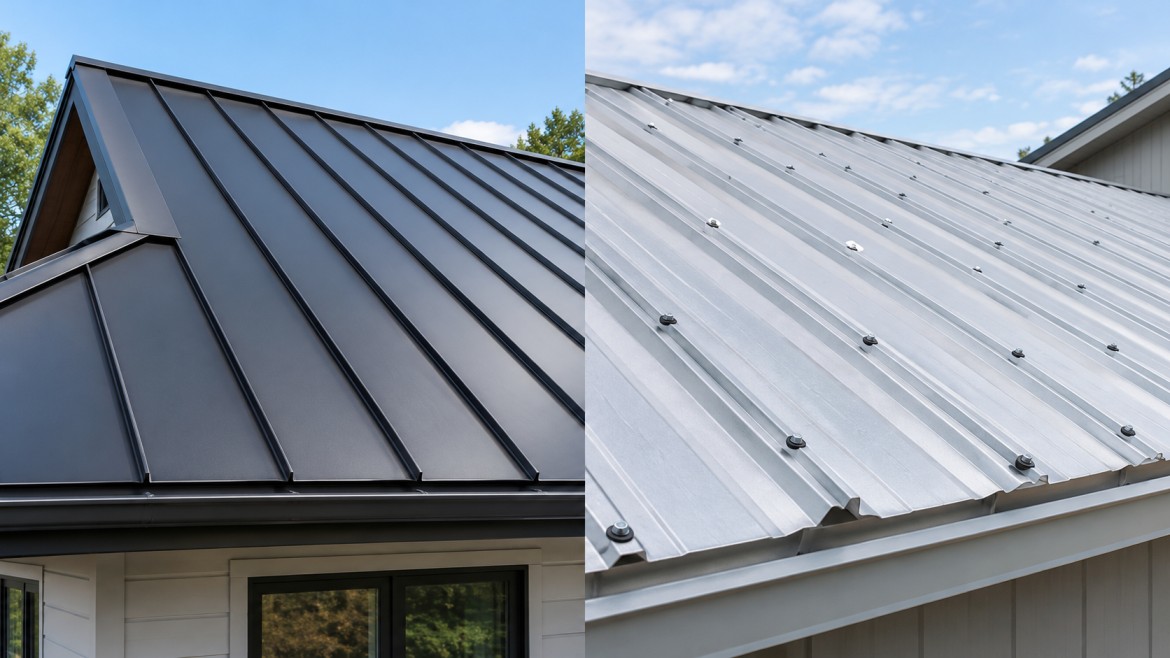
Exposed fastener metal roofing: Uses overlapping metal panels secured directly to the roof deck or framing with visible screws. Each screw typically has a rubber or neoprene washer that helps seal the fastener hole and keep water out. Because the screws and washers remain exposed to the weather, they need regular inspection for loosening, wear, and potential leaks.
Roof pitch: Exposed fastener systems generally require a minimum roof pitch of 3/12 to help water drain properly and reduce the risk of water backing up at panel overlaps or screw holes. They are not suitable for completely flat roofs.
Exposed fastener metal panels are usually the most affordable metal roofing option. They often use 26-gauge to 29-gauge steel with silicone-modified polyester (SMP) paint. Installers secure the panels with visible screws driven directly through the metal, so they do not need concealed mounting clips or specialized seaming tools. Their wide panels, often up to 36 inches, cover the roof quickly, making installation less labor-intensive and helping reduce labor costs.
Which Metal Roofing System Costs More to Install?
Standing Seam Panels (Moderate to High Cost)
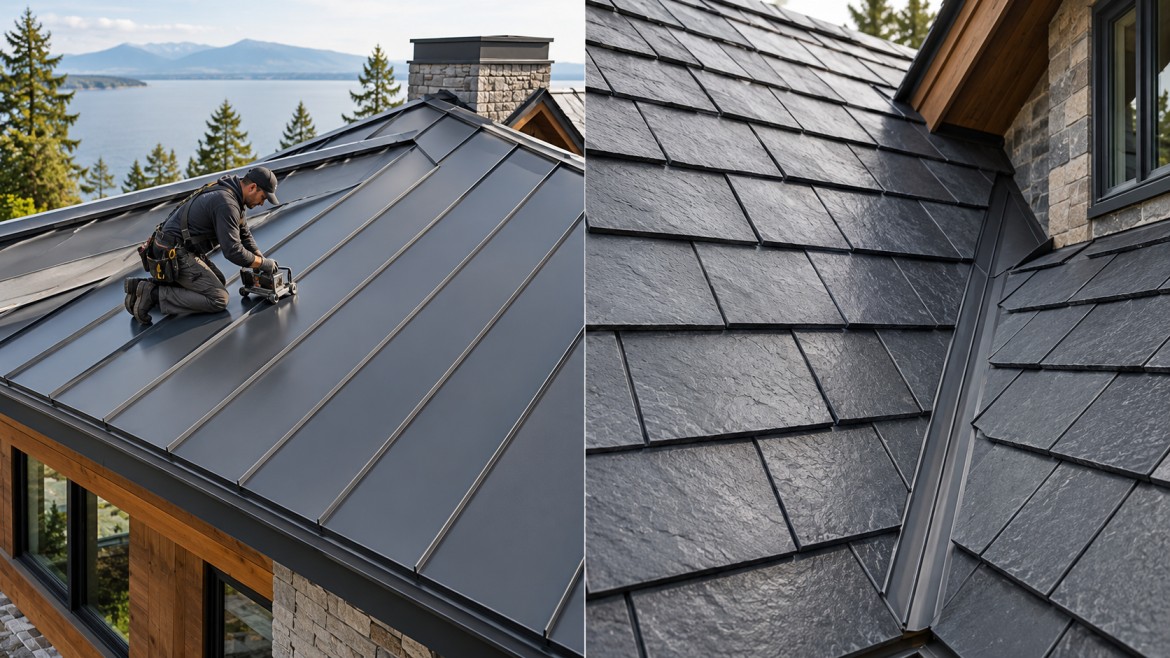
Standing seam metal panels usually cost more upfront because they often use thicker 24-gauge to 26-gauge steel and may feature high-performance PVDF (Kynar 500) paint finishes. Instead of visible screws, they use concealed mounting clips and raised seams to secure the panels. Installers must carefully align the panels and join the seams using hand or mechanical seaming equipment. This process requires specialized tools and experienced installers, which can increase labor costs.
Stamped Panels (Highest Installation Cost)
Metal shingles or stamped panels can have the highest installation costs of these metal roofing options. They are made from steel or aluminum and shaped to resemble slate, shake, or tile. Some products use stone granules or PVDF paint for their finish. Unlike long standing seam panels, these systems use individual interlocking panels that installers must fit and fasten one by one. This detailed work takes more time, especially around roof valleys and penetrations, which can increase labor costs.
Roofing Material | Estimated Installed Cost |
|---|---|
Traditional asphalt shingles | $3.50–$5.50 per sq. ft. |
Traditional asphalt shingles (average home) | Around $15,000 |
Steel metal shingles / stamped panels | $7.00–$12.00+ per sq. ft. |
Steel metal shingles / stamped panels (average home) | $40,000–$50,000 |
Before comparing quotes, check that they cover the same materials, roof area, and installation work. For a quick budget estimate, try SnowsBrain’s free roof cost calculator.
Which System Holds Up Better Over Time?
: Standing seam generally reduces exposed-fastener maintenance, while exposed-fastener roofing may cost less initially. Both systems’ durability depends on material quality, climate, installation quality, and ongoing maintenance.
Feature | Standing Seam | Exposed Fastener |
|---|---|---|
Fastener Design | Concealed beneath raised seams. | Screws visible on the panel surface. |
Maintenance Needs | Generally less fastener-related maintenance. | More frequent checks of screws and washers. |
Metal Gauge | Gauge affects panel strength and dent resistance. | Gauge also affects strength and dent resistance. |
Protective Coating | Quality coatings help resist fading and chalking. | Coating quality affects corrosion and weather resistance. |
Installation Requirements | Precise seam and clip installation. | Correct screw placement and washer compression. |
Initial Cost | Generally higher. | Generally lower. |
Warranty vs. Service Life | Warranty coverage does not guarantee a specific lifespan. | Warranty coverage does not guarantee a specific lifespan. |
Which Metal Roof Has a Lower Risk of Leaks?
Standing Seam Systems (Lowest Leak Risk)
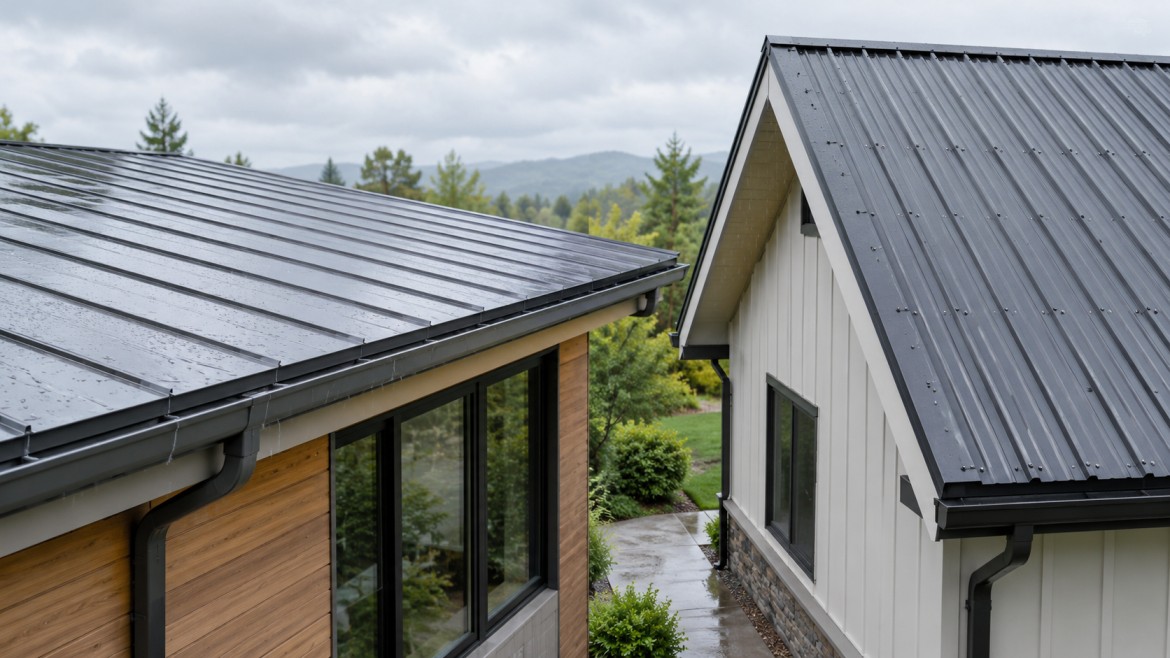
Zero Face Penetrations: Concealed clips attach the panels to the roof deck without screws or nails piercing the exposed metal surface, reducing potential leak points.
Raised Seams: Interlocking vertical seams sit above the main water channels, helping water drain without reaching the seam connections.
Thermal Movement: Concealed clips allow panels to expand and contract as temperatures change, reducing stress on attachments.
Weathertight Warranties: Some manufacturers offer warranties against leaks for specific standing seam systems, subject to their terms and installation requirements.
Exposed Fastener Systems (Highest Leak Risk)
Thousands of Face Holes: Screws pass directly through metal panels into the roof deck or framing, creating many potential entry points for water.
Fastener Withdrawal: Panel movement from temperature changes can loosen screws or widen screw holes over time, weakening the seal.
Gasket and Washer Degradation: Rubber or neoprene washers can crack or dry out due to sunlight and UV exposure, increasing the risk of leaks.
Installation Sensitivity: Overdriven, underdriven, or angled screws can crush or distort washers, leaving gaps where water can enter.
Warranty Limitations: Exposed fastener systems may not qualify for the same weathertightness warranties as standing seam systems, so check the manufacturer's specific terms.