
What are Roof Shingle ?:Types, Cost, Benefits & Lifespan 2026
Not all shingle roofs are created equal; some last much longer than others. An asphalt shingle roof is a popular and budget-friendly roofing option that can protect your home for decades when installed and maintained properly. With a typical shingle roof cost ranging from about $10,500 to $21,000, it remains one of the most affordable roofing choices. But is it the right roof for your home? In this guide, you'll learn about roof shingles, shingles roof material, shingle roof lifespan, shingles roof types, and the factors that influence long-term value and performance.
What Is a Shingle Roof?
A shingle roof is a residential roofing system made of overlapping roof shingles that create a durable waterproof barrier over a home. These rectangular pieces of roofing material work together as a primary water-shedding covering, directing rain and snow away from the roof surface and into gutters to prevent water infiltration. An asphalt shingle roof is the most common roofing type in North America, although shingles are also available in metal, wood, clay, concrete, and slate. Thanks to its strong weather resistance, reliable roof protection, and attractive appearance, a shingle roof remains one of the most popular roofing solutions for residential properties.
What Is a Shingle Roof Made Of?
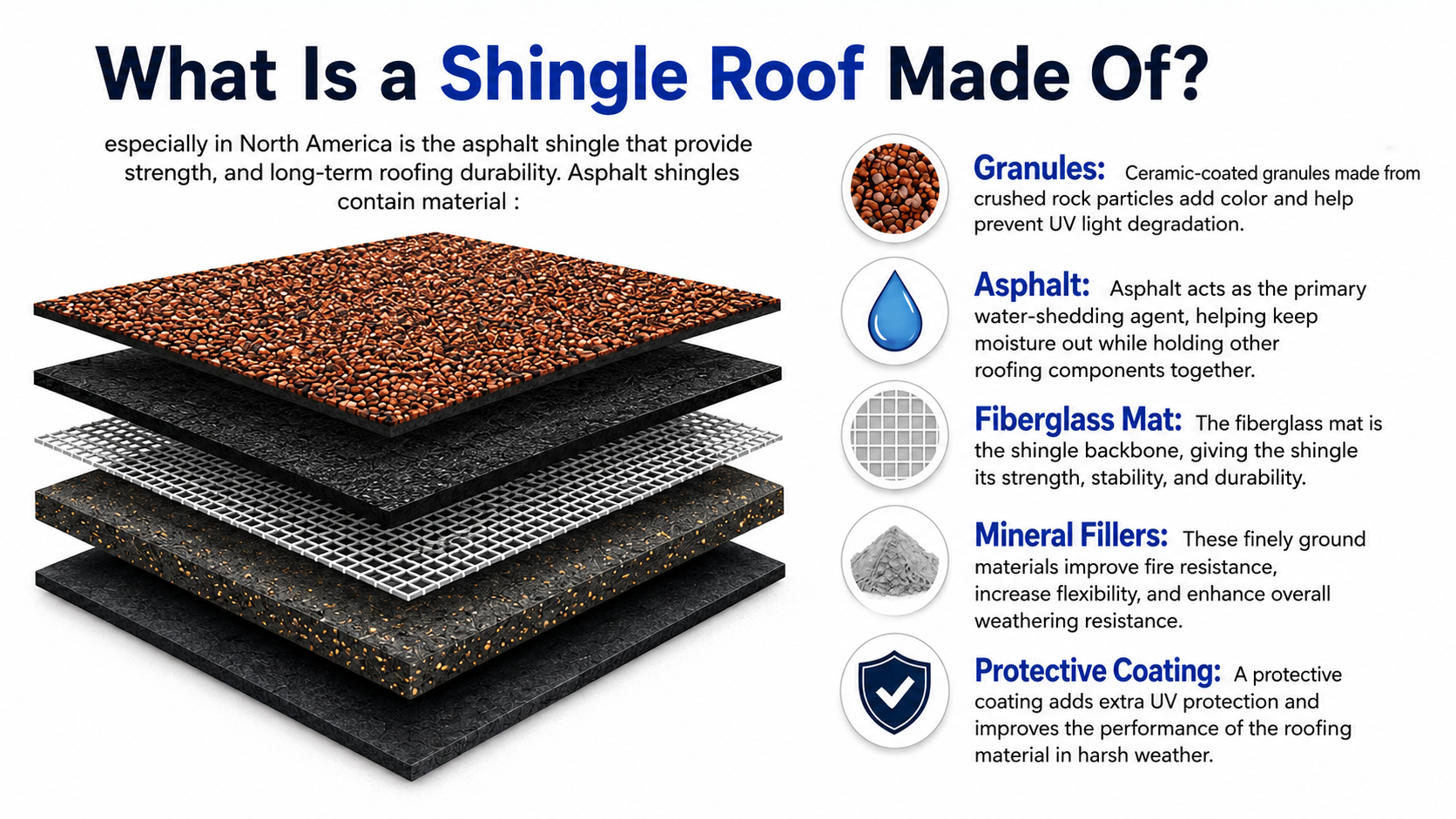
Most asphalt shingles contain several core materials that work together to provide weather protection
especially in North America is the asphalt shingle that provide strength, and long-term roofing durability. Asphalt shingles contain material :
Fiberglass Mat: The fiberglass mat is the shingle backbone, giving the shingle its strength, stability, and durability.
Asphalt: Asphalt acts as the primary water-shedding agent, helping keep moisture out while holding other roofing components together.
Mineral Fillers: These finely ground materials improve fire resistance, increase flexibility, and enhance overall weathering resistance.
Granules: Ceramic-coated granules made from crushed rock particles add color and help prevent UV light degradation.
Protective Coating: A protective coating adds extra UV protection and improves the performance of the roofing material in harsh weather.
Other Shingle Materials Used in Roofing
Not all roof shingles are made from asphalt. Different shingle materials are available for various roofing needs.
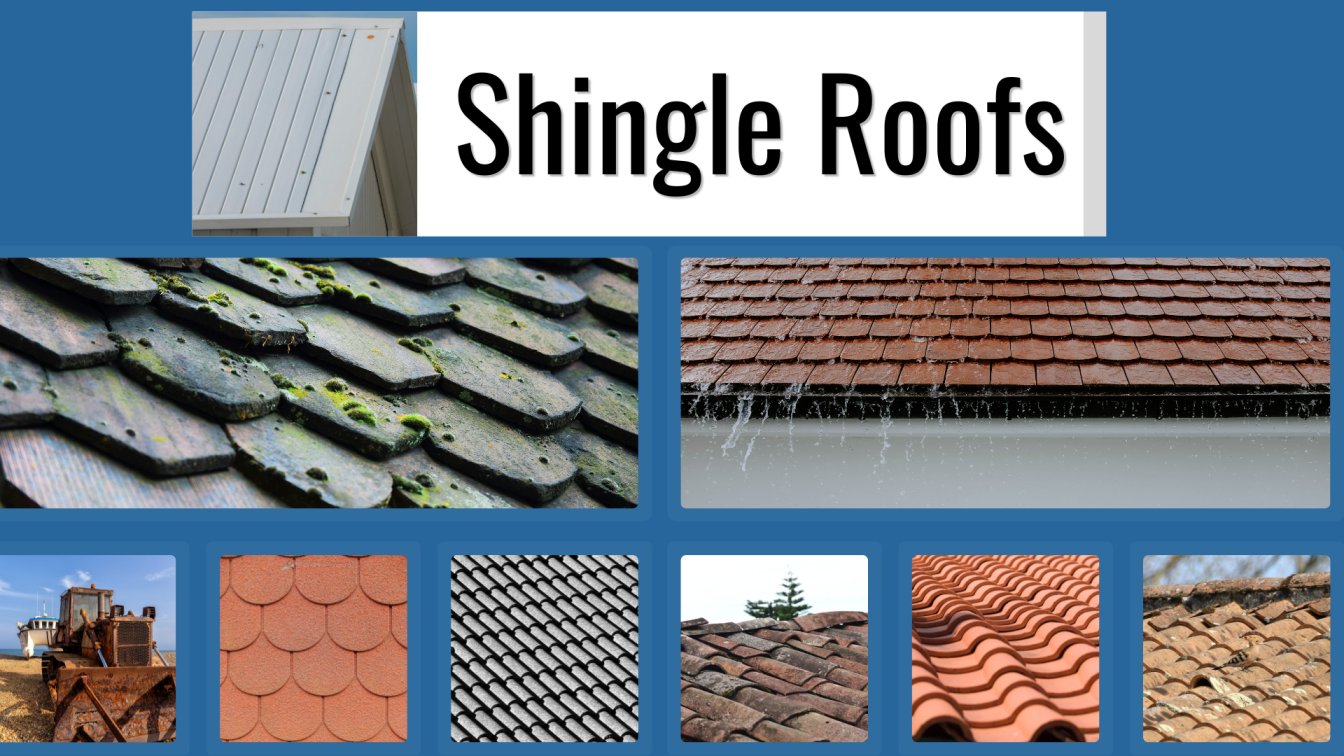
Asphalt Shingles
Asphalt shingles are made from a mixture of asphalt, fiberglass, and roof granules, making them the most common and affordable roofing choice with good durability for 20–30 years.
Lifespan: 20–30 years
Cost: Around $10,500
Wood Shingles
Wood shingles (or shakes) are made from natural cedar or poplar wood, giving a traditional and natural look but needing more maintenance and care.
Lifespan: 25–50 years
Cost: Around $21,000
Metal Shingles
Metal shingles are made from steel, aluminum, zinc, or copper, and they are highly durable with very low maintenance needs.
Lifespan: 40–80+ years
Cost: Around $11,700
Slate Shingles
Slate shingles are made from natural stone (slate), making them one of the strongest and longest-lasting roofing materials but also very heavy.
Lifespan: 60–150+ years
Cost: Around $13,500
Clay & Concrete Shingles
Clay and concrete shingles (tiles) are made from natural clay or concrete, offering strong durability but requiring structural support due to weight.
Lifespan: 50–100+ years
Cost:Around$17,500
Benefits and Drawbacks of a Shingle Roof
To understand whether it is the right option, it’s important to look at both its advantages and limitations. This helps you see why it remains a popular and balanced roofing solution across many regions.
Benefits of a Shingle Roof
Cost-effectiveness and variety
Shingle roofs are budget-friendly, especially 3-tab shingles which are the cheapest option. At the same time, they come in many colors and styles. Designer shingles can even imitate the look of wood shakes or natural slate without the high cost, heavy weight, or extra maintenance.Strong performance and protection
Most asphalt shingles offer solid protection, including Class A fire resistance, strong wind ratings (Class F or Class H), and even Class 4 impact resistance in some types. This makes them reliable against fire, wind, and hail damage.Smart functional features
Modern shingles often include advanced technology like copper-coated granules that help prevent algae growth and dark streaks. Some also use solar-reflective granules that reduce heat absorption, helping to keep your home cooler and improve energy efficiency.Easy maintenance and installation
Compared to materials like slate or clay, shingles are lightweight and easier to install. This reduces labor time and cost, making them a practical and affordable roofing choice for many homeowners.
Drawbacks and Considerations
Environmental vulnerability
Shingle roofs do not have a fixed lifespan. Their durability depends on weather conditions, UV exposure, moisture levels, and location. Over time, granules wear off, exposing the asphalt layer and reducing protection.Aesthetic and longevity trade-offs
Basic 3-tab shingles are affordable but have a flat appearance. They do not offer the same depth, style, or long-lasting durability as architectural or laminated shingles.System dependency for best performance
A shingle roof works best as a complete system. Proper ventilation, underlayment, ice and water barriers, and starter strips all play an important role in preventing leaks and improving lifespan.Aesthetic issues over time
Algae growth does not damage shingles structurally, but it can create dark streaks and discoloration if algae-resistant technology is not used.
How to Choose the Right Shingle Roof
Choosing the right shingle roof is not just about picking a material—it’s about finding the right balance between performance, style, and long-term value. Here are the key factors to consider before making a decision.
Evaluate Performance Based on Climate
Your local weather plays a major role in selecting the right shingles. Different climates need different features like:
Wind-prone areas should use shingles with Class F or Class H wind resistance
Hail-prone regions benefit from Class 4 impact-resistant shingles
Humid areas should choose shingles with algae resistance to prevent dark streaks
For example:
In Florida, the best shingles are those with heat resistance, energy efficiency, and strong fire protection, along with solar-reflective technology for hot climates.
Select Based on Aesthetic and Design
Roof design also affects your home’s appearance. You can choose from different styles based on:
3-tab shingles – simple, flat, and budget-friendly
Architectural shingles – more depth and a modern dimensional look
Designer shingles – premium options that mimic slate or wood shakes
Consider Budget and Long-Term Value
Your budget is important, but think beyond just the upfront cost. Higher-quality shingles like architectural or designer types may cost more initially, but they often last longer, handle weather better, and can improve your home’s resale value over time.
Think About the Whole Roofing System
A roof is not just shingles—it works as a complete system. Make sure your contractor includes:
Proper underlayment
Good ventilation
Starter strips and ice/water barriers
Strong warranty coverage
These components work together to improve durability and prevent future problems.
Common Shingle Roof Problems
Even though shingle roofs are durable and widely used, they can still face certain issues over time. Understanding these problems helps you maintain your roof better and avoid costly repairs.
Weather and Environmental Damage
Shingle roofs are often affected by harsh weather conditions:
Strong winds can lift shingles or even cause blow-offs, especially if starter strips are not installed properly.
Hailstorms and falling branches can cause cracks or remove protective granules from the shingles.
Long-term exposure to sunlight leads to UV damage, slowly breaking down the protective surface and exposing the asphalt layer underneath.
Biological and Aesthetic Issues
Some problems mainly affect appearance but still indicate aging:
Algae growth, especially blue-green algae, can create dark streaks and stains on the roof. While it does not damage the structure, it reduces curb appeal.
Granule loss is a natural sign of aging. You may notice small mineral granules collecting in gutters, which means the shingles are wearing out.
Structural and Systemic Failures
Some issues affect the roof’s performance and can lead to serious damage:
Water leaks can develop from poorly sealed valleys, eaves, or flashing, leading to stains on ceilings or even a sagging roof structure.
In colder climates, poor insulation and ventilation can cause ice dams, forcing water back under the shingles.
Lack of proper ventilation traps heat and moisture in the attic, which can weaken shingles from underneath and reduce their lifespan.
Conclusion
A shingle roof is a smart choice when you balance cost, climate, and long-term performance. While asphalt shingles are affordable and widely used, their durability depends on proper installation and choosing the right type for your environment. When selected wisely and installed as a complete system, they offer reliable protection and long-term value for your home.