
Snow Guards for Metal Roofs are safety devices installed on a roof surface to hold snow and ice in place during winter. These snow guards, also called snow stops or snow stoppers, help prevent sudden snow slides and dangerous roof avalanches on metal roofing systems. They allow snow to melt gradually, improving roof protection, ice retention, gutters safety, property protection, and people safety below.
What Are Snow Guards for Metal Roofs?
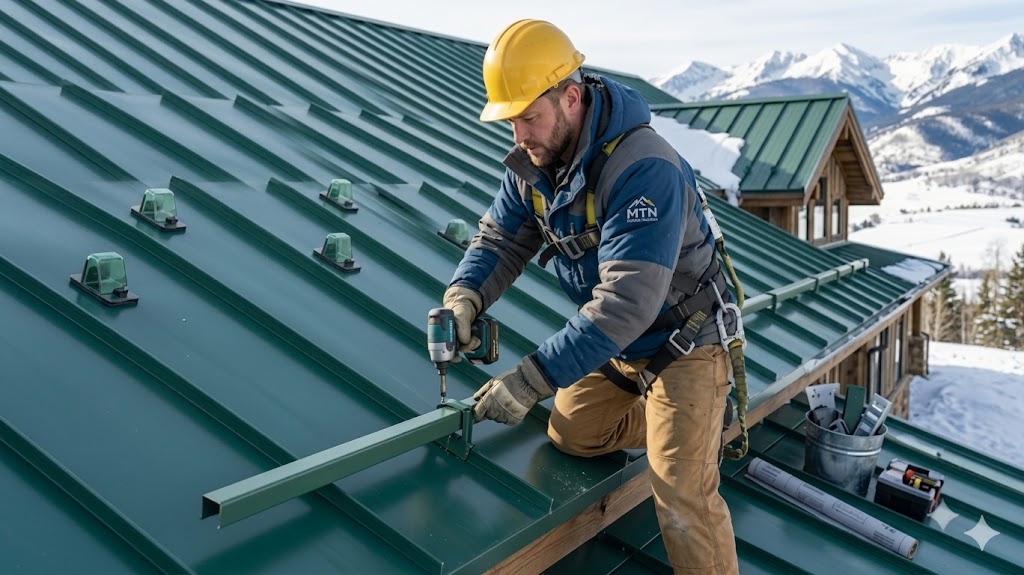
Snow guards for metal roof safety devices help allow snow to melt gradually instead of letting dangerous sheets of snow fall all at once. Snow guards on a roof can be attached mechanically or adhered to different metal roofing materials like metal, copper, aluminum, plastic, and rubber. Some adhered snow guards are installed during the roof installed process, while retrofitted snow guards can be added years later when the roof in place already exists. The best snow guards for metal roofs improve snow retention, ice retention, gutters safety, rooftop protection, and safety for people below by preventing large and dangerous sheets of snow from sliding off unexpectedly.
How Snow Guards Work on Metal Roofs
A snow retention system works by holding snow and ice on a metal roof instead of letting it slide off all at once. Because metal roof snow stops are installed as strong fixtures, they grip the snow and slow its movement. Snow cleats, and snow breaks Since metal roofs have smooth and slick surfaces, snow usually slides easily when it becomes heavy and turns into a single massive sheet.
Do You Really Need Snow Guards on a Metal Roof?
As a blogger, I noticed that many homeowners ask, are snow guards needed on metal roof systems in areas with heavy snowfall and long winters. After researching different Metal Roofs, I found that a metal roof has a slicker surface than a shingle roof, so snow and ice can quickly slide down and create a dangerous roof avalanche. In places like USA,Toronto, southern Ontario, Colorado, and other high-snowfall regions, properly installed snow stops on a metal roof help hold snow in place, improve snow retention, and reduce the risk of avalanches around homes and buildings.
I’ve seen experts explain how freeze-thaw cycles, accumulated snow, and a steep roof can increase safety hazards if snow slides off in one massive high-speed sheet. That’s why many homeowners and professional installers see these systems as a smart proactive safety measure for better energy efficiency, reduced maintenance, lower replacement costs, and long-term peace of mind.
While International Building Code (IBC) or local building codes do not make them a strict legal requirement.
Here are the main reasons ice guards are important for roof safety:
Safety Hazards
Snow guards help reduce the risk of injury or even death by stopping heavy and sharp snow from sliding suddenly onto people or pets below.Property Damage
They also protect against damage to parked vehicles, roof vents, fixtures, landscaping, and help prevent issues like damaged downspouts during heavy snow slides.Financial Liability
By controlling snow movement, they reduce the chances of lawsuits, insurance problems, and costly catastrophic damage claims.Roof Protection
Snow guards support the roof by reducing uneven pressure, helping prevent wear and tear, seam damage, and roof cave-ins caused by heavy snow load.Ice Dam Control
They allow snow to melt slowly and naturally, improving water flow and helping reduce the risk of ice dams and blocked drainage.Energy Efficiency
A layer of retained snow can act like natural insulation, creating a barrier that helps reduce cold air entering the attic space.Entryway Protection
They also make areas like entryways, driveways, and walkways safer, where people regularly walk or pass under the roof.
Why Ice Guards for roof Important (Risks)?
Installing ice guards on a metal roof is a safety measure because metal surfaces are exceptionally smooth and do not absorb water. When sun heat or the building interior starts melting snow from the bottom layer, it forms a thin film water that creates a natural lubricant effect. This causes the accumulated snow load to suddenly slide off as a roof avalanche, which brings serious severe risks for homes and people.
These risks include danger to life, as falling snow and ice masses are heavy and sharp, leading to serious injury or even death risk for people below. In real cases like Colorado roof avalanche deaths, accidents have shown how dangerous it can be, including a tragic example where people were buried by snow.
Along with snow buildup, roofs can face serious long-term damage if snow slides suddenly instead of being controlled.
Main risks include:
Damage to gutters, siding, roof vents, and metal seams
Broken windows, damaged landscaping, and affected parked vehicles
Stress on lower roofs due to heavy falling snow
Internal leaks, roof membrane damage, and water penetration
Long-term issues like corrosion, increasing repair costs
What Are The Different Types Of Snow Guards?
There are three main types of snow guards for metal roofs used to control heavy snow and ice on a roof. These systems include bar-style guards, fence-style systems, and pad style snow guards, and each type protects your roof in a different way.
1. Snow Fence (Continuous Systems)
A snow fence system uses strong vertical tubes to create a solid fence that stops heavy snow from suddenly falling off the roof. These snow fences are popular heavy duty snow guards for metal roof areas because they provide extra support in places with deep snowfall and steep roofs.
Strength:
Systems like Snow Fence™ by S5! use mechanically attached parts with strong clamps instead of weak adhesively-mounted devices. This design gives increased strength, strong connections, and a more durable attachment for heavy snow conditions.
Installation:
You can install these snow guards on standing seam roofs without making holes or damaging the panels. Installers use mounting clips on the side lap of the standing seam panel to attach the system without penetrating the metal panel. This method blocks entry points for water and helps prevent a leak.
Appearance:
These systems come in aluminum and brass styles. Some homeowners prefer their stronger and more traditional appearance over a single bar-style snow guard, especially on larger homes and mountain properties.
-e67a8979.png)
2. Pad Style Snow Guards (Discontinuous Systems)
Pad style snow guards use many small devices placed across the roof instead of one continuous system. These individual snow guards are available in plastic or stainless steel and are often called snow birds, snow cleats, snow pads, or snow jacks. Many homeowners choose plastic snow guards for metal roofs because they are simple, lightweight, and easy to install.
Installation:
Installers place these individual units in a staggered pattern across the roof to break up the size and frequency of falling snow. These systems can be adhesively mounted or mechanically fastened with screws onto the roof panel.
Small vs Large Profile:
Small profile snow guards have a smaller face area under four square inches and mainly create friction to hold the snow blanket in place. They stay less conspicuous but become less effective on steep pitches or in high snow load areas.
Large profile snow guards create a stronger barrier against snow movement and usually need fewer units for protection.
Design Options:
Some decorative snow guards for metal roofs include ornamental guards with Fleur-de-lis, Maple Leaf, and Sun Burst designs. These styles add a visually pleasing aesthetic to slate roofs, shingle roofs, and modern metal roofing systems.
-feb0d900.jpg)
3. Bar-Style Snow Guards (Continuous Systems)
A snow guard bar for metal roof systems uses a continuous rectangular metal bar installed horizontally across the roof to stop heavy snow and ice from sliding at once. These bar style snow guards work as a strong barrier and are one of the most trusted snow guards for metal roofs for areas with high snow load.
Aesthetics:
These systems give your metal roof a streamlined look and modern look. Some options like S-5! Color Gard let installers place real roofing material inside the bar, making the system almost invisible while perfectly matching the roof color.
Performance:
These snow guards for roof systems are highly efficient at holding snow and ice. Many experts recommend them for roofs with ground snow loads above 45 PSF because they provide strong protection against dangerous snow slides.
-bb58631b.png)
Final Thoughts
Snow guards are roofing fixtures designed to control accumulated snow and ice on a pitched metal roof and prevent sudden roof avalanches or high-speed sliding that can cause damage or injury. They work through gripping, friction, and load distribution, helping snow stay in place and melt naturally in harmless amounts instead of falling as a single massive sheet. Depending on conditions, you can use pad-style, bar-style, or fence-style snow retention systems, each suited for different roof pitches and snow loads. When properly installed with correct scientific configuration, roof pitch, and annual inspections, they improve safety, reduce property damage, support energy efficiency, and act as a cost-effective long-term protection solution.
FAQ'S
Do snow guards on metal roofs work?
Yes, snow guards work effectively on metal roofs by creating friction and mechanical retention that help hold in place heavy snow and ice before a dangerous snow slide or roof avalanches happen. When properly installed and correctly spaced across the entire roof, they help distribute snow load, protect gutters and vehicles below, and reduce failures caused by too few guards or a non-compatible system.
How many snow guards do you need for a metal roof?
The number of snow guards depends on the roof slope, roof length (eave to peak), and local snow load (PSF), so there is no fixed amount. Experts use scientific calculations and tools like the S-5! ColorGard Calculator to decide the exact quantity.
Pad-style guards use a staggered layout with more near the eave, while bar-style systems usually need one row, but may require more in high snow load areas (45–75 PSF) for proper snow retention.
How to stop snow from falling off a metal roof?
To stop snow from falling off a metal roof, use a snow retention system (guards, bars, fences) that creates friction and barriers to hold snow until it melts and drains safely. Choose the right system (pad, bar, or fence type) based on roof type, slope, and snow load (45–75 PSF) with proper installation. Correct spacing and setup prevent roof avalanches, damage, and safety risks.
What does a snow guard on a metal roof look like?
Snow guards on a metal roof look like small metal or polycarbonate units (spikes, blocks, cleats) placed in patterns, or decorative shapes on the roof slope.They can also appear as a long horizontal bar or a small fence-like system, depending on snow load needs.