
What happens when lightning strikes a metal roof?
When lightning strikes a metal roof, the electrical current spreads across the metal surface and travels down to the ground through a grounding path. It does not punch a hole through your house or set your roof on fire. If you have a metal roof or are thinking about getting one, you may wonder what happens when lightning strikes it. Metal roofing is actually one of the smarter choices when lightning is a concern. Let's break down exactly what happens, step by step.
Myths vs Facts
Myth | Facts |
Metal roofs attract lightning. | Height and location decide where lightning strikes, not the material on top of the house. |
Metal roofs catch fire easily. | Metal is non-combustible, so it cannot ignite the way wood or asphalt shingles can. |
You always need a lightning rod with a metal roof. | Most homes only need proper grounding; a full lightning protection system is only needed in specific cases. |
A metal roof will shock you if you touch it during a storm. | A properly grounded roof carries the charge straight to the earth, away from the living space. |
Does Lightning Strike Metal Roofs More Often?
No. A metal roof does not get struck more than any other roof type. Lightning does not care what covers your house. Lightning looks for the shortest path to the ground. Four factors actually decide strike probability: topography, building size, geographic location, and how often storms hit your area. A tall building on a hilltop gets hit more often than a short house tucked between other buildings, no matter what material sits on top. The National Weather Service confirms this — strike location depends on terrain and structure height, not roofing type.
So if you are switching from shingles to metal, your lightning risk stays exactly the same. The metal roof lightning risk is no higher and no lower than any other roofing material.
What Happens When Lightning Hits a Metal Roof?
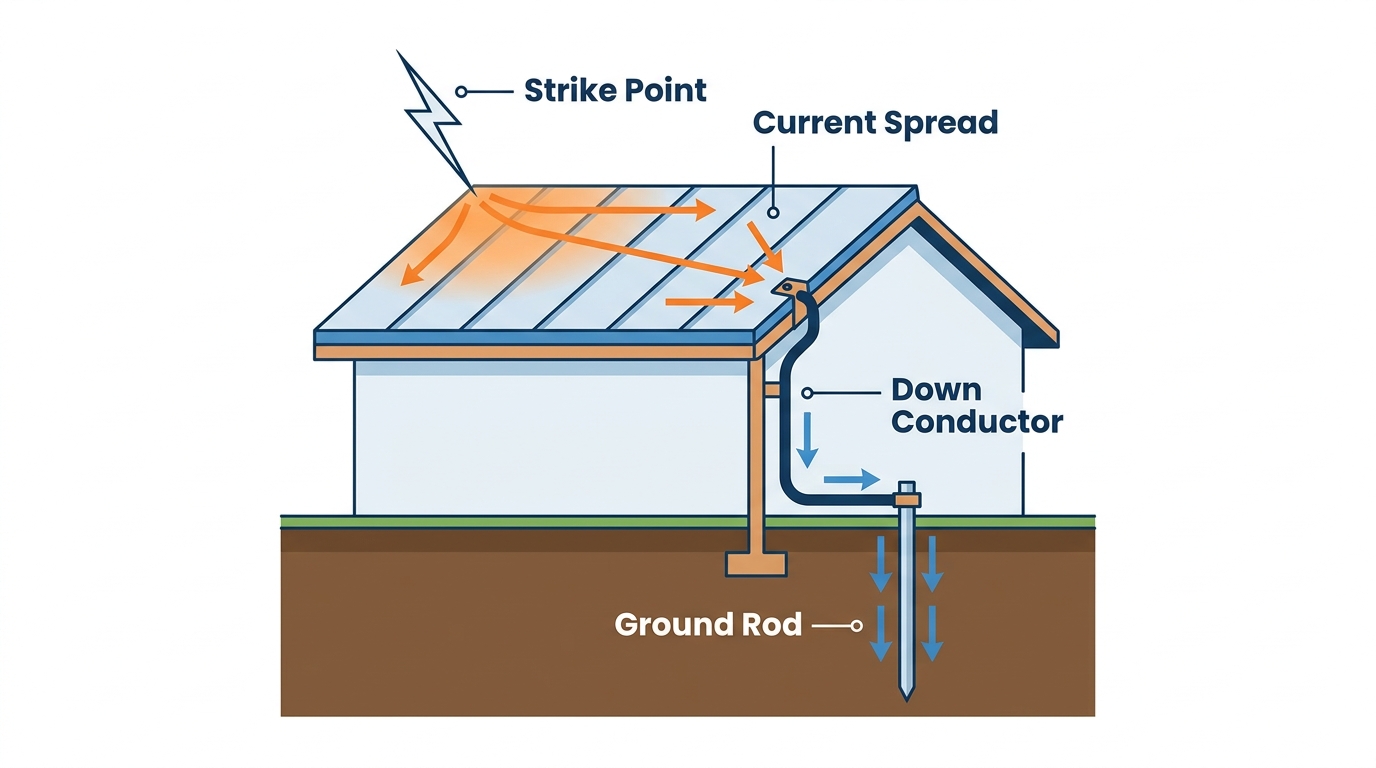
When lightning hits a metal roof, the metal carries the electrical current across the surface. That current can then move down through a grounding path, if one exists, and into the earth. At its core, lightning is a burst of negatively charged electrons searching for the fastest path to the ground. A metal roof gives those electrons an easy, low-resistance surface to travel across, instead of forcing them to burn through the material.
Metal is a conductor. It lets electricity move through it easily instead of trapping it in one spot. This is actually a good thing during a strike.
Does the Lightning Travel Through the Metal Roof?
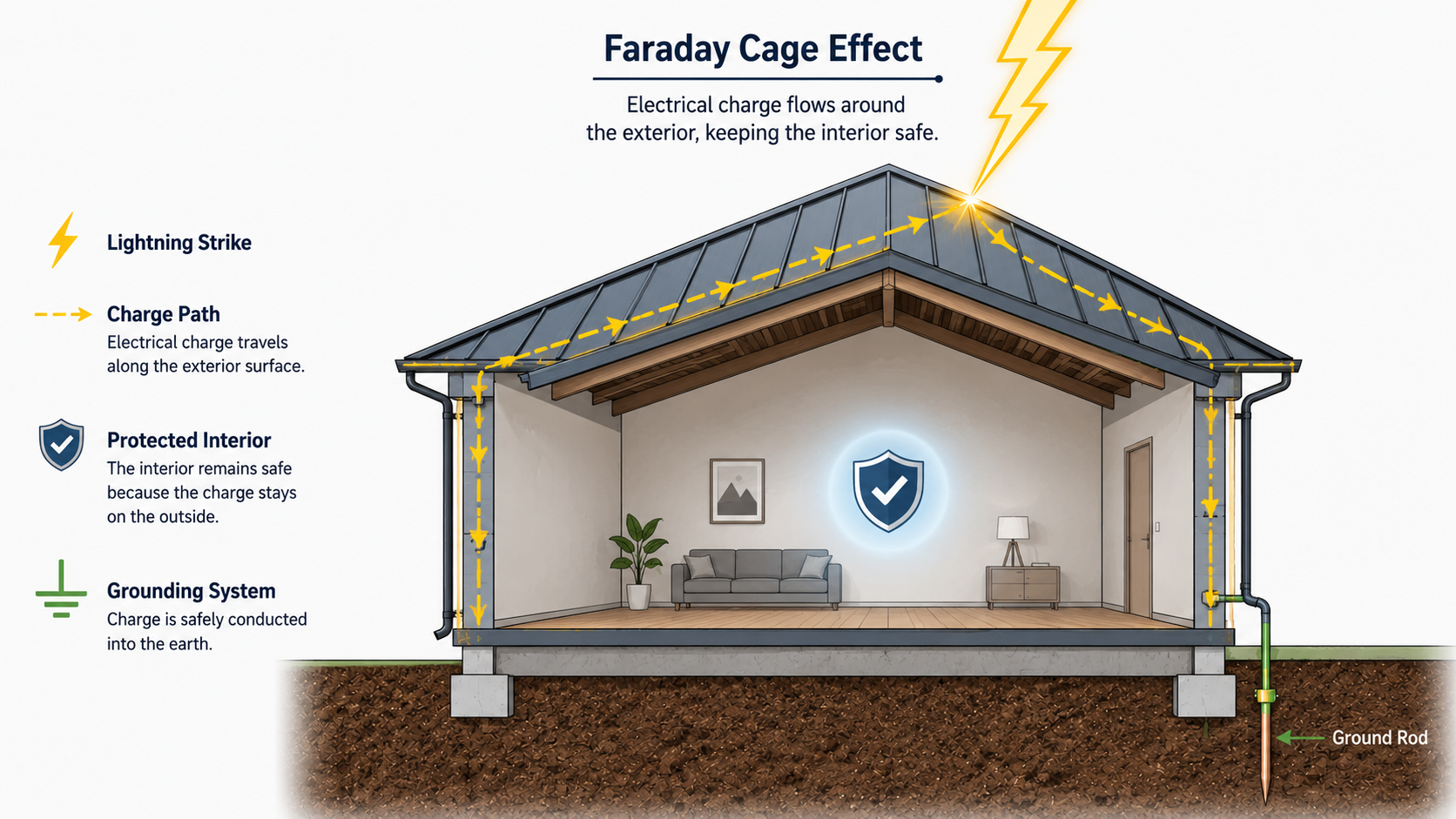
Yes, the current travels across the metal panels and spreads out instead of staying in one concentrated point. This spreading effect is sometimes explained through the Faraday cage effect. A grounded, conductive structure routes the charge around its outer surface, which keeps the interior largely unaffected. Less heat builds up in any single spot, so there is less chance of damage.
Does the Lightning Travel Through the Metal Roof?
Yes, the current travels across the metal panels and spreads out instead of staying in one concentrated point. This behavior is similar to what is explained as a Faraday-like shield.
According to the National Fire Protection Association (NFPA), a continuous conductive structure that is properly bonded and grounded can help direct lightning current along its exterior surface. This reduces the amount of current that may pass through the interior of the structure.
Source: National Fire Protection Association (NFPA)
Can a Metal Roof Catch Fire From Lightning?
No, metal itself cannot catch fire. It is non-combustible, so it will not ignite the way wood shakes or asphalt shingles can. This is one of the biggest safety advantages of metal roofing. A strike on a shingle roof can spark a fire at the point of impact. A metal roof simply cannot burn.
Can Lightning Damage the Roof or Home?
Yes, it still can, even though metal will not burn. A strong strike can leave scorch marks, small punctures, or loosened seams, especially on a standing seam metal roof where panels interlock at the edges. These signs may not always be obvious from the ground, so a closer inspection may be needed after a strike.
Are Metal Roofs Safer During a Lightning Storm?
Yes, metal roofing is one of the safer roofing choices during a thunderstorm. It will not attract more strikes, and it handles the ones it does get better than most materials.
Why Metal Roofing Does Not Attract Lightning
Weather vanes sit on rooftops all over the world, and they are almost always made of metal. If metal attracted lightning, weather vanes would be struck far more often than they are. Lightning responds more to height, shape, and location than to the material of the roof. Metal roofing simply conducts the electrical current well once a strike occurs.
How Metal Roofing Can Help Reduce Fire Risk
Because metal will not ignite, it removes one of the biggest dangers of a strike. Wood and asphalt can smolder and catch fire after impact. A properly grounded metal roof spreads the electrical energy across a wide surface. That spreading action reduces heat buildup at any single spot, cutting fire risk even further.
Do You Need a Lightning Rod With a Metal Roof?
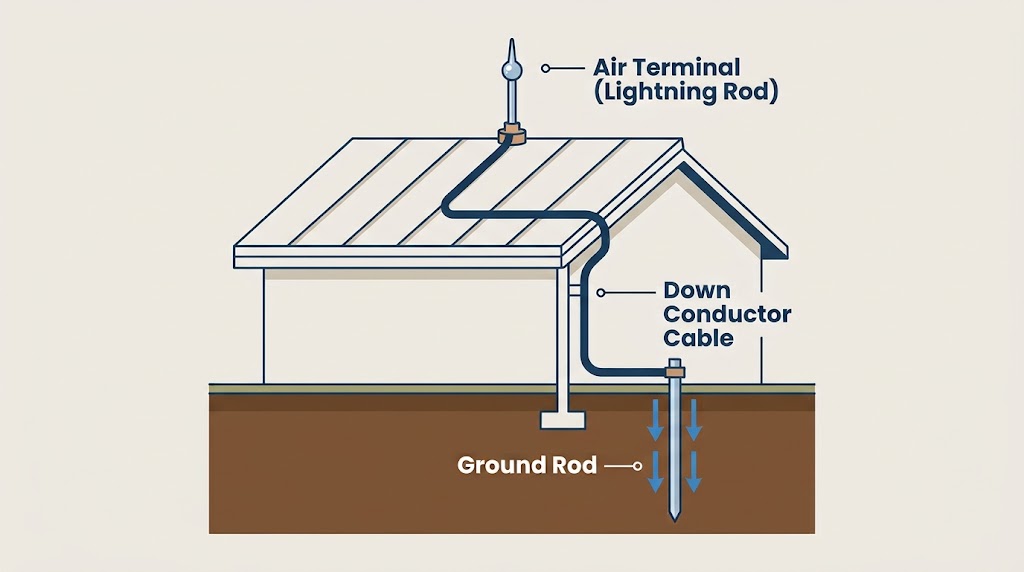
For most homes, no. A standard metal roof does not require a lightning rod simply because it is made of metal. A lightning rod, also called an air terminal, may be worth considering if your home is in an exposed location, sits on high ground, or has other features that increase its exposure to lightning.
When a Lightning Protection System May Be Needed
You may want to talk to a professional about lightning protection if any of these apply to your property:
Your home sits much taller than nearby buildings
Your property is in an open field or on a hilltop
You store expensive electronics, vehicles, or equipment inside
Your home has historical value that is hard to replace
A full system connects the air terminal to a down conductor, which carries the charge to a ground rod driven deep into the soil. Together, these three parts give a strike a controlled, safe path to the earth. If none of these situations fit your property, a properly grounded metal roof is usually enough.
Before installing a system, it also helps to check with your insurance company. Some insurers offer lower premiums for homes with certified lightning protection, and a few may even require it for certain coverage types.
Why Proper Grounding and Installation Matter
A lightning rod is not the most important piece of the puzzle. Correct grounding is. Your roof needs a clear, continuous path for electricity to travel from the panels down to the earth. Skipping this step, or installing it poorly, is what actually creates risk. Always hire an installer certified by the Lightning Protection Institute (LPI), and confirm the components carry UL 96 or UL 96A listing, so the system meets NFPA 780 requirements.
What Happens to the Rest of the House When Lightning Hits the Roof?
A strike does not always stay contained to the roof. The electrical charge can travel further into your home through wiring, pipes, or other metal pathways.
Electrical Systems and Appliances
Lightning can send a power surge through your home's wiring. This surge can damage televisions, computers, and other plugged-in devices. Even a strike that never touches your house directly can send a surge through nearby power lines. This is why surge protection matters, even for homes with well-grounded roofs.
Plumbing and Other Metal Components
Metal pipes, gutters, and ductwork can carry an electrical charge if it finds its way inside your walls. This is called side-flash or arcing. Proper bonding connects these metal components to your grounding system. Bonding gives the charge a safe path instead of letting it jump between materials.
Structural and Fire Damage
A powerful strike can occasionally cause minor structural stress at the point of impact, such as loosened fasteners or seams. Fire risk from the roof itself stays low because metal does not burn. The bigger fire risk usually comes from electrical arcing inside walls, not the roof surface itself.
Can Lightning Damage a Metal Roof?
Yes, damage is possible, though it is usually minor compared to what other roofing materials experience.
Common Types of Lightning Damage
Here is what a strike can leave behind on a metal roof:
Small burn marks or discoloration at the contact point
Tiny punctures or pitting in the panel surface
Loosened seams or fasteners
Damage to grounding wires or lightning protection components
Signs Your Roof May Have Been Damaged
After a nearby strike, walk the perimeter of your home and look for these clues:
Scorch marks or a burnt smell near the roofline
Loose or displaced panels
Damaged gutters, downspouts, or vent caps
Any tripped breakers or unusual electrical behavior inside
What Should You Do After Lightning Strikes Your Metal Roof?
Stay calm. Most metal roofs come through a strike with little to no visible damage. Still, a quick check is always worth doing.
Check for Visible Roof Damage
Look at your roof from the ground first. Binoculars work well if you do not want to climb up. Check for scorch marks, bent panels, or anything that looks out of place. Do not walk on the roof yourself if you are not experienced doing so.
Have the Electrical System Inspected
Check your breaker panel for tripped switches. Test major appliances and outlets for normal function. If anything smells burnt, sparks, or stops working, call an electrician before using that circuit again.
When to Call a Roofing or Lightning Protection Professional
Call a roofing contractor if you spot any damage, or if you are unsure after a direct strike. A lightning protection specialist should inspect your system if you already have one installed. It is always better to get a quick inspection than to assume everything is fine.
How to Protect a Metal-Roofed Home From Lightning
You cannot stop lightning from striking your home. You can control how safely that energy leaves your property.
Proper Grounding and Bonding
Every metal component on your roof and around your home should connect to a single grounding path. This includes gutters, flashing, and any metal trim. Good bonding stops electricity from jumping between materials and causing arcing damage.
Lightning Protection Systems
A full system uses air terminals, down conductors, and ground rods to give a strike a clear, safe path to the earth. This setup follows NFPA 780, the national standard for lightning protection installation, and should use UL-listed components throughout. A standing seam metal roof lightning protection setup typically clamps the air terminal base directly onto the raised seam, so no drilling into the panel is needed. This matters most for tall buildings, open properties, or homes with valuable equipment inside.
Surge Protection for Electrical Equipment
A whole-house surge protector guards your electronics from power spikes. This protects your home even from strikes that hit nearby power lines instead of your roof directly. Pair this with a grounded roof, and your home is well covered from every angle a strike could come from.
Want to learn more about roofing materials, costs, and maintenance? Visit Snows brain for more practical roofing guides. If you’re planning a roofing project, try our roofing calculator to estimate your roof price and see how weather conditions can affect your roofing needs.
Frequently Asked Questions
Does a metal roof attract lightning?
No. Metal does not attract lightning any more than shingles, tile, or wood. Height and location decide where lightning strikes, not roofing material.
Can lightning cause a house fire through a metal roof?
Rarely from the roof itself, since metal cannot burn. Fire risk mostly comes from electrical arcing inside the walls, not the panels.
Is it safe to stay inside during a storm with a metal roof?
Yes. A grounded metal roof is one of the safer roof types to be under during a thunderstorm.
How much does a lightning protection system cost?
Cost depends on your home's size, roof type, and whether you already have proper grounding in place. A local lightning protection specialist can give you an accurate quote for your property.
Do all metal roofs need grounding?
Not a formal lightning protection system, but every metal roof benefits from proper bonding between its metal components. Full grounding systems are recommended mainly for tall, exposed, or high-value properties.