
 @amina
Newer metal roofing options include nail-gunnable steel shingles, stone-coated steel roofing, and updated standing seam panels. These systems offer different designs and features, but they are not all brand-new inventions. Some are established roofing styles with newer design or installation options, such as replaceable panels, concealed fasteners, and improved impact resistance.
You may also come across features that improve a roof's performance rather than define its structure. For example, thermal breaks can help reduce heat transfer, while cool roof coatings reflect more sunlight and PVDF finishes help protect the roof's color and surface. Understanding the difference between a roofing type and a performance feature will help you compare options and choose what suits your home, budget, and climate.
Is Cool Metal Roofing a New Roofing Type or Just a Roof Feature?
Cool metal roofing is not a separate structural roofing profile. It is a performance feature that uses specialized coatings with reflective pigments to reflect more solar energy away from your home. These coatings can be applied to different metal roofing profiles, including standing seam, corrugated panels, and metal shingles. By reducing heat absorption and heat transfer into the attic, cool metal finishes may help lower cooling energy bills, especially in hot climates with strong sunlight.
The coating also matters. Some metal roofs use durable PVDF fluoropolymer coatings, such as Kynar 500®, to help protect against fading, chalking, and UV damage. Light-colored or reflective finishes can support energy efficiency, but results depend on the roof, climate, insulation, and ventilation. In cold climates, proper ceiling insulation and attic ventilation matter more for heat retention than roof color alone. So, when choosing a new type of metal roofing, remember that a roof's style, material, and coating technology are different things. A finish such as Textured, Low-Gloss Moonstone™ should only be named as a specific product example when its details are confirmed by the manufacturer.
Standing Seam vs. Exposed-Fastener Metal Roofing: Which Is Better?
Both standing seam and exposed-fastener metal roofing have their own strengths. Standing seam offers longer-term durability and less routine fastener maintenance, while exposed-fastener roofing is often more affordable to install. The right option depends on what matters most to you, from upfront cost and maintenance needs to appearance and long-term performance. Here’s how they compare.
1. Standing Seam Metal Roofing
Advantages:
Concealed fasteners: Hidden beneath raised seams, keeping screws out of the exposed metal surface.
Better leak protection: Fewer exposed fastening points help reduce potential leak risks.
Long service life: Can last around 40–70+ years, depending on materials, installation, and maintenance.
Lower routine maintenance: No exposed screws to check regularly, though the roof still needs inspections.
Modern appearance: Clean vertical lines suit contemporary home designs.
Things to consider:
Higher upfront cost: Typically around $9–$16+ per square foot installed.
Skilled installation: The concealed clip system and panel design require proper installation expertise.
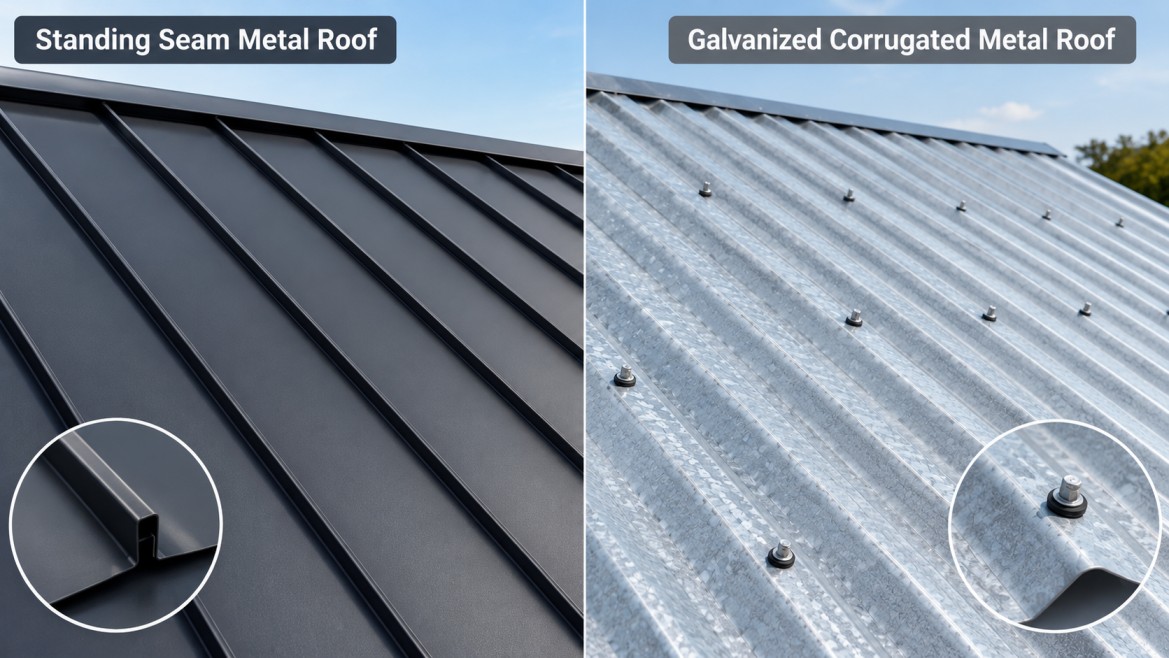
2. Exposed-Fastener Metal Roofing
Advantages:
Lower upfront cost: Typically around $4–$12 per square foot installed.
Simpler installation: Wider panels can cover more roof area with fewer pieces.
Practical for outbuildings: Often considered for barns, garages, and other budget-conscious projects.
Traditional appearance: Corrugated sheets, Ag-panels, and R-panels offer a more industrial or agricultural look.
Things to consider:
Visible screws: Fasteners and rubber washers remain exposed to weather and sunlight.
Regular maintenance: Screws and washers may need inspection, tightening, or replacement every 5–10 years.
Potential leak points: Worn washers or loose screws can allow water to enter.
Shorter expected lifespan: Often around 20–30 years, depending on product quality, installation, and upkeep.
Quick Comparison
Decision Factor | Standing Seam | Exposed-Fastener |
|---|---|---|
Fasteners | Concealed | Visible screws |
Initial cost | Higher | Lower |
Maintenance | Generally less fastener maintenance | Periodic screw and washer checks |
Expected lifespan | 40–70+ years | 20–30 years |
Installation | More specialized | Generally simpler |
Best fit | Long-term homes and modern designs | Tighter budgets and outbuildings |
Which should you choose?
Consider standing seam if you plan to stay in your home for many years and want fewer exposed fasteners to maintain. Exposed-fastener roofing may be a better fit if initial cost is your priority and you are comfortable with regular maintenance. Actual prices and lifespans vary by product, roof design, location, and installation quality.
What Other Metal Roofing Styles Can You Choose From?
Metal roofing comes in more styles than basic panels. You can choose a roof that looks like traditional shingles, cedar shakes, slate, or clay tiles while still getting the benefits of metal. The best option depends on your preferred appearance, budget, and roofing needs.
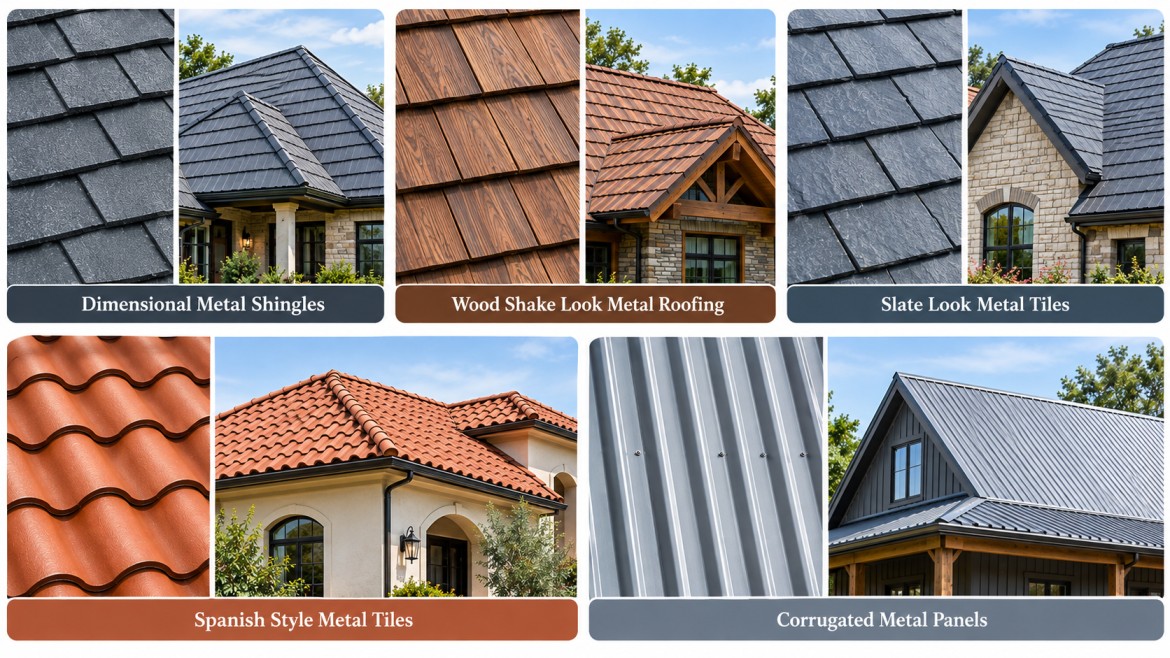
1. Metal Shingles, Shake, and Slate
Metal Shingles: Copy the look of traditional asphalt shingles, with a dimensional texture and a familiar appearance.
Metal Wood Shake: Gives your roof a rustic cedar-shake look without the same risk of rot and mold.
Metal Slate: Mimics natural slate stone while adding less weight to the roof structure.
Best for: Homeowners who want a traditional roof style with the durability and fire resistance of metal.
2. Metal Tiles: Spanish and Mediterranean Styles
Metal tiles mimic the curved shape of clay and concrete tiles. They provide a classic Spanish or Mediterranean appearance without the heavy load of traditional tile roofing.
Best for: Homes with Mediterranean architecture or homeowners who want a tile-style roof without adding as much weight.
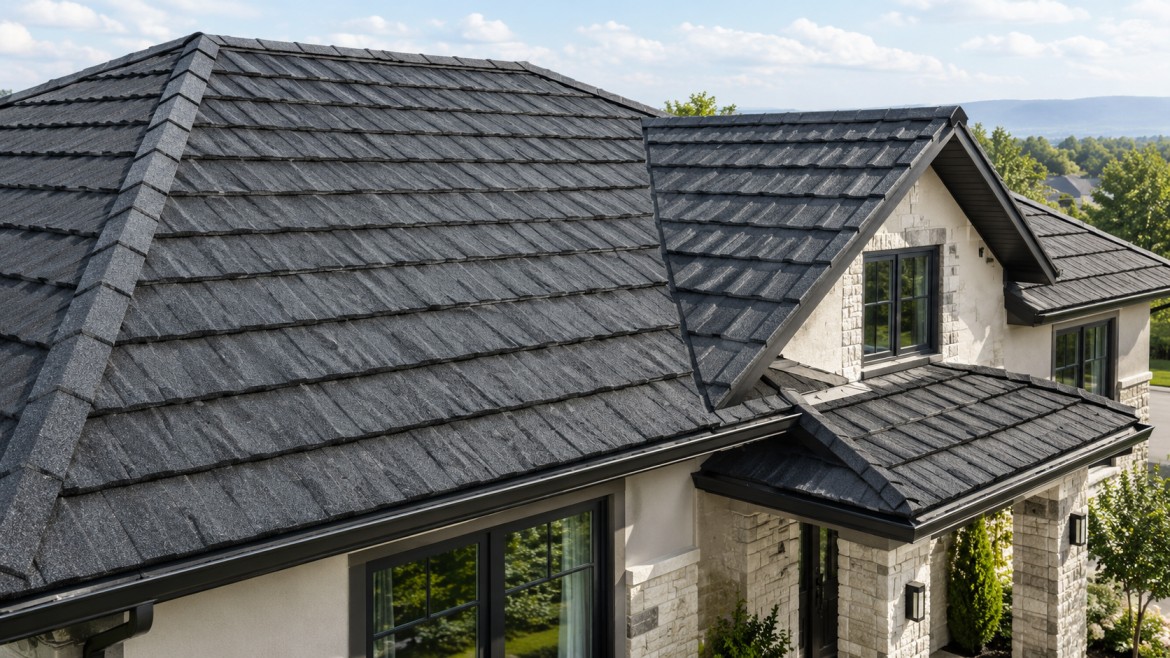
3. Stone-Coated Steel Roofing
Stone-coated steel roofing uses steel panels covered with natural stone granules. It comes in shingle, shake, and barrel-tile profiles, making it a flexible choice for different home designs.
Best for: Homeowners who want a textured, traditional appearance with the strength of steel. Some systems also include an under-panel air gap that can help reduce heat transfer.
4. Exposed-Fastener Profile Options
Corrugated Panels: Have a classic wavy or zigzag shape and suit rustic or industrial designs.
Ribbed and V-Groove Panels: Include styles such as R-Panel, Ag-Panel, 5V, and U-Panel. They are commonly used on homes, garages, barns, and agricultural buildings.
Best for: Homeowners who prefer a simple metal-panel look or need roofing for an outbuilding.
5. Specialty and Wood-Look Metal Panels
Wood-look metal panels use printed finishes to resemble natural timber. Metal board-and-batten panels create a traditional farmhouse look, while decorative batten-cap panels add detail to areas such as entryways, dormers, and awnings.
Best for: Homeowners who want a distinctive exterior or a farmhouse-style design without using real wood.
Which Metal Roofing Style Is Best for Your Climate?
Your local weather can affect which metal roofing material and style makes the most sense. Use this quick comparison as a starting point.
Weather Conditions | Metal Roofing Style | Why Consider It? |
|---|---|---|
Coastal areas | Aluminum roofing | Resists salt-air corrosion |
Heavy snowfall | Standing seam | Smooth surface helps snow slide off |
HOA restrictions | Stone-coated steel shingles | Offers a traditional look with metal durability |
Hot, sunny climate | Reflective metal roofing | Helps reduce roof heat gain |
Which Metal Roofing Materials Are Used in Modern Roofs?
Modern metal roofing materials offer different benefits based on their weight, durability, cost, and corrosion resistance. Steel is a popular, cost-effective choice for residential and commercial roofs. Galvanized steel has a protective zinc coating, while Galvalume steel uses a mix of aluminum, zinc, and silicone to help protect against corrosion. Aluminum is lightweight and naturally rust-resistant, making it a good option for coastal homes exposed to salt air. Copper offers a distinctive look that changes over time, developing a blue-green patina, and can last for many decades. Zinc is also long-lasting and recyclable, with a natural patina that helps protect its surface. The right material depends on your home's location, budget, and the conditions your roof must handle.
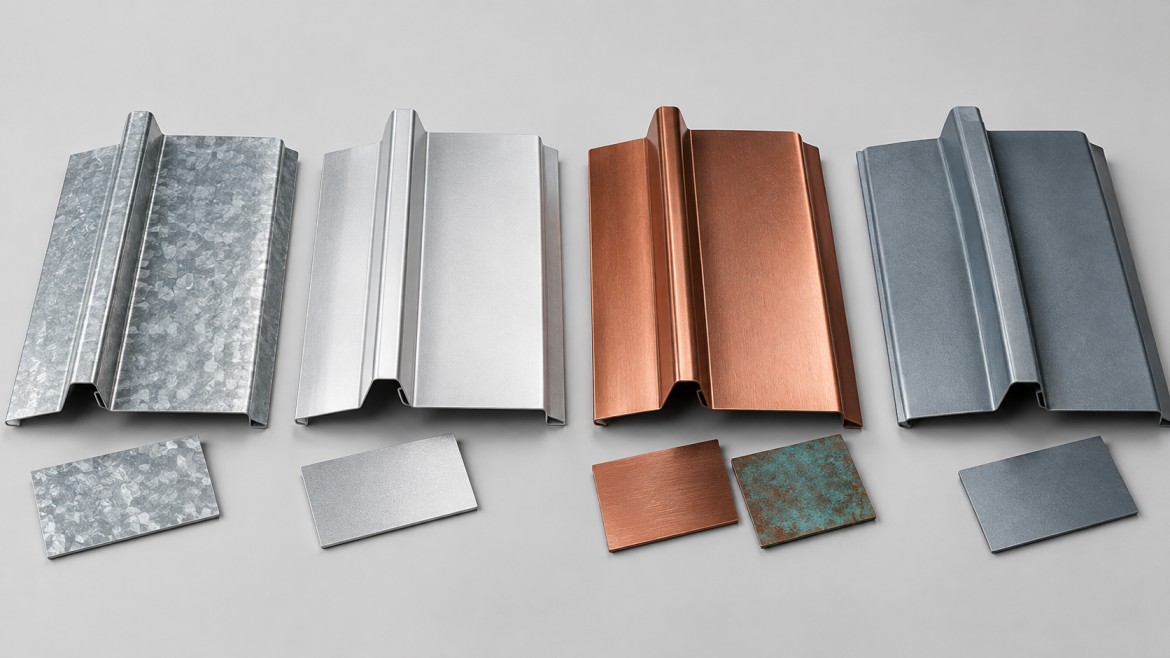
What About Paint Finishes?
Once you choose a base metal, consider its paint finish as well. PVDF (Polyvinylidene Fluoride) coatings, sold under names such as Kynar 500 and Hylar 5000, offer strong resistance to UV damage, chalking, and fading, making them a common choice for premium metal roofs. SMP (Silicone Modified Polyester) and standard polyester coatings are often more budget-friendly, but their color may fade sooner with long-term sun exposure. Choosing a suitable coating for your metal and local climate can help maintain your roof's appearance and reduce the need for repainting.
How Do You Choose the Right Metal Roof for Your Home?
Choosing the right metal roof depends on your budget, climate, and long-term plans. Standing seam and stone-coated steel suit long-term homeowners, while exposed-fastener panels offer a lower upfront cost but need regular maintenance. For coastal areas, aluminum or zinc resist salt-air corrosion, while impact-rated steel can help protect against hail. In hot or snowy climates, consider reflective coatings, roof slope, drainage, and ice-dam risks before making your choice.
What Should You Check Before Buying a Metal Roofing System?
Material and finish: Compare Galvalume steel, galvanized steel, aluminum, and PVDF coatings.
Fasteners: Check whether the system uses concealed or exposed fasteners and what maintenance they need.
Roof condition: Confirm roof slope, drainage, deck condition, and local building code requirements.
Installation: Ensure correct fastener placement, proper flashing, and compliance with manufacturer instructions.
Warranty and ratings: Check paint, corrosion, and workmanship warranties, plus relevant wind and hail ratings.
Underlayment: Confirm suitable moisture protection for your climate.
Installer experience: Verify metal roofing experience and ask to see recent projects.
Explore more metal roofing types and their features on SnowsBrain. Use our roofing calculator to estimate your roof’s cost and learn which options may suit your local climate.