
What Is Galvalume? Everything Homeowners Need to Know
Not every metal roof provides the same level of protection against rust, corrosion, and harsh weather. Choosing the wrong roofing material can lead to expensive repairs, poor performance, and a shorter roof lifespan. Galvalume was developed to solve these problems with its durable aluminum-zinc protective coating, helping roofs last longer in many environments. In this guide, you'll learn what Galvalume is, how it works, its benefits, common uses, potential drawbacks, and whether it's the right choice for your home.
If you're comparing Galvalume with galvanized steel or choosing a metal roof for a new home, understanding how this protective coating works can help you make a better long-term decision.
What Is Galvalume?
Galvalume is a high-performance metal roofing material made from a steel substrate coated with a specialized aluminum-zinc alloy.
Developed by Bethlehem Steel in the early 1970s, Galvalume was created to provide better corrosion resistance and durability than traditional galvanized steel. The aluminum-zinc coating protects the underlying steel from rust, moisture, and harsh weather, helping extend the roof's service life. Because of its long-lasting performance, Galvalume steel is widely used for metal roofing, metal siding, and wall panels. A properly installed Galvalume roof can last 40 to 70 years, depending on the climate, installation quality, and regular maintenance.
What Is Galvalume Made Of?
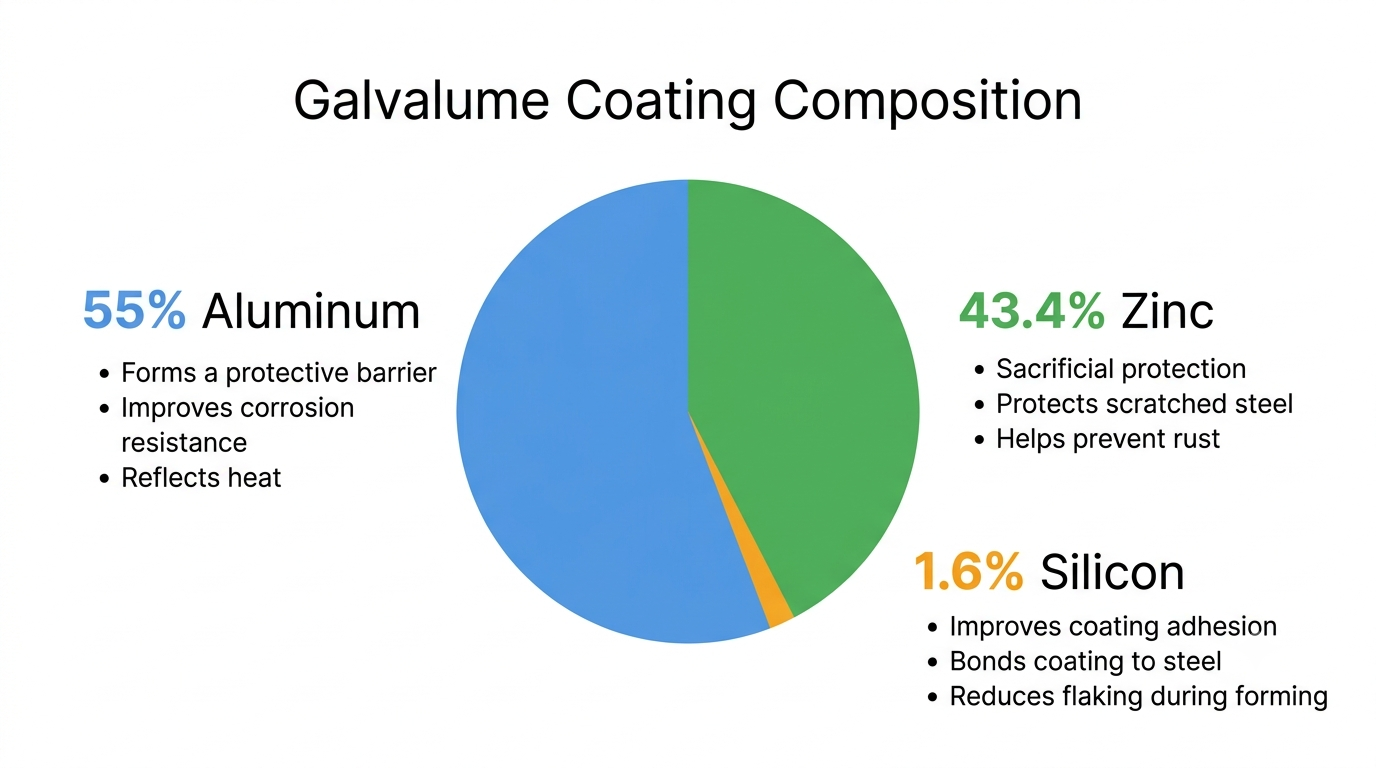
Galvalume is made by coating a cold-rolled carbon steel sheet with a molten alloy of 55% aluminum, 43.4% zinc, and 1.6% silicon through a continuous hot-dip process.
Each metal has a specific role. Together, they improve corrosion resistance, strengthen the bond between the coating and the steel, and help extend the roof's lifespan.
Composition of the Galvalume Coating
The aluminum-zinc coating steel combines three metals that work together to protect the steel and improve long-term performance.
Before looking at the composition, it's helpful to understand the difference between Galvalume steel and a Galvalume roof. Galvalume steel is the coated raw material, while a Galvalume metal is the finished roofing product made by forming that steel into roofing panels.
Element | Purpose |
|---|---|
55% Aluminum | Forms a protective barrier, improves corrosion resistance, and reflects heat. |
43.4% Zinc | Provides sacrificial protection by corroding before the steel if the coating is scratched or damaged. |
1.6% Silicon | Improves coating adhesion and helps keep the metallic coating bonded during shaping and manufacturing. |
Galvalume vs. Galvanized Steel: What's the Difference?
Although both materials protect steel from rust, they use different types of coatings and perform differently over time.
Galvalume is coated with an aluminum-zinc alloy, giving it better corrosion resistance, longer-lasting rust protection, and higher heat reflectivity. Galvanized steel, on the other hand, uses a 100% zinc coating. It is usually more affordable and performs well in high-alkaline environments, but it generally has a shorter lifespan than Galvalume.
-a54bcc63.png)
Feature | Galvalume | Galvanized Steel |
|---|---|---|
Coating | 55% Aluminum, 43.4% Zinc, 1.6% Silicon | 100% Zinc |
Expected Lifespan | 40–70 years | 20–50 years |
Main Advantage | Better corrosion resistance, heat reflectivity, and longer lifespan | Better performance in high-alkaline environments |
Best For | Residential and commercial metal roofs | Agricultural buildings, animal shelters, and alkaline environments |
How Does Galvalume Protect Steel From Rust?
Galvalume metal roofing protects steel through a dual-action protection system that combines barrier protection and sacrificial protection. Instead of relying on a single layer, each metal in the coating performs a different job to keep the underlying steel safe from moisture, oxygen, and corrosion.
Rust Protection Mechanism:
Aluminum (Barrier Protection)
Aluminum forms a stable oxide barrier over the steel surface. This protective layer blocks moisture, oxygen, and atmospheric pollutants, reducing oxidation before it reaches the steel substrate.
Zinc (Sacrificial Protection)
Zinc protects the steel by corroding first whenever the coating is scratched or worn. This galvanic action shields the underlying steel and slows the spread of rust.
Silicon (Coating Adhesion)
Silicon strengthens the bond between the protective coating and the steel during the manufacturing process. This stronger bond helps the coating stay attached during bending, forming, and installation.
Self-Healing Protection
At cut edges or other exposed areas, the zinc coating helps control edge creep by protecting the exposed steel. This self-healing action reduces red rust, slows rust spreading, and improves the long-term durability of the roofing panels.
Common Uses of Galvalume
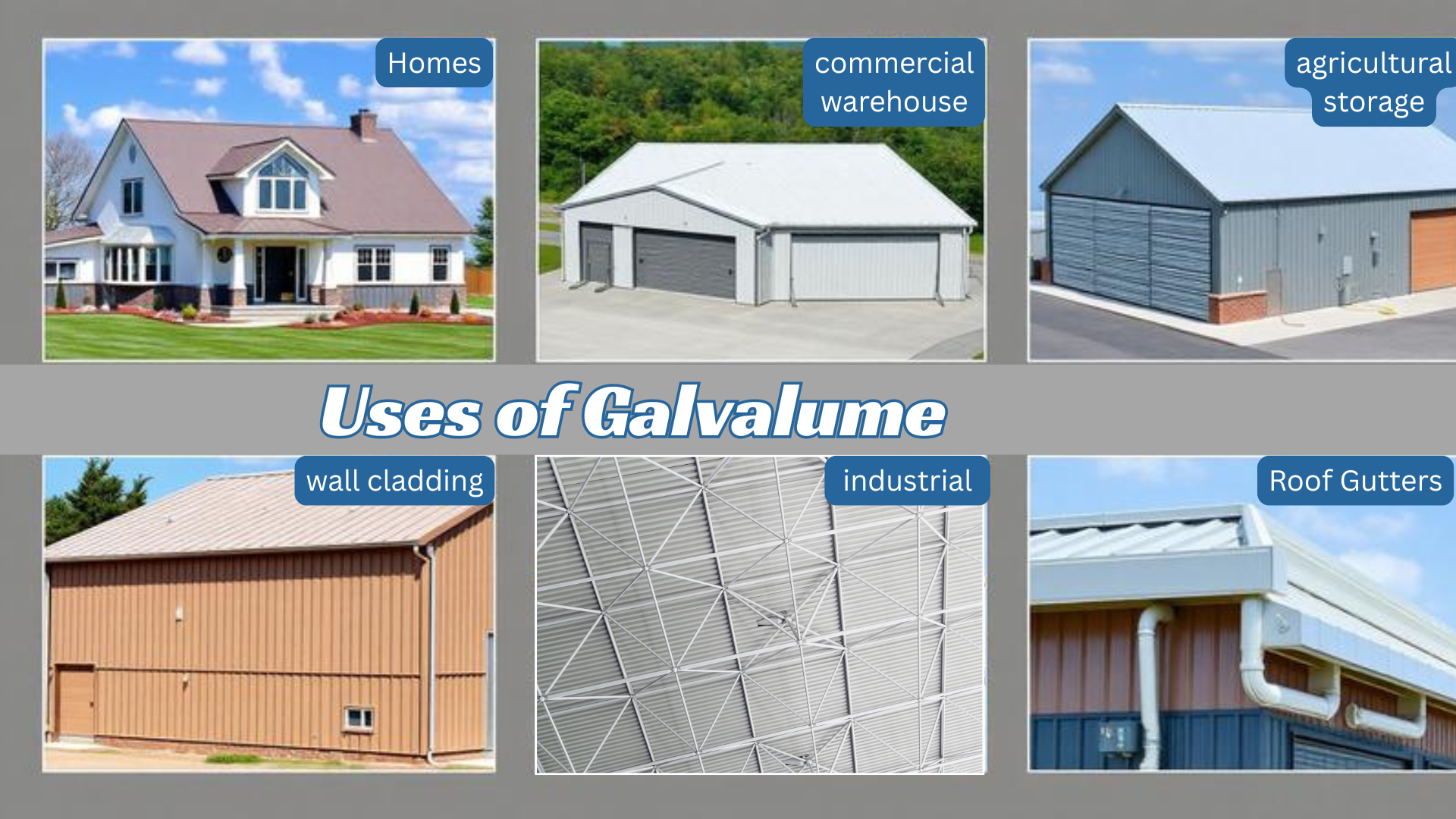
Galvalume is a versatile aluminum-zinc coated steel used in a wide range of construction projects because of its excellent corrosion resistance, long lifespan, and low maintenance requirements. It performs best in non-coastal environments and is commonly used for roofing, wall systems, and other exterior building components.
Residential Roofing
Galvalume is a popular roofing material for single-family homes, condominiums, and multi-family residential projects. It is available as factory-painted panels in a wide range of colors, giving homeowners more design options while covering its natural silvery finish.
Why homeowners choose it:
Standing seam systems: Hidden fasteners create a clean, modern appearance and provide better leak protection.
Painted panels: Available in many colors to match different home styles.
Expected lifespan:
A properly installed Galvalume roof can last 40–70 years, offering an excellent return on investment and often outlasting multiple asphalt shingle roofs.
Commercial Buildings
Galvalume is widely used on commercial buildings because it performs well in demanding weather conditions while requiring very little maintenance.
Common applications:
Hospitals
Schools
Stores
Government buildings
Large-scale commercial structures
Key benefits:
Resists high winds, heavy rain, and snow.
Unpainted Galvalume is an affordable metal panel option for large buildings.
High solar reflectance helps reduce cooling costs by reflecting heat away from the building.
Agricultural Buildings
Galvalume works well for storage facilities, barns, and non-animal agricultural buildings because it is durable, economical, and easy to install over large areas.
Why it works well:
Corrugated and exposed fastener panels cover large roof areas quickly.
Lower installation and material costs.
Important limitation:
Avoid using Galvalume for animal housing. Ammonia gas from animal waste can damage the protective coating. In these environments, galvanized steel is usually the better choice.
Metal Siding
Galvalume is also a popular choice for metal siding and exterior wall panels, providing long-lasting weather protection with a clean, modern appearance.
Common applications:
Warehouses
Factories
Industrial buildings
Commercial buildings
Architectural projects
Installation options:
Horizontal or vertical installation
Concealed fastener systems for a streamlined appearance and improved water resistance
Gutters & Flashing
Galvalume is also used to make roofing accessories that help control water and protect vulnerable areas of a building.
Common components:
Gutters
Downspouts
Flashing
Trim components
Drip edges
Galvalume flat sheets
Galvalume coils
Where they're used:
Around chimneys
Roof valleys
Roof intersections
Custom on-site trim
Main benefit:
These components create a watertight seal, improve water drainage, protect the building envelope, and help prevent moisture damage to the fascia.
Benefits of Galvalume Roofing
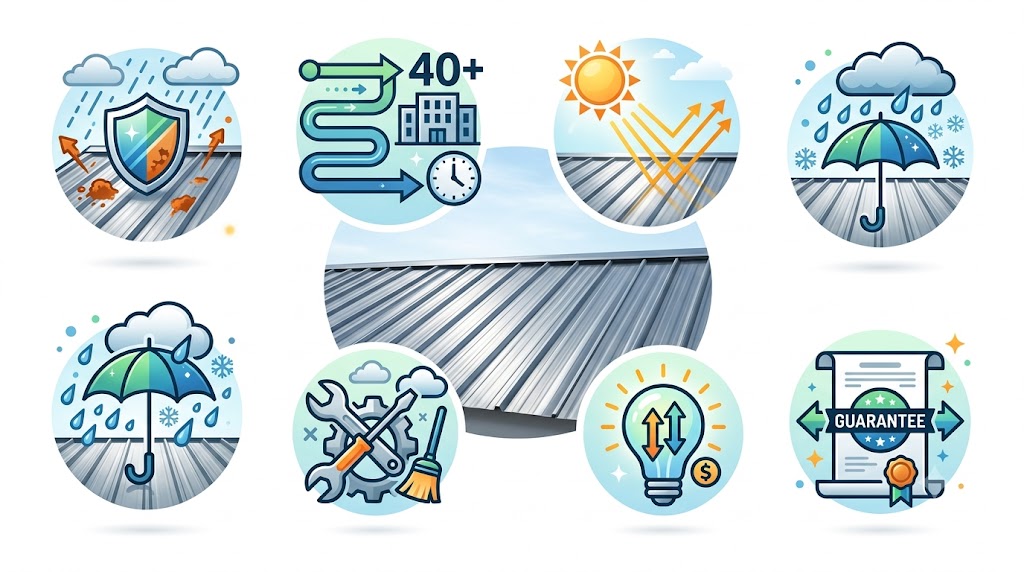
Galvalume roofing is valued for its long-lasting performance, durability, and energy efficiency. Its aluminum-zinc alloy coating helps protect the steel from rust, reduces maintenance needs, and provides long-term value for homeowners and commercial property owners alike.
Superior Corrosion Resistance
One of the biggest advantages of Galvalume roofing is its excellent corrosion resistance. The aluminum layer blocks moisture, while the zinc layer protects exposed steel if the coating is damaged. Together, they reduce rust, resist environmental wear, and help Galvalume last two to four times longer than traditional galvanized steel in similar conditions.
Self-Healing Protection
When roofing panels are cut, small areas of steel become exposed. The zinc coating helps control edge creep by protecting these cut edges, reducing red rust, slowing rust spread, and lowering the risk of long-term roof damage.
Long Lifespan and Weather Resistance
With proper installation and regular maintenance, a Galvalume roof can last 40–70 years in suitable environments. Its flexible alloy coating stands up well to rain, snow, ice, and changing temperatures, helping reduce the risk of cracking over time.
Better Energy Efficiency
Thanks to its high aluminum content, unpainted Galvalume reflects a large amount of solar heat instead of absorbing it. This helps keep the roof cooler, reduces summer cooling loads, and may lower energy bills when paired with reflective roof coatings.
Cost-Effective Over Time
Although materials such as aluminum, copper, and zinc roofing are available, Galvalume remains one of the most cost-effective metal roofing options. Its durability, low maintenance, and long lifespan provide an excellent long-term return on investment compared with replacing asphalt shingles multiple times.
Strong Manufacturer Warranties
Many manufacturers back their Galvalume products with substrate warranties, including 25.5-year perforation warranties. Factory-painted panels may also include separate paint warranties against fading and chalking, providing additional long-term protection.
Disadvantages of Galvalume
Although Galvalume offers excellent durability and corrosion resistance, it isn't the best choice for every environment. Understanding its limitations can help you select the right roofing material and avoid problems later.
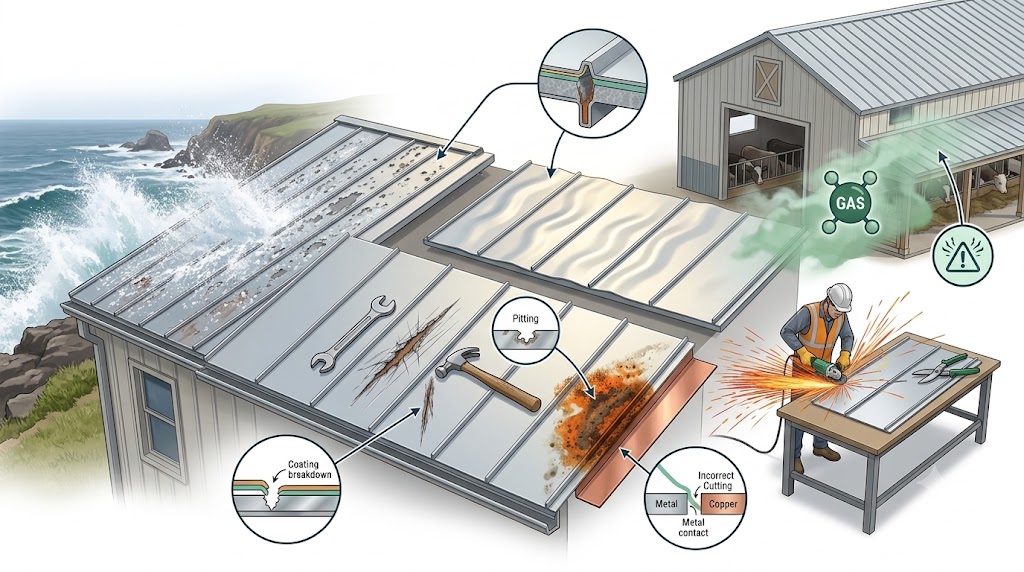
Not Ideal Near Saltwater
Galvalume is not recommended for properties within 1,500 feet of the coastline. Constant salt spray can gradually damage the protective coating and increase the risk of premature corrosion. For coastal homes, aluminum roofing is often a better choice.
Not Suitable for Animal Buildings
Avoid using Galvalume on barns, stables, or other animal housing. Ammonia gas released from animal waste can break down the protective coating over time. In these conditions, galvanized steel generally performs better.
Risk of Galvanic Corrosion
Galvalume should not come into direct contact with copper, lead, iron, concrete, bricks, or treated lumber. Even water runoff from copper flashing or copper pipes can trigger galvanic corrosion and shorten the roof's lifespan.
Oil Canning
Like most light-gauge metal roofs, Galvalume panels may develop oil canning, which appears as small waves or ripples on flat surfaces. This is only a cosmetic issue and does not affect the roof's structural performance.
Scratches and Surface Marks
Unpainted and acrylic-coated Galvalume have a softer surface than galvanized steel. Heavy foot traffic, dropped tools, or improper installation can leave scratches or scuff marks that may weather unevenly over time.
Paint May Fade Over Time
Factory-painted Galvalume roofs are designed for long-term performance, but years of exposure to sunlight, heat, and weather can gradually cause color fading or chalking, especially on lower-quality paint systems. Choosing a quality paint finish with a strong manufacturer warranty helps reduce this risk.
Top manufacturers of Galvalume steel sheets in the United States
Finding the right Galvalume steel supplier can be challenging because many manufacturers offer similar products. Based on my research, Nucor Corporation, Steel Dynamics (SDI), Steelscape, Majestic Steel USA, and Kloeckner Metals Corporation are among the most trusted U.S. manufacturers of Galvalume steel sheets. These companies are known for producing high-quality Galvalume products, advanced manufacturing capabilities, and reliable supply for residential, commercial, and industrial metal roofing projects.
Does Galvalume Rust?
Galvalume is highly resistant to rust, but it is not completely rust-proof. It performs best in suitable environments and can develop corrosion if the protective coating is damaged or exposed to salt air, harsh chemicals, trapped moisture, or poor installation practices.
Does Galvalume Need Maintenance?
Yes. Galvalume roofing requires very little maintenance, but routine care helps preserve its appearance and extend its service life. Annual inspections, removing leaves and debris, cleaning gutters, and checking roof penetrations and fasteners can help prevent trapped moisture, premature corrosion, and costly repairs.
Maintenance also depends on the roofing system. Standing seam roofs with concealed fasteners generally require less upkeep than exposed fastener systems, where screws, rubber washers, and seals should be inspected regularly. Avoid scratching the protective coating, and repair damaged cut edges promptly to maintain long-term performance.
Painted Galvalume vs Bare Galvalume
Both Painted Galvalume and Bare Galvalume use the same aluminum-zinc coating and offer excellent durability, but they differ in appearance, cost, maintenance, and ideal applications. The table below highlights the key differences to help you choose the right option.
Feature | Painted Galvalume (AZ-50) | Bare Galvalume (AZ-55 / Galvalume Plus) |
|---|---|---|
Appearance | Factory-painted in a wide range of colors | Natural silvery metallic finish |
Coating | AZ-50 coating weight | AZ-55 coating weight with a clear acrylic coating |
Best For | Residential homes | Commercial, agricultural, and industrial buildings |
Cost | Higher upfront cost | More affordable |
Maintenance & Appearance | Better hides oil canning; minor scratches can be touched up | More likely to show oil canning, scuffs, and uneven weathering |
Is Galvalume Worth It?
Galvalume is a smart choice for many homeowners because it offers excellent corrosion resistance, a 40–70 year lifespan, low maintenance, and good energy efficiency. Although it costs more than galvanized steel, its long-term durability often makes it a worthwhile investment.
However, it isn't the best option for every property. If your home is near the coast or exposed to ammonia, another roofing material may perform better. Choosing the right roof depends on your location, budget, and long-term needs.
Frequently Asked Questions
What is Galvalume material?
Galvalume is a high-performance steel roofing and metal siding material made from a steel substrate coated with an aluminum-zinc alloy containing 55% aluminum, 43.4% zinc, and 1.6% silicon. This protective coating provides excellent corrosion resistance, helping Galvalume last longer than traditional galvanized steel in many environments.
Does Galvalume rust?
Galvalume is highly rust-resistant, but it is not completely rust-proof. It can develop rust if the protective coating is damaged or exposed to salt spray, ammonia gas, or poor installation practices, though it generally offers two to four times better corrosion resistance than galvanized steel.
How long does Galvalume last?
A properly installed Galvalume roof typically lasts 40 to 70 years in non-coastal environments. Its long lifespan depends on proper installation, regular maintenance, and avoiding harsh conditions that can damage the protective coating.
Is Galvalume magnetic?
Yes. Galvalume is magnetic because its core is made from carbon steel. Although it has an aluminum-zinc coating, the steel substrate retains its natural magnetic properties.
Can Galvalume be painted?
Yes. Galvalume is available as factory-painted panels or bare Galvalume with a metallic finish. It can also be repainted using coatings designed for metal roofing after the surface is properly cleaned and prepared.
Is Galvalume recyclable?
Yes. Galvalume is 100% recyclable, making it an eco-friendly roofing material. Many Galvalume products are also manufactured with recycled steel, helping reduce construction waste and support sustainable building practices.