
Standing Seam Metal Roofing: Types, Cost, Pros & Cons (2026 Guide)
A standing seam metal roof is a modern metal roofing system that uses concealed fastener technology with strong vertical panels and raised seams. It is designed with a metal panel system where the fasteners stay hidden under the vertical legs, helping create a clean and smooth finish on the roof surface. This system is widely used in both residential roofing and commercial roofing because of its strong performance.
From my reserach experience on standing seam, this system is known for its durable roofing system, offering structural strength, long life, and better protection against weather. It also improves wind uplift resistance and uses smart design features like thermal movement control, making it more stable in changing temperatures compared to traditional roofing materials.
To make things easier, understanding metal roof materials and types 2026 can help you choose the right roofing option for your home.
What is a Standing Seam Metal Roofing System?
A standing seam metal roofing system is a type of roof made from metal roofing systems that use vertical panels with concealed fastener design. The fasteners are hidden under the seams, which are raised parts between panels, making the roof more secure and leak-resistant. It is created using rollforming technology to form precise panel profiles like snap-lock, mechanical lock, and batten panel systems.
This system is widely used in both residential roofing and commercial roofing because of its strong structural strength and ability to handle wind uplift and thermal movement. It is often made with materials like Galvalume, offering better energy efficiency, long-lasting protection, and a reliable weathertight warranty.
How Standing Seam Panels Work
Core Working Mechanism (Movement + Strength)
From real site work, I’ve noticed a standing seam panels roof performs best when standing seam panels are installed as vertical interlocking panels with concealed fasteners and clips that are fastened to deck, helping in preventing leaks while allowing smooth thermal movement. The system forms a raised seam above the water plane, using a snap-lock ridge or mechanically seamed ridge, giving a watertight finish with no exposed screws. Even with different standing seam panel profiles and standing seam panels width, the base idea stays the same—interlocking seams with male leg and female leg that snap together or lock together into a tight watertight seal. This vertical orientation from ridge to eaves improves water shedding, making it a durable system with a 40-60 year lifespan, widely used in commercial projects and modern residential projects for a clean finish.
💡 Quick Insight:
Standing seam roofs stay stronger without visible screws. Hidden clips secure panels to the roof deck, preventing holes and allowing natural expansion—making the system more durable and long-lasting.
Installation Flow & System Behavior
In practical installation, snap-on panels are used in roofing applications, mansard, and fascia applications, placed over a waterproofed solid substrate with a minimum 3:12 roof pitch. These panels are factory roll-formed in continuous lengths, from minimum panel length 4 feet to maximum panel length 35 feet, including nonstandard lengths. A smart pan design with leveling gives superior flatness and smooth on-site workability. Supporting elements like trim and flashing are fabricated by manufacturer or qualified fabricator, using PAC-CLAD aluminum or PAC-CLAD steel in 24 gauge or 22 gauge, often backed by a finish warranty or 35-year non-prorated warranty.
⚠ Pro Tip:
Small details matter—protect the finish with proper masking, handling, and film removal. Install panels on solid decking with full under layment, use non-penetrating clips at correct spacing, and always follow slope and local code requirements for a long-lasting roof.
Design Variations & Advanced Systems
For design flexibility, curved panels can create concave radius and convex radius shapes with a minimum radius 9 feet, often used in barrel vaults and entrance ways over a waterproofed substrate, where oil canning is not cause for rejection. A non-structural panel system uses a flat panel with a batten seam, where the seam portion locks over spacer clips for concealed fasteners protection in solid substrate installation, meaning no stand-alone system. These systems support tapered panels and curved panels that snap into place and are fastened with clips, avoiding no seam caps and improving movement control through seam creeping reduction, positive locking installation, and reduced labor.
Myth: All roofing systems are basically the same and perform the same way.
Reality: Mechanically seamed systems are different—they can adjust seam height, handle expansion and contraction better with clip systems, and even allow precise curved designs with improved structural stability.
Types of Standing Seam Metal Roofing Systems
Standing seam metal roofing systems are divided into four main types, each designed with a different installation method, flexibility level, and performance outcome. Understanding these standing seam metal roof profiles helps you compare durability, cost, and performance—especially when analyzing mechanical lock vs snap lock standing seam options for your project.
1. Snap-Lock Systems
Snap-Lock systems are designed with rollformed panels and specifically shaped edges, where the male leg and female leg snap together during installation. This built-in locking mechanism removes the need for heavy hand or mechanical seaming, making the process faster and more efficient. The panels are installed using a clip system, attached beneath the seam, allowing the panels to float freely and adapt to natural roof movement caused by temperature changes.
When people ask about snap lock metal roof slope requirements, it’s important to note that these systems are best suited for slopes of 3/12 and above.
Recommended for roof slope 3/12 and above
Provides strong weather resistance and performance efficiency
Allows flexible installation with reduced labor time
2. Mechanical Lock Systems
Mechanical Lock systems use a more traditional and stronger method where panels are physically joined by folding the seam edges together using a hand seamer or mechanical seamer. This creates a tight and continuous seam, making it a top choice when comparing mechanical lock vs snap lock standing seam, especially for durability and long-term performance.
This system is also known for excellent weather-tightness of mechanical lock systems, making it ideal for demanding environments.
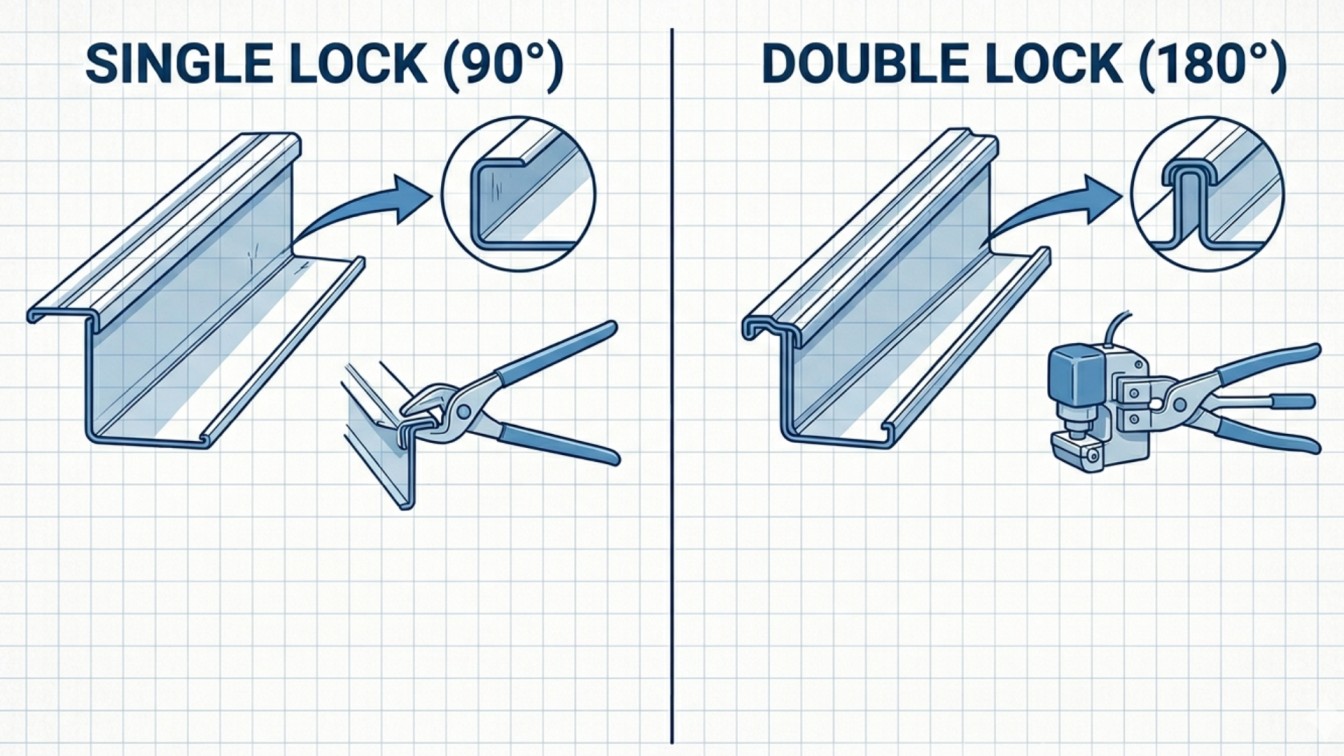
Single lock vs Double lock standing seam
1. Single Lock (90°)
One fold seam (90-degree)
Easier and faster to install
Suitable for moderate climates
2. Double Lock (180°)
Two folds seam (180-degree)
Higher weather-tightness and seam security
Ideal for:
double lock standing seam for low slope roofs (0.5/12 – 1/12 pitch)
Heavy rain, snow, and harsh climates
3. Batten Panel Systems
Batten Panel systems use panel legs placed side by side, covered by a metal cap to create the seam. This method balances structural performance with modern metal roof panel design options, making it popular in architectural projects.
Tee Seam
Cap is mechanically locked into place
Stronger sealing and better weather-tight performance
Suitable for demanding environments and long-term durability
Snap Cap
Cap simply snaps over the panel legs
Popular for curved panel designs and aesthetics
Performance depends heavily on installation quality
4. Nail Flange Systems
This is the simplest system where panels are directly fixed to the roof deck without clips. It reduces installation time and cost but limits panel movement.
Budget-friendly option
Faster installation
Limited expansion and contraction flexibility
Lower long-term durability compared to other systems
💡 Pro Tip:
If your project involves long panel runs or extreme temperature changes, always prioritize systems with clip-based movement (Snap-Lock or Mechanical Lock). They prevent stress buildup and reduce long-term panel distortion.
Standing Seam Panel Profiles, Rib Height & Design Options
This section bridges technical performance with design flexibility, helping you understand standing seam rib height comparison and choose the right metal roof panel design options for both durability and appearance.
What is the best rib height for standing seam?
Rib height plays a key role in performance and also known as secret to weather-tightness rib height.It comes in two ribs 1.5 and 2 inches.
1.5 vs 2 inch standing seam
1.5-inch Rib Height
Standard choice for residential roofing
Balanced between performance and aesthetics
Works best on steeper slopes
2-inch Rib Height
Common in commercial and low-slope applications
Provides improved water resistance and durability
Suitable for structural panel systems
Often considered the best standing seam profile for heavy rain
💡 Pro Tip:
Higher ribs (2”–3”) improve water flow and reduce the risk of leaks in heavy rainfall or snow-prone areas. They are especially important for low-slope roofs where drainage is slower.
Surface Design Options
Surface design directly concerns with prevent oil canning in metal roofs. Designs used at the time of panel manufactring .If you care about both looks and cost, checking standing seam roof colors and pricing 2026 helps you pick a style that works for your home and budget.
Striated vs Flat Metal Panels.
Striations (V-Grooves)
Linear grooves across the panel surface
Best option for:
Reducing oil canning visibility
Increasing structural strength
👉 When comparing striated vs flat metal panels, striated panels perform better because the grooves help reduce oil canning and improve panel strength, while flat panels have a higher chance of visible waviness.Rib Stiffeners
Low-profile indentations in the center of panels
Ideal for wider panels
Helps maintain a uniform surface appearance
Flat / Smooth Panels
Clean, modern architectural look
Higher risk of visible oil canning
Best for projects focused on aesthetics
Clip Relief
Raised area near the seam
Prevents clips and fasteners from showing
Ensures a smooth, clean panel finish
 💡Quick step:
If you want a clean look without visible waves, avoid completely flat panels. Use striations or stiffening ribs to balance appearance with performance.
Which Profile Should You Choose?
System Type | Slope Requirement | Installation Difficulty | Best Use Case |
|---|---|---|---|
Snap-Lock | ≥ 3/12 | Low | Residential roofing |
Mechanical Lock | Low-slope (0.5/12+) | High | Commercial & harsh climates |
Batten Panel | Flexible | Medium | Premium architectural design |
Nail Flange | ≥ 3/12 | Low | Budget-friendly projects |
Choose Mechanical Lock for maximum durability, Snap-Lock for balanced performance and cost, Batten Panels for design flexibility, and Nail Flange only when budget is the primary concern.
Is Standing Seam Metal Roofing Better Than Other Metal Roofs?
When comparing roofing options, I focus on cost, lifespan, and long-term value to help homeowners choose the right system for their needs. Each option performs differently based on budget, durability, and investment goals. Here is a quick comparison of different roof type with their benefits, cost and it's life span
Roof Type | Cost per sq ft | Lifespan | Benefits |
|---|---|---|---|
Standing Seam Metal Roof | $10–$18 | 40–70 years | Long-term durability, premium homes, low maintenance |
Corrugated Metal Panels | $7–$12 | 25–40 years | Budget metal roofing with moderate durability |
Asphalt Architectural Shingles | $4–$10 | 15–30 years | Low-cost residential roofing, short-term budget projects |
What Metal is Used in Standing Seam Metal Roofing?
A standing seam metal roof is mainly made from Galvalume coated steel and aluminum. These materials are shaped from a metal coil into standing seam panels using a rollforming process that controls panel thickness for strength and performance.
Thickness
Steel panels usually range from 29 to 22 gauge, where lower numbers mean thicker metal and higher durability. The most common choice is 24 gauge Galvalume steel, known for long-lasting performance. Aluminum panels are measured in thickness from 0.032 to 0.040 inches, making them lightweight and highly resistant to corrosion.
What are the Main Advantages of Standing Seam Metal Roofing
Before choosing this system, it’s important to evaluate all standing seam metal roof pros and cons to avoid costly mistakes.
Longevity 40–70 years / Roof lifespan 50+ years for long-term value and investment
Strong weather resistance and high weathertightness with interlocking and raised seams
Concealed fasteners / hidden fasteners that reduce roof leak risk and fastener failure
High wind resistance up to 140 mph for extreme conditions
Effective snow shedding, ice shedding, and rain shedding in all climates
Excellent UV protection, moisture resistance, and overall building protection
Strong corrosion resistance with durable materials like steel, aluminum, and copper
High energy efficiency with solar heat reflection and cool roof performance
Up to 25% energy savings with reduced cooling costs and better indoor comfort
Very low maintenance with simple maintenance inspection
Strong fire resistance, especially useful in wildfire-prone areas
Improves curb appeal and increases property value
Long-term cost effectiveness and overall roof protection performance
What Are the Disadvantages of Standing Seam Metal Roofing?
High cost concerns / strong roofing cost difference vs asphalt shingles
Increased installation complexity and need for professional installers requirement
Installation mistakes leading to roof leak risks
Oil canning effect caused by metal panel expansion and thermal movement
Noticeable noise issues and noise during rain
Difficult color matching repairs due to UV exposure fading
Ongoing long-term maintenance issues and repair difficulty
Risks from wind uplift, panel deflection, and vortex pressure
Structural limits affecting roof performance limits in extreme weather
Material-related issues like corrosion risk, dissimilar metals, and galvanic corrosion
Restrictions due to local codes, HOA restrictions, and roofing regulations
Biggest Mistakes to Avoid When Choosing a Metal Roofing System
The most common mistakes include ignoring installation complexity and not hiring professional installers requirement, which can lead to installation mistakes and roof leak risks. Many people also overlook metal panel expansion and thermal movement, causing the oil canning effect over time. Choosing only on price without understanding cost concerns and roofing cost difference is another major error. Poor planning for wind uplift, panel deflection, and vortex pressure can reduce safety, while ignoring corrosion risk, dissimilar metals, and galvanic corrosion can damage the roof long-term.