
What are the Metal Roof Types, Uses, and Cost
When you take a drive down any road in a busy city, you start to look at every roof a bit differently. You’ll notice how many homes, houses, and even large buildings now use metal roofs instead of older options.
Today, metal roofing is the second most popular roofing material in the United States, and for good reason. It offers strong benefits like durability, longevity, and energy efficiency, making it one of the best roofing materials available. Many homeowners and commercial building managers are upgrading from traditional asphalt shingles to metal roofing. This option delivers better ROI, improved sustainability, and handles harsh weather conditions well.
In this article, we are going to cover everything about types, uses, and materials.
What is a Metal Roof made of?
A metal roof is a roofing system made from durable materials like steel, aluminum, copper, zinc, or tin. It is designed for long-term performance, energy efficiency, and corrosion resistance, often lasting 40–70 years or more with proper care.
Many options are affordable and come coated with protective layers such as zinc-aluminum, Galvalume, or galvanized finishes, making them highly corrosion-resistant. Some metals, like copper and zinc, develop a natural patina over time, creating a unique blue-green look that adds to the roof’s aesthetic appeal. Because they are lightweight, they are easy to install and perform well even in coastal areas where salt spray can cause rust and corrosion in other roofing types.
What are the benefits of a metal roof on a house?
Durability
A metal roofing system is widely known for its strong durability, making it a trusted choice for homeowners, building owners, and consumers for long-term protection. It is designed to handle strong winds, heavy rain, moisture, snow, hail, and UV exposure without major damage, corrosion, or performance loss.
It also resists mold, algae, mildew, rodents, and other animals, making it more reliable than many traditional roofing materials like wood, plastic, or glass.
With Class A fire-rated, noncombustible protection, it provides one of the highest levels of safety against fire-related risks. Even in extreme weather conditions, it maintains its structural stability and keeps its shape better than many conventional roofing systems.
Longevity
One of the biggest advantages of metal roofing is its long lifespan. It is built to last 50+ years and in some cases up to 60 years or more. Compared to materials like asphalt shingles, tiles, or concrete roofs that may require replacement within 15–20 years, metal roofing can last through multiple roof cycles. It does not easily crack, weaken, or lose strength over time.
This long-lasting performance makes it a reliable long-term solution for both residential and commercial buildings, even in changing weather conditions.
Lower Cost
While the initial cost of a metal roof may be higher, it becomes cost-effective over time due to its durability and long life.
Since metal roofs last for decades, they are cost-effective due to:
Lower long-term labor and material expenses
Limited cleaning and debris removal
Reduced maintenance costs over time
In addition, metal roofing can improve energy efficiency by reflecting heat, which may help reduce cooling costs in warmer climates.
Eco-Friendly & Sustainability Benefits
Metal roofing is also an environmentally friendly option because it is fully recyclable. Old panels, tear-off metal, and manufacturing scraps can be reused instead of being sent to landfills. This type of roof comes with:
Pre-consumer recycled materials : Refer to waste or scrap produced during the manufacturing process that is collected and recycled for future use.
Post-consumer recycled materials: These are materials that have already been used by consumers and then collected, processed, and recycled for reuse.
Compared to non-recyclable roofing materials, metal roofing is the best choice.
Low Maintenance
Another key benefit is its low maintenance requirement. Metal roofs generally need only basic upkeep, such as removing leaves, branches, and debris from gutters after storms.
Occasional cleaning is enough to maintain their appearance and performance. Many modern systems, especially concealed fastener designs, require even less maintenance compared to exposed fastener systems.
Best For : Metal roof is a practical and hassle-free choice for homeowners and building owners.
Types of metal roofing materials
From my Experience, I see metal roofing as a broad term that covers many materials and installation styles. We can see roofing systems into categories by metal material,
by fastening system, by aesthetics style. You will find steel as the most popular and affordable choice, often used in modern builds.
Types by Material
Steel: A strong and affordable option with a long lifespan. It comes in types like Galvalume, galvanized, and stainless steel. It is highly resistant to fire, mold, and pests, but can be expensive in premium grades.
Steel is a popular and least expensive metal roofing material, available in corrugated exposed fastener or standing seam hidden fastener styles, offering 40–60 years of life at a fraction of the cost of premium metals.
Aluminum: A lightweight, corrosion-resistant metal. It works well in coastal environments where rust is a risk due to salt spray.
Aluminum is ideal for coastal areas within 1,500 feet of saltwater because it is corrosion-resistant, does not rust from salt spray, and is more affordable than copper and zinc, though still costlier than steel.
Copper: The longest-lasting metal. It can last for centuries. It starts as a shiny penny and forms a blue-green patina. It is more expensive but offers high aesthetic value and is naturally resistant to rust.
Zinc: A premium, long-lasting choice with a lifespan of 60–100+ years. It forms a blue-gray patina and offers strong corrosion protection, though it is harder to source.
Tin: A rare and often generic term today. Most modern uses refer to steel or aluminum instead.
Types by Fastening System
One of the most advanced options is standing seam metal roofing system, which offers better leak protection and long-term durability compared to exposed fastener panels.Here are 2 types of fastening system
1. Corrugated metal roof/Exposed fastener systems
Ribbed metal panels are secured with screws or nails that pass through the panels into the roof deck. The fasteners remain visible, making the system cost-effective. However, it requires more maintenance because rubber washers can become brittle and crack over time.
Exposed fastener panel comes with:
5V Crimp (historic style with v- shaped crimps).
R-Panel for commercial buildings and industrial buildings with boxy corrugations.
An Ag Panel is used in agricultural settings.
2. Standing seam /Hidden fastener systems:
Standing seam metal roofing are vertical ribs and concealed panels to improve design, leak resistance, and wind resistance. No holes are exposed on the weathering surface. To understand different standing seam roof types and installation methods, it’s important to compare snap-lock, mechanical lock, and batten panel systems in detail.
Standing seam subtypes are:
Snap-Lock panels that snap together and mechanically seamed panels folded with a tool.
Mechanical seam : Mechanically seamed panels are roll formed with specific edges that line up on the roof. A hand seamer or robotic seamer is used to bend and lock panels, creating a strong, locked seam that looks like a paper clip shape. Depending on the design two types of mechanical seaming:
single lock (90-degree seam) with one fold
double lock (180-degree seam) with two folds
which improves the seam and overall seam structure for better durability.
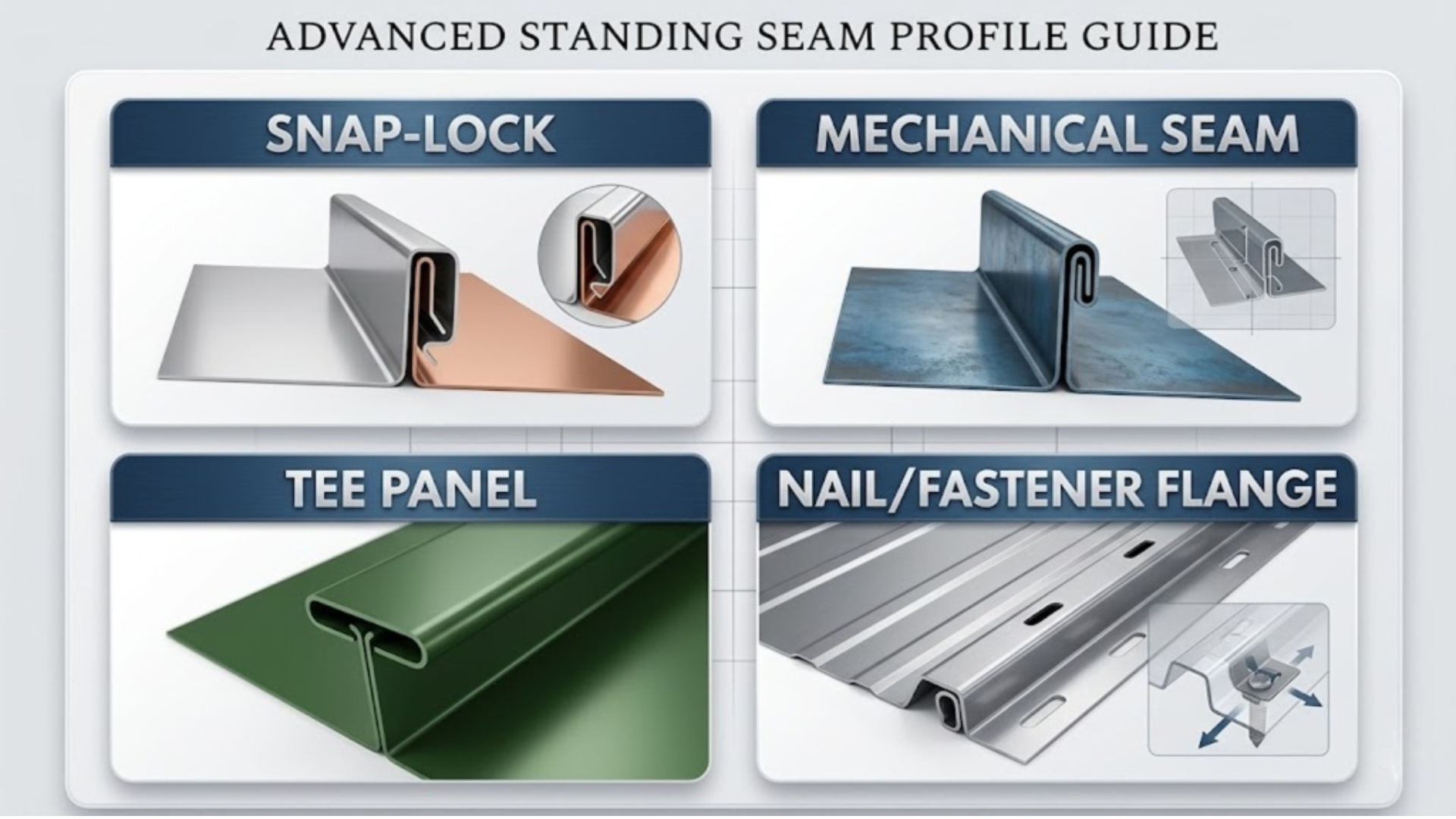
Tee panel: Another type of panel where standing seam panels are connected at the top using a cap. Once seaming is complete, the top forms a clear “T” shape at the panel junction, improving both strength and structural connection. The seam cap helps finish the system cleanly, and in many cases, it is also mechanically seamed to ensure the lock panels stay tight under pressure.
Nail flange: Fastener flange or Nail flange design uses a snap-lock panel system where a clip helps attach the metal panel to the roof deck. The panel is fastened through the male leg, then the female leg snaps over it, which hides the fastener head completely. This panel locking method creates a clean finish while keeping a strong structural fastening system and is widely used as a concealed fastener installation method in modern roofing work.
Types by Aesthetic Style
Stone-coated steel: Manufacturers create metal roofing that is designed to mimic traditional materials. Steel sheets are stamped into shapes and coated with stone granules to replicate asphalt shingles, clay tiles, or wood shakes, while keeping high durability.
Stone-coated steel offers metal durability with a traditional look, as its panels replicate asphalt shingles, clay tiles, and wood shakes, making it a strong choice for homeowners
Metal shingles and slats: These use metal to form individual panels or shingles that copy traditional slate or wood. They are lighter and easier to install.
Sheet profiles: These include flat or corrugated sheets shaped into wavy or boxy patterns. This improves structural stiffness and overall performance.
Quick comparison of different types of metal roofing
Steel | $16–$23 | 40–70 years | Medium | Low (coastal areas) | Homes, barns and warehouses |
Aluminum | $17–$25 | 30–50 years | Very light | Excellent | Coastal homes |
Zinc | $14–$20 | 60–100+ years | Light | Very high | Premium homes |
Copper | $29–$41 | 100+ years | Medium | Extreme | Luxury and historic buildings |
Where is a metal roof used?
Commercial Areas
In commercial buildings, metal roofing is used across offices, hotels, hospitals, schools, universities, churches, government buildings, and restaurants because business owners need strong durability, safety, and low maintenance. An advantage is its strong structural stiffness, sustainability, and cost effectiveness, making it a smart long-term investment.
Agricultural Structures
On farms and rural land, agricultural metal roofing is used in barns, sheds, livestock shelters, and storage buildings. These structures mainly focus on function rather than design, so farmers prefer corrugated metal sheets, Ag panels, and exposed fastener systems because they are cost-effective, durable, and easy to maintain.
These roofs handle harsh weather, pests, and heavy use while offering long-term protection and structural support.
Industrial Use
In the industrial sector, metal roofing is used for factories, warehouses, military buildings, and large facilities where strength and reliability matter most. These structures require roofing that can handle extreme conditions, hurricane-force winds, and heavy structural loads.
Industrial systems often use corrugated sheets, R-panels, and exposed framing for maximum strength and efficiency.
Residential Use
The residential market, booming, shows how homeowners now realize that metal roofing can truly save money in the long term. I have seen that roof size does not really matter anymore because modern metal roofing systems are now used even in small scale residential use like a shed or mailbox.
Always consult the manufacturer or contractor before they install different roofing materials, because when placed together, they can sometimes react, creating compatibility issues in mixed materials that affecting proper roofing.
Before making a final decision, it’s smart to review all metal roof pros and cons to understand both long-term benefits and possible drawbacks
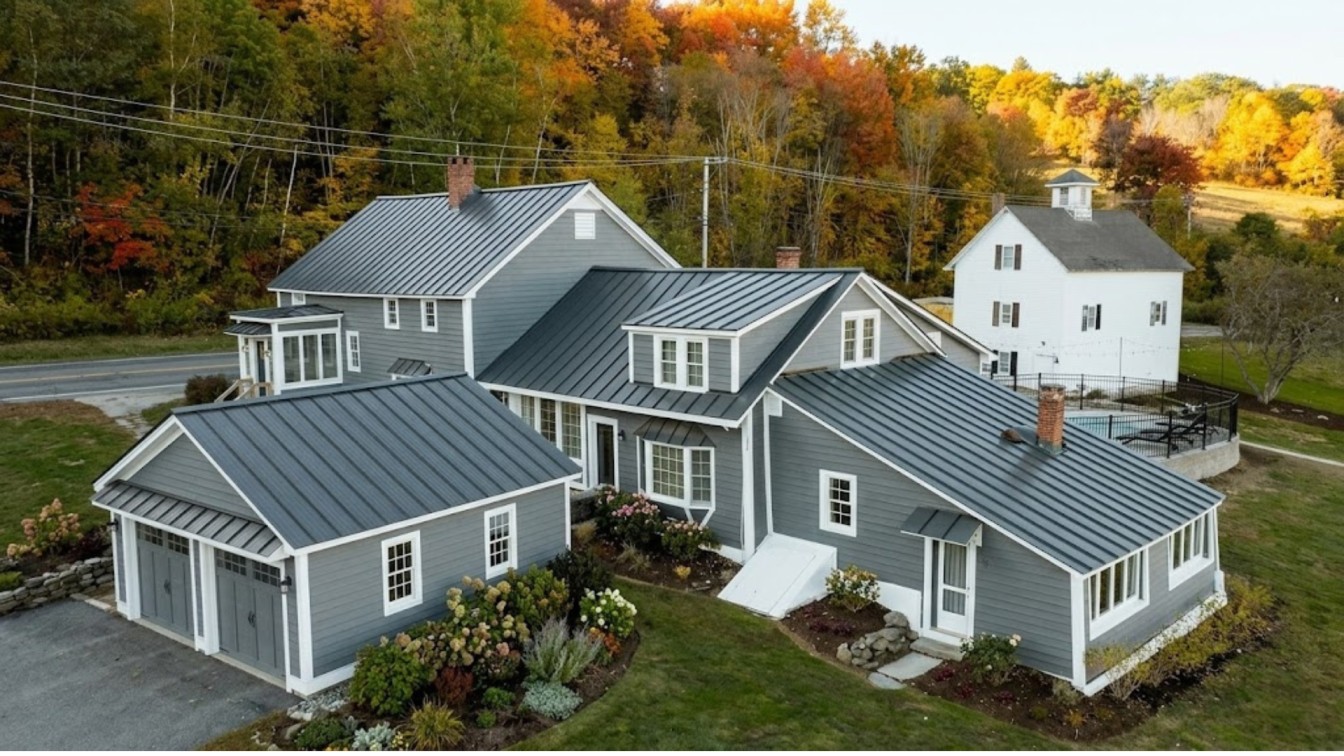
Key Disadvantages of Metal Roofing
High Initial Cost: Metal roofing can be expensive to purchase and install compared to traditional asphalt shingle roofs.
Noise: During rain and hailstorms, a metal roof may produce a louder impact if insulation or soundproofing is not properly used.
Denting / Impact Damage: Aluminum, copper, and steel panels can dent easily from hail or falling debris.
Installation Difficulty: Requires specialized labor, and poor installation may lead to leaks, oil canning, and unwanted waves in flat panels.
Rust and Corrosion: Bare steel can rust if scratched or improperly installed, and salt spray in coastal areas can speed up deterioration in some metal types.
Maintenance of Fasteners: Exposed fastener systems or screw-down roofs need maintenance every 12–15 years because rubber washers can degrade.
Thermal Expansion: Metal expands and contracts with temperature changes, which can cause loose fasteners if installation is not done correctly.
Repair Challenges: Repairs can be complex, often requiring full panel replacement, which increases cost.
Aesthetics: The modern, industrial, or rural look may not suit all homeowners or homeowner associations.
Metal Roof Thickness
Thickness is measured using a measurement system called the gauge system in steel roofing. Thickness is measured using a gauge number, where a lower gauge number = thicker metal and higher strength. Here I mention some material that comes in different thicknesses:
Simple rule to understand:
Aluminum / shingles → inches (decimal)
Steel → gauge
Copper → oz per sq. ft.
Metal Roof Thickness by Material
Standing seam systems / Exposed fastener systems | Steel gauge system | 24 gauge, 22 gauge | High strength, used in standard and high-performance roofing systems |
Aluminum roofing | Decimal measurement (inch) | .032, .040 | Lightweight, corrosion-resistant, ideal for modern roofing |
Stamped shingles | Decimal measurement (inch) | .019, .024 | Decorative roofing, suitable for lighter applications |
Copper roofing | Weight-based measurement | 16 oz, 20 oz per sq. ft. | Superior durability; 20 oz offers better dent resistance against hail |
Metal Roof Colors
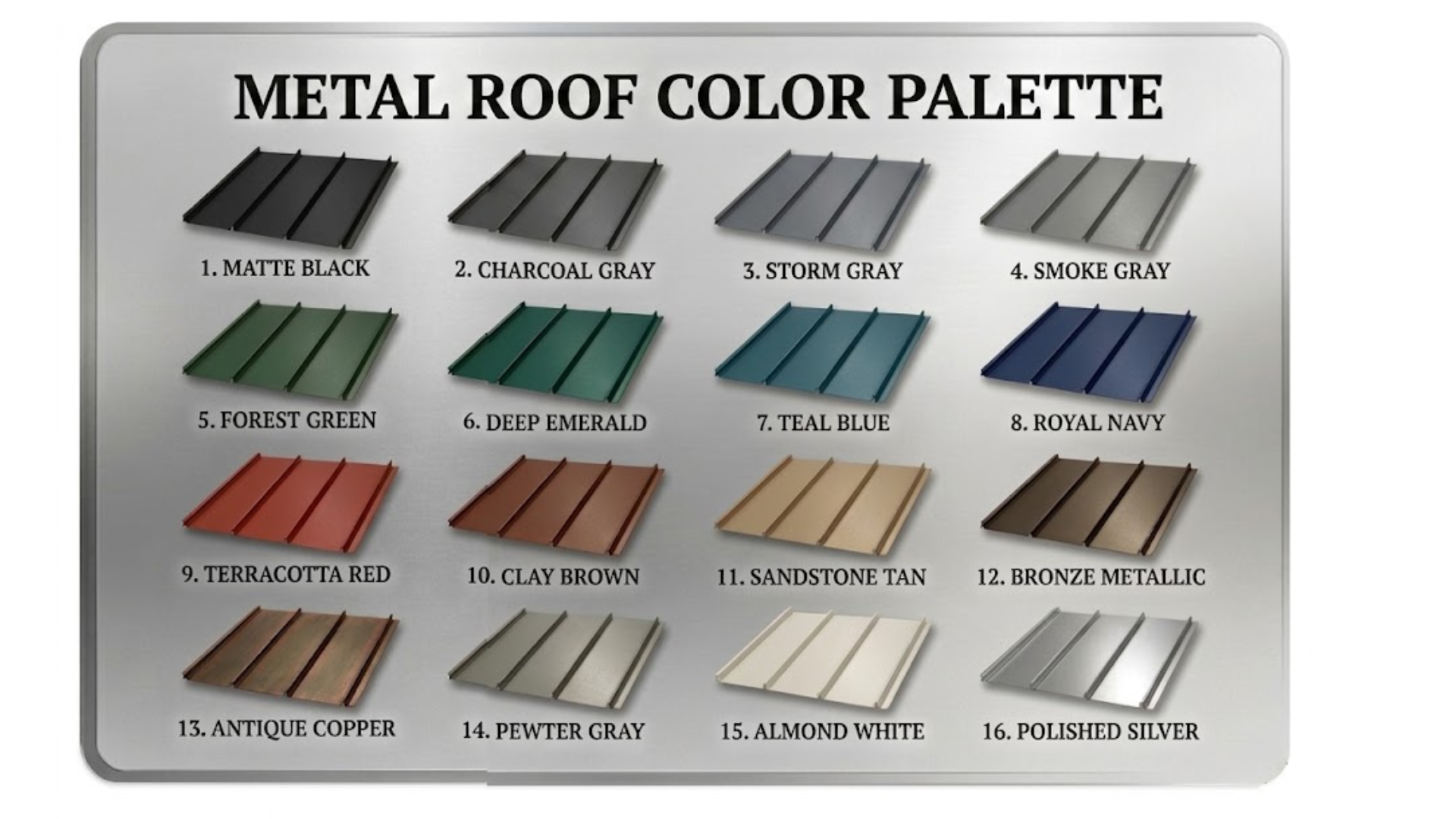
If you're choosing a design, exploring metal roof color options and cost can help you match aesthetics with budget and energy efficiency. Metal roof offer a wide range of options, from classic shades like Black, Grey, and White to modern tones like Rustic Red, Hawaiian Blue, and Evergreen. Available in 29 and 26 gauge panels with multiple finishes, they combine durability with design flexibility.
Final Thoughts
If you’re just getting started with metal roofing and doing your research, metal roofing may seem like a complex topic, but once you understand its real benefits, it becomes a clear and smart metal roofing option. This modern roof type is built for both home and business, giving every property owner a long-lasting roofing solution. Instead of dealing with a shingle roof that you need to replace every 15-20 years, a metal roof can become your last roof, saving money and effort in the long run. It also stands out as an eco-friendly, sustainable roof, with low maintenance needs and a fully recyclable roof.
A wide variety of color options, finish options, and texture options make choosing roof styles easier for any design. If you still have questions, let us know in the comments , and we’ll try our best to answer you. Learn more with Snows brain.
FAQ Section
What is the best metal roof type for a humid climate?
For a humid climate, aluminum metal roofing with a standing seam concealed fastener system is usually the best choice. It offers strong protection against moisture, corrosion, rust, and salt air, making it a reliable long-term option in humid environments.
Is metal a type of roof?
Yes, metal is a roofing material used in modern building construction, and it comes in different metal roof material types such as aluminum, copper, zinc, and steel. Each material has its own characteristics, pros, cons, and costs, depending on the project needs and structural application. For example, aluminum roofing is lightweight, rustproof, and heat-reflective, offering strong corrosion resistance, low weight per square foot, and easy installation methods.
What is the purpose of a metal roof?
The main purpose of metal roofs is strong building protection with high durability and reliable structural performance. Systems like standing seam and stamped metal shingle roofs are designed to handle extreme weather, including fire resistance, wind resistance, and hail resistance, while offering a long roof lifespan of around 40–80 years.